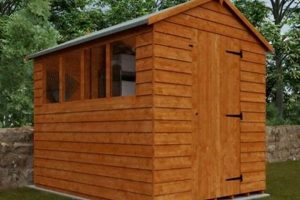
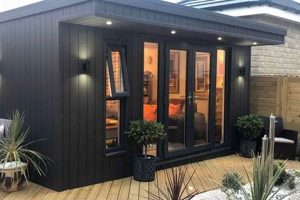
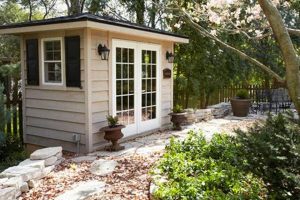
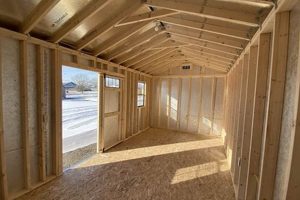
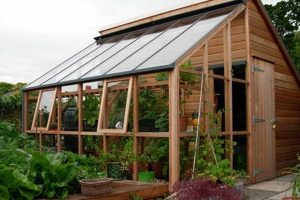
The concept encompasses a range of design options for the uppermost covering of a small, outdoor storage structure. These plans address material selection, structural design, and aesthetic considerations. For instance, a pent roof offers a simple, angled surface for efficient water runoff, while a gable design provides increased headroom and a classic appearance.
Appropriate roofing is paramount for safeguarding stored contents from environmental elements such as rain, snow, and sunlight. Effective construction prevents water damage, rot, and pest infestations, extending the lifespan of both the shed and its contents. Historically, selection was limited to locally available resources, but contemporary options include a variety of materials offering varying levels of durability, cost, and aesthetic appeal.
The following sections will delve into specific types of coverings, examine the impact of material choice on longevity, and provide guidance on installation considerations, ensuring a secure and aesthetically pleasing structure.
Essential Considerations for Shed Roof Design
Careful planning is crucial for a robust and enduring shed roof. The following guidance emphasizes key aspects to consider during the design and construction phases.
Tip 1: Prioritize Water Management: Proper slope and effective drainage are critical. Ensure a sufficient roof pitch to facilitate water runoff and consider installing gutters and downspouts to direct water away from the shed’s foundation. Failure to do so can lead to moisture damage and structural degradation.
Tip 2: Material Selection Based on Climate: Consider local weather patterns when choosing roofing material. In regions with heavy snowfall, opt for materials with high load-bearing capacity. In areas prone to high winds, prioritize materials with robust wind resistance.
Tip 3: Ventilation is Paramount: Adequate ventilation under the roof prevents moisture buildup, reducing the risk of mold and rot. Integrate soffit and ridge vents to promote airflow. Ensure proper sizing and placement of vents to maximize effectiveness.
Tip 4: Assess Structural Load Requirements: Determine the appropriate load-bearing capacity based on local building codes and anticipated snow or wind loads. Consult with a structural engineer if necessary to ensure the structural integrity of the roof frame.
Tip 5: Incorporate Overhangs: Extend the roof slightly beyond the walls to protect the shed’s siding from the elements. Overhangs help prevent water from running down the walls, reducing the risk of water damage and extending the lifespan of the siding.
Tip 6: Adhere to Building Codes and Regulations: Familiarize yourself with local building codes and regulations pertaining to shed construction. This ensures compliance and avoids potential legal issues. Obtain necessary permits before commencing construction.
Tip 7: Secure Proper Fastening: Employ appropriate fasteners, such as nails or screws, specifically designed for roofing applications. Ensure proper spacing and penetration depth to securely attach the roofing material to the underlayment and rafters.
These guidelines underscore the importance of proper planning, material selection, and construction techniques in creating a durable and effective covering for the shed. Careful attention to these factors ensures a long-lasting structure that protects stored items from the elements.
With these essential considerations addressed, proceed to the subsequent sections detailing specific material options and installation procedures.
1. Material Durability

Material durability is a paramount concern in the context of outdoor storage design. The lifespan and protective capabilities of a shed roof are intrinsically linked to the inherent resilience of the chosen material. Selection should prioritize materials capable of withstanding environmental stressors, thereby ensuring long-term structural integrity and safeguarding stored contents.
- Resistance to Weathering
Weathering encompasses the degradation caused by exposure to sunlight, rain, wind, and temperature fluctuations. Materials exhibiting high resistance to weathering, such as metal or treated wood, maintain their structural integrity and aesthetic appeal over extended periods. Conversely, materials susceptible to weathering may require frequent maintenance or replacement, increasing long-term costs.
- Resistance to Impact Damage
The ability to withstand physical impacts, such as those from falling branches, hailstones, or debris, is crucial for preventing leaks and structural compromise. Durable materials, such as asphalt shingles with high impact ratings or metal roofing, offer enhanced protection against such events, extending the roof’s service life.
- Resistance to Moisture Intrusion
Moisture intrusion is a primary cause of rot, mold growth, and structural weakening. Roofing materials must possess inherent water resistance or be treated to prevent water absorption. Proper installation techniques, including the use of underlayment and flashing, are essential for maximizing moisture resistance.
- Resistance to Pest Infestation
Certain materials are more susceptible to damage from insects or rodents. Selecting materials resistant to pest infestation, or implementing preventative measures such as applying wood preservatives, helps maintain the structural integrity and appearance of the roof. For example, metal is inherently resistant to termite damage, unlike untreated wood.
The selection of a roofing material hinges on a thorough assessment of its durability characteristics. Consideration of weathering, impact resistance, moisture resistance, and pest resistance directly impacts the long-term performance and cost-effectiveness of the shed roof. Prioritizing these factors ensures a robust, reliable covering that protects stored belongings from environmental damage and contributes to the overall longevity of the structure.
2. Structural Integrity

The structural integrity of a garden shed roof is paramount, dictating its capacity to withstand external forces and maintain its intended form. A compromised structure jeopardizes the shed’s primary function of protecting contents from the elements. The selection of roofing material, the design of the supporting framework, and the quality of construction directly affect structural soundness. For example, insufficient rafter spacing or the use of substandard materials can result in sagging or collapse under snow load. Neglecting these elements undermines the entire structure, regardless of aesthetic appeal.
The cause-and-effect relationship is evident: inadequate structural design leads to premature failure. Employing proper engineering principles, adhering to local building codes, and choosing durable materials are crucial preventive measures. One practical application involves calculating load requirements based on regional climate data. Roofs in areas with heavy snowfall necessitate stronger support systems than those in milder climates. Regular inspections and timely repairs are also essential for maintaining structural integrity over time. A well-constructed roof not only protects stored items but also prevents costly repairs or replacements in the long run.
In summation, structural integrity forms the bedrock of any effective plan for a garden shed roof. Prioritizing robust design, durable materials, and sound construction practices ensures a lasting and reliable structure. Overlooking this crucial aspect increases the risk of structural failure, rendering the shed ineffective and potentially hazardous. Therefore, a comprehensive understanding of structural principles is indispensable for successful shed construction.
3. Water Runoff

Effective water runoff is a critical design consideration for any garden shed roof. Inadequate drainage precipitates water accumulation, potentially leading to material degradation, structural weakening, and damage to stored contents. The slope, material, and drainage system of the roof directly influence its ability to shed water efficiently. A poorly designed roof can experience ponding, which accelerates the deterioration of roofing materials and compromises the integrity of the underlying structure. For instance, a flat roof without proper drainage outlets will inevitably collect rainwater, increasing the risk of leaks and structural failure. The pitch of the roof must be sufficient to facilitate unimpeded water flow, and the material should be selected for its water-resistant properties.
Practical application involves integrating appropriate drainage mechanisms, such as gutters and downspouts, to channel water away from the shed’s foundation. This prevents soil erosion and minimizes the risk of water damage to the shed’s base. Furthermore, the choice of roofing material significantly impacts runoff efficiency. Metal roofing, for example, typically sheds water more effectively than asphalt shingles due to its smooth, non-porous surface. Regular maintenance, including the removal of debris from gutters and downspouts, is essential to ensure continued proper drainage. The absence of such maintenance can negate even the most well-designed roofing system.
In summary, the connection between effective water runoff and successful shed design is undeniable. A properly designed and maintained roof not only protects the shed’s contents but also extends the lifespan of the structure itself. Ignoring the principles of water management during the design and construction phases results in a structure vulnerable to water damage, leading to costly repairs and premature failure. Thus, prioritizing efficient drainage is paramount to ensuring the long-term integrity and functionality of a garden shed.
4. Aesthetic Compatibility

The visual integration of a garden shed with its surrounding environment is a significant aspect of overall design. Aesthetic compatibility refers to the harmonious blending of the shed’s roof design with the existing architectural style of nearby structures and the natural features of the landscape. This consideration extends beyond mere cosmetic appeal, influencing property value and contributing to a cohesive outdoor space.
- Material Harmonization
The choice of roofing material should complement the materials used in the primary residence and other outbuildings. For instance, if the main house features asphalt shingles, selecting a similar style and color for the shed roof can create a unified appearance. Contrasting materials, while potentially visually striking, must be carefully considered to ensure they do not clash with the overall aesthetic.
- Color Coordination
Roof color plays a crucial role in aesthetic integration. Neutral tones, such as grays, browns, and greens, often blend seamlessly with natural surroundings. Brighter, more vibrant colors can be used strategically to add visual interest, but they should be chosen to complement, not dominate, the existing color palette of the landscape and nearby structures. Consideration should also be given to the way the color will weather over time.
- Architectural Style Alignment
The roof style should align with the architectural style of the primary residence. A gable roof is commonly used to provide a classic look, which is compatible with most architectural styles. Alternatively, a pent roof offers a modern touch. However, selecting an unconventional roof style may detract from the property’s overall aesthetic if it does not complement the existing architectural elements.
- Landscape Integration
The shed’s roof can be designed to integrate with the surrounding landscape. For example, a green roof, featuring vegetation, can seamlessly blend the structure with its environment. Furthermore, the size and scale of the roof should be proportionate to the size of the shed and the surrounding landscape to avoid creating a visually disruptive element.
These facets highlight the multifaceted nature of aesthetic compatibility in the context of garden shed roofing. By carefully considering material harmonization, color coordination, architectural style alignment, and landscape integration, it is possible to create a shed that is both functional and visually appealing, seamlessly blending into its surroundings and enhancing the overall aesthetic of the property.
5. Ventilation Needs

Adequate ventilation is a crucial element in garden shed roof design, directly affecting the longevity of the structure and the preservation of its contents. Insufficient ventilation leads to moisture accumulation, creating an environment conducive to mold growth, wood rot, and corrosion of stored items. The interconnection between roof design and air circulation is evident: a poorly ventilated roof traps humid air, exacerbating these detrimental effects. Conversely, a well-ventilated roof facilitates the expulsion of moisture, reducing the risk of damage and extending the lifespan of the shed. For example, a shed storing gardening tools and equipment may develop rust and corrosion if exposed to persistently high humidity levels caused by inadequate roof ventilation.
Practical application involves the integration of ventilation features such as soffit vents, ridge vents, or gable vents into the roof design. These features allow for the continuous circulation of air, preventing moisture buildup and regulating temperature within the shed. The number and size of vents should be determined based on the shed’s dimensions and the prevailing climate conditions. In humid climates, a greater emphasis on ventilation is necessary to counteract the increased moisture levels. Moreover, proper insulation, when combined with adequate ventilation, can further enhance temperature control and reduce condensation. Ignoring these principles undermines the purpose of the roofing system, rendering it unable to effectively protect stored items and the shed structure itself.
In summary, the connection between ventilation needs and garden shed roof design is undeniable. A properly ventilated roof not only prevents moisture-related damage but also contributes to a more stable and controlled internal environment within the shed. Overlooking this crucial aspect increases the risk of structural degradation and damage to stored items, potentially leading to costly repairs or replacements. Therefore, integrating ventilation features into the roof design is an essential investment in the long-term performance and functionality of a garden shed.
6. Cost-Effectiveness
Balancing initial investment with long-term expenses constitutes the core principle of cost-effectiveness in garden shed roof construction. Evaluating various materials and design options necessitates a comprehensive understanding of their respective costs and lifespans, ensuring optimal value over time.
- Material Acquisition Costs
The initial price of roofing materials, such as asphalt shingles, metal panels, or wood shakes, significantly influences the overall budget. Lower-cost materials may present an attractive upfront option, but their shorter lifespans often result in more frequent replacements, increasing long-term expenses. For example, asphalt shingles, while typically less expensive initially, may require replacement every 15-20 years, whereas metal roofing can last 50 years or more. The material acquisition cost must be weighed against anticipated longevity and maintenance requirements.
- Installation Labor Costs
Labor costs associated with roof installation vary depending on the complexity of the design and the type of material used. Materials requiring specialized skills or equipment for installation, such as metal roofing or cedar shakes, often incur higher labor charges. DIY installation can reduce labor costs but may compromise quality and void warranties if not performed correctly. A comprehensive assessment of both professional installation fees and the potential risks of self-installation is crucial.
- Maintenance and Repair Expenses
Ongoing maintenance and repair expenses contribute significantly to the total cost of a roof over its lifespan. Materials prone to weathering, such as wood, require regular treatments and repairs to prevent rot and decay. Conversely, materials with inherent durability, such as metal, necessitate less frequent maintenance. Evaluating the long-term maintenance and repair requirements of each roofing option informs a more accurate assessment of cost-effectiveness.
- Energy Efficiency Savings
Certain roofing materials offer enhanced energy efficiency, resulting in reduced heating and cooling costs. Reflective metal roofing, for example, can lower attic temperatures during summer months, decreasing air conditioning usage. While these materials may have a higher initial cost, the resulting energy savings can offset the expense over time. Integrating energy efficiency considerations into the material selection process contributes to a more sustainable and cost-effective roofing solution.
These facets underscore the multifaceted nature of cost-effectiveness in the context of garden shed roof construction. By carefully evaluating material acquisition costs, installation labor, maintenance expenses, and energy efficiency savings, it is possible to make informed decisions that optimize value and ensure a durable, functional, and financially sound roofing solution.
Frequently Asked Questions
The following addresses common inquiries regarding roofing for small outdoor structures, aiming to provide clarity and informed decision-making.
Question 1: How critical is roof slope for a garden shed?
A: Roof slope, or pitch, is essential for effective water runoff. Insufficient slope can lead to water pooling, potentially causing leaks, material degradation, and structural damage. Consult local building codes for minimum slope requirements based on roofing material.
Question 2: What roofing material provides the best long-term value?
A: Determining the “best” material necessitates considering factors such as initial cost, lifespan, maintenance requirements, and environmental conditions. Metal roofing typically offers superior longevity but may have a higher initial investment than asphalt shingles, requiring a cost-benefit analysis.
Question 3: How does ventilation impact shed roof longevity?
A: Adequate ventilation reduces moisture buildup beneath the roofing material, mitigating the risk of mold, rot, and structural weakening. Soffit and ridge vents promote air circulation, extending the lifespan of the roof and protecting stored items.
Question 4: Are there specific building codes applicable to shed roofing?
A: Local building codes often regulate shed construction, including roofing requirements. Compliance with these codes is mandatory and may dictate material specifications, structural load-bearing capacity, and permit acquisition.
Question 5: What are the implications of improper installation?
A: Incorrect installation can compromise the structural integrity and weather resistance of the roof. This can lead to leaks, premature material failure, and costly repairs. Employing a qualified contractor or adhering to manufacturer guidelines during self-installation is crucial.
Question 6: How do I address existing roof leaks?
A: Leaks should be addressed promptly to prevent further damage. Locate the source of the leak and make necessary repairs, which may involve patching, replacing damaged materials, or resealing seams. Extensive damage may necessitate complete roof replacement.
These questions highlight key considerations regarding the construction of garden shed roofing. Proper planning and execution remain essential to ensure a durable and effective structure.
The subsequent sections provide a focused exploration of popular designs.
Conclusion
The preceding exploration of garden shed roof ideas has highlighted the multifaceted considerations inherent in constructing a durable and functional covering. Material selection, structural integrity, water management, aesthetic compatibility, ventilation, and cost-effectiveness each exert a significant influence on the overall performance and longevity of the structure. A comprehensive understanding of these interconnected factors is essential for informed decision-making.
Optimal implementation ensures the effective protection of stored contents and contributes to the aesthetic integration of the shed within its environment. Prioritizing careful planning, adhering to relevant building codes, and executing sound construction practices will yield a resilient and valuable addition to any outdoor space, providing years of reliable service. Future advancements in materials science and sustainable building techniques offer the potential for even more efficient and environmentally conscious solutions.