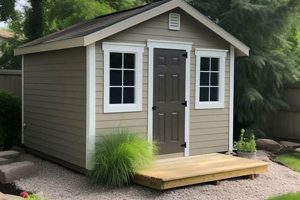
These pivotal components facilitate the opening and closing of structures designed for storage in outdoor spaces. They commonly consist of two metal plates joined by a pin, enabling a door to swing relative to its frame. Various types exist, differing in size, material, and design, each suited for specific door dimensions and weight capacities. For example, strap versions are often used for heavier doors, distributing the load across a larger area.
Their proper functionality is paramount to the security and usability of the enclosure. Durable and well-maintained examples ensure the door operates smoothly, preventing sagging, sticking, or detachment, which could compromise the contents within. Historically, these mechanisms have evolved from simple wooden pegs to sophisticated metal designs, reflecting advancements in metallurgy and engineering. The selection of appropriate hardware contributes directly to the longevity and protection afforded by the structure.
The subsequent sections will delve into the selection criteria, installation techniques, maintenance procedures, and common problems associated with these essential fittings, providing a detailed guide to ensuring optimal performance and extending the lifespan of a garden shed.
Essential Guidance for Selection and Maintenance
The following recommendations provide insight into the selection, installation, and maintenance of hardware essential for proper shed door function and security.
Tip 1: Material Selection. Opt for galvanized steel or stainless steel to resist corrosion and ensure longevity, particularly in humid environments. Consider the weight of the door when choosing the material thickness; heavier doors require more robust options.
Tip 2: Size and Load Capacity. Evaluate the door’s dimensions and weight before selecting a model. Exceeding the specified load capacity can lead to premature wear and eventual failure.
Tip 3: Proper Installation. Ensure accurate alignment during installation to prevent binding or uneven wear. Use appropriate fasteners and pilot holes to avoid damaging the door or frame.
Tip 4: Regular Lubrication. Apply a suitable lubricant periodically to maintain smooth operation and prevent rust formation. Lithium grease or silicone-based lubricants are generally recommended.
Tip 5: Inspection for Wear. Conduct routine inspections to identify signs of wear, such as rust, loose screws, or bent plates. Address these issues promptly to prevent further damage.
Tip 6: Consider Security. For enhanced security, select models with tamper-resistant features or consider adding supplementary security measures such as hinge bolts or security screws.
Implementing these strategies will contribute to the reliable function and extended lifespan of garden shed door hardware, safeguarding the contents within.
The subsequent section will provide a more detailed examination of common problems and troubleshooting techniques associated with these critical components.
1. Material Durability

Material durability is a primary determinant of the lifespan and functionality of garden shed door hardware. The selection of appropriate materials directly impacts resistance to environmental stressors, load-bearing capability, and overall structural integrity.
- Corrosion Resistance
External hardware is constantly exposed to moisture, temperature fluctuations, and potentially corrosive substances. Materials such as galvanized steel, stainless steel, and powder-coated metals exhibit superior corrosion resistance compared to untreated steel or iron. Rust compromises the structural integrity of the mechanism, leading to failure. Selecting resistant materials is critical for longevity in outdoor environments.
- Tensile Strength
The material’s tensile strength, its ability to withstand pulling forces, is crucial for supporting the weight of the door and resisting stress from repeated use. High-tensile steel alloys are commonly employed for heavy-duty applications, ensuring the mechanism does not deform or break under load. Inadequate tensile strength results in sagging, binding, and eventual breakage.
- Fatigue Resistance
Repeated opening and closing of the door subjects the hardware to cyclical stress. Fatigue resistance refers to the material’s ability to withstand these repeated stress cycles without cracking or fracturing. Materials with high fatigue resistance, such as specific grades of stainless steel, are preferred for frequently used doors. Failure due to fatigue manifests as cracks near stress points, eventually leading to complete failure.
- Impact Resistance
Accidental impacts, such as those from tools or equipment, can damage shed door hardware. Materials with high impact resistance, such as certain grades of steel, can withstand these forces without significant deformation or breakage. Low impact resistance leads to bending, cracking, or complete failure, compromising the functionality of the door.
In summary, the selection of durable materials is paramount for ensuring the reliable operation and extended lifespan of garden shed door hardware. Factors such as corrosion resistance, tensile strength, fatigue resistance, and impact resistance should be carefully considered to optimize performance and prevent premature failure, thus safeguarding the contents of the shed.
2. Load-Bearing Capacity

The load-bearing capacity of garden shed door hardware is a critical parameter directly affecting the functionality, safety, and longevity of the structure. It signifies the maximum weight the hinges can support without undergoing deformation, failure, or compromising the door’s operation. Selecting appropriate hardware with adequate load-bearing capacity is essential for preventing premature wear and ensuring the door functions as intended.
- Door Weight and Distribution
The total weight of the door, inclusive of its material composition and any attached hardware (e.g., handles, latches), constitutes the primary load. Furthermore, the distribution of this weight across the hinges must be considered. Heavier doors require models designed to withstand significant vertical forces. Incorrect estimations can lead to sagging, difficulty in operation, and eventual structural failure.
- Hinge Material and Design
The material composition (e.g., steel, stainless steel) and the design of the hinges directly influence their load-bearing capabilities. Thicker, more robust designs crafted from high-strength materials inherently offer higher load capacities. Manufacturers typically specify a maximum weight rating for each model. Exceeding this rating risks permanent deformation or breakage. Examples include strap which distribute load bearing capacity.
- Fastener Strength and Quantity
The fasteners used to secure the hardware to the door and frame play a crucial role in transferring the load. The type, size, and quantity of screws or bolts must be appropriate for the weight being supported. Under-sized or insufficient fasteners can shear or pull out under stress, causing the door to detach. Using high-quality, appropriately sized fasteners is therefore a critical aspect of ensuring adequate load-bearing performance.
- Environmental Factors
Environmental factors, such as temperature fluctuations and moisture exposure, can indirectly affect the load-bearing capacity. Extreme temperatures can alter the material properties of both the hardware and the surrounding wood or composite materials. Moisture can lead to corrosion, weakening the metal components over time. Selecting corrosion-resistant materials and ensuring proper sealing can mitigate these effects.
In conclusion, proper consideration of load-bearing capacity, encompassing door weight, hardware material and design, fastener strength, and environmental factors, is indispensable for ensuring the reliable and safe operation of a garden shed door. Neglecting this aspect can result in functional issues and premature structural failure, ultimately compromising the security and utility of the shed.
3. Corrosion Resistance

Corrosion resistance is a paramount attribute influencing the longevity and functionality of garden shed door hardware. External placement exposes these components to diverse environmental elements, necessitating materials and treatments capable of withstanding degradation.
- Material Selection
The choice of base material directly dictates the level of inherent corrosion protection. Stainless steel, characterized by its chromium content, forms a passive oxide layer that inhibits rust formation. Galvanized steel, coated with a layer of zinc, sacrifices the zinc to protect the underlying steel. Conversely, untreated steel and iron are highly susceptible to corrosion, requiring additional protective measures.
- Protective Coatings
Coatings provide a barrier between the base metal and the corrosive environment. Powder coating, a dry finishing process, creates a durable, even layer that resists scratches and corrosion. Paint, while offering some protection, is more prone to chipping and degradation. Regularly reapplying protective coatings is essential to maintain their effectiveness.
- Environmental Factors
Environmental conditions significantly impact the rate of corrosion. Coastal regions, with their high salt content, accelerate the process. Areas with high humidity or acid rain also exacerbate corrosion. Selecting materials and coatings specifically suited to the local climate is critical for long-term performance.
- Maintenance Practices
Regular maintenance can significantly extend the lifespan of hardware in corrosive environments. Periodic cleaning removes accumulated dirt, salt, and other corrosive substances. Applying a protective lubricant creates a barrier against moisture and reduces friction. Promptly addressing any signs of rust or corrosion prevents further damage.
The interplay between material selection, protective coatings, environmental factors, and maintenance practices determines the degree to which garden shed door fittings resist corrosion. Implementing appropriate strategies safeguards the hardware, ensuring the shed door operates smoothly and reliably for an extended period. Selecting durable components is the first step toward protecting your shed.
4. Installation Precision
Installation precision directly affects the functionality and longevity of garden shed door hardware. Misaligned or improperly installed hinges induce stress, leading to premature wear, operational difficulties, and potential security vulnerabilities. For instance, if the two hinge plates are not aligned perfectly parallel, the door may bind, requiring excessive force to open or close. This repeated strain weakens the metal over time, potentially causing cracks or complete failure. Correct installation necessitates accurate measurements, proper alignment, and secure fastening.
The selection of appropriate fasteners is also integral to installation precision. Using screws that are too short or too thin compromises the structural integrity of the connection. Similarly, failing to pre-drill pilot holes in dense wood can cause the wood to split, loosening the screws and destabilizing the door. In contrast, employing screws of the correct length and gauge, combined with proper pilot holes, ensures a secure and stable connection that distributes the load evenly across the entire hinge assembly. A real-world example of the result of precise installation would be a shed door that swings smoothly and effortlessly for years, requiring minimal maintenance.
In summary, installation precision is not merely a procedural detail but a critical factor that determines the operational lifespan and security of a garden shed. The challenges of ensuring precise installation are multifaceted, requiring attention to detail, accurate measurements, and the use of appropriate tools and materials. Proper installation, in turn, contributes to the overall value and utility of the structure by ensuring smooth operation, enhanced security, and reduced maintenance requirements.
5. Maintenance Requirements
The longevity and operational efficiency of garden shed door hinges are intrinsically linked to consistent and appropriate maintenance. Neglecting these requirements leads to a cascade of negative effects, ranging from impaired functionality to complete failure of the mechanism. For instance, a lack of lubrication allows friction to increase, causing the hinge pin to wear down prematurely and potentially leading to binding or seizing. Similarly, the accumulation of dirt, debris, or corrosive substances on the hinge surface accelerates the degradation of the metal, especially in the absence of protective coatings. Real-world examples abound: a hinge subjected to seasonal temperature changes and moisture without periodic lubrication will exhibit rust and stiffness within a year, drastically reducing its lifespan. The practical significance of understanding these maintenance requirements lies in the ability to proactively prevent costly repairs and ensure the secure and convenient access to the shed’s contents.
Proper maintenance encompasses several key areas: regular cleaning to remove accumulated dirt and debris, periodic lubrication with a suitable grease or oil to reduce friction, and frequent inspection for signs of wear, corrosion, or loose fasteners. The frequency of these activities should be tailored to the specific environmental conditions and usage patterns. In coastal environments, where salt spray accelerates corrosion, more frequent cleaning and lubrication are essential. Furthermore, any signs of rust or corrosion should be addressed promptly, either through rust removal and protective coating application or, in severe cases, hinge replacement. Consider a shed used frequently for gardening equipment storage: the hinges would benefit from monthly lubrication to counteract the abrasive effects of dirt and grit inevitably transferred to the mechanism.
In conclusion, understanding and adhering to the maintenance requirements of garden shed door hinges is crucial for ensuring their long-term functionality and preventing premature failure. The combination of regular cleaning, lubrication, inspection, and timely intervention, tailored to the specific environmental context and usage patterns, is essential for preserving the integrity of the hinges and, consequently, the security and convenience of the shed. While the individual maintenance tasks are relatively simple, their consistent execution yields significant benefits, translating to reduced repair costs, enhanced security, and prolonged operational lifespan.
Frequently Asked Questions About Garden Shed Door Hinges
The following addresses common inquiries regarding the selection, maintenance, and troubleshooting of hardware critical for garden shed door operation.
Question 1: What constitutes an acceptable material for garden shed door hinges in a coastal environment?
Stainless steel offers superior corrosion resistance compared to galvanized steel in coastal regions. The high salt content accelerates the corrosion of galvanized coatings, whereas stainless steel’s inherent chromium content provides more robust protection.
Question 2: How does hinge placement impact the structural integrity of a shed door?
Proper hinge placement distributes the weight of the door evenly across the frame. Placing a hinge near the top and bottom of the door, with an additional hinge in the middle for heavier doors, maximizes stability and prevents sagging. Uneven distribution leads to stress concentrations and potential failure.
Question 3: What are the indicators of impending hinge failure?
Signs of impending failure include visible rust, excessive play in the hinge joint, difficulty opening or closing the door, and sagging of the door within the frame. Addressing these indicators promptly can prevent complete failure and potential security breaches.
Question 4: Is lubrication truly necessary for garden shed door hinges, and if so, what type of lubricant is recommended?
Lubrication is essential for minimizing friction and preventing wear. A lithium-based grease or silicone-based lubricant is recommended, as these provide long-lasting protection and are less likely to attract dirt and debris. Avoid using oil-based lubricants, which can degrade rubber seals and attract contaminants.
Question 5: How does the weight of the shed door influence the selection of appropriate hardware?
The weight of the shed door directly dictates the required load-bearing capacity of the hinges. Exceeding the manufacturer’s specified weight limit can result in premature wear, deformation, or complete failure. Consulting the manufacturer’s specifications and selecting hinges with an appropriate safety margin is crucial.
Question 6: What security measures can be implemented to enhance the security of shed doors secured with hinges?
Several security measures enhance door security. Utilizing security screws that require specialized tools for removal deters unauthorized access. Installing hinge bolts that extend through the door frame provides additional reinforcement. Furthermore, ensuring that the hinge plates are securely fastened to both the door and frame minimizes the risk of forced entry.
Adhering to these guidelines contributes to the reliable operation and enhanced security of garden sheds.
The following section will provide troubleshooting strategies for commonly encountered problems related to shed door hardware.
Garden Shed Door Hinges
This discussion has underscored the critical role hardware plays in the overall utility and security of garden sheds. From material selection and load-bearing considerations to installation precision and maintenance protocols, each aspect contributes to the reliable operation and extended lifespan of these essential components. Neglecting any of these factors can compromise the functionality of the structure and potentially expose its contents to damage or theft.
Proper attention to the selection, installation, and upkeep of garden shed door hinges represents a worthwhile investment in the long-term performance and security of garden sheds. Owners are encouraged to apply the knowledge outlined herein to ensure their sheds provide reliable storage and protection for years to come, therefore guaranteeing security for your garden tools.