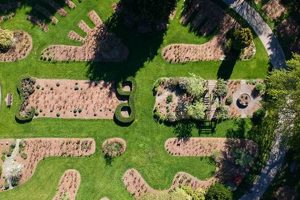
Cultivated paddies located within private or community gardens represent a localized approach to grain production. This method focuses on smaller-scale cultivation, often utilizing organic or sustainable farming practices. An example of this practice involves a homeowner dedicating a portion of their land to growing a short-grain variety for personal consumption.
This localized cultivation offers several advantages, including enhanced food security, reduced transportation costs and environmental impact, and increased control over the production process. Historically, small-scale farming has played a significant role in diverse cultures, contributing to dietary diversity and community resilience. The principles of integrated pest management and water conservation are often central to the success of these gardens.
Further discussion will explore the specific techniques employed in these gardens, the challenges faced by practitioners, and the potential for expanding this approach to enhance local food systems. The varieties best suited for such endeavors, along with considerations for soil health and climate, will also be examined in detail.
Cultivation Strategies
Effective cultivation demands careful planning and execution. These guidelines provide a framework for optimizing yield and ensuring sustainable practices.
Tip 1: Site Selection: Prioritize locations with adequate sunlight exposure, ideally six to eight hours daily. Ensure the site offers sufficient water retention or access to irrigation, as consistent moisture levels are crucial.
Tip 2: Soil Preparation: Conduct a soil analysis to determine nutrient deficiencies. Amend the soil with organic matter, such as composted manure or green manure, to improve fertility and water-holding capacity. Maintaining a slightly acidic pH, between 6.0 and 6.8, is generally recommended.
Tip 3: Variety Selection: Choose varieties adapted to the local climate and growing season. Short-grain varieties are often more resilient in smaller settings. Consult with local agricultural extension services for recommendations on suitable cultivars.
Tip 4: Water Management: Implement an efficient irrigation system, such as drip irrigation or controlled flooding, to minimize water waste. Monitor soil moisture levels regularly and adjust irrigation schedules accordingly. Avoid overwatering, which can lead to root rot and nutrient leaching.
Tip 5: Pest and Disease Control: Employ integrated pest management (IPM) strategies to minimize reliance on chemical pesticides. Encourage beneficial insects through companion planting. Regularly inspect plants for signs of pests or diseases and take prompt action to prevent their spread.
Tip 6: Nutrient Management: Provide essential nutrients through balanced fertilization. Monitor plant growth and adjust fertilizer applications as needed. Avoid excessive nitrogen fertilization, which can promote vegetative growth at the expense of grain production.
Tip 7: Harvesting and Storage: Harvest at the appropriate maturity stage, when grains are firm and have reached their characteristic color. Ensure thorough drying before storage to prevent spoilage. Store the dried grains in airtight containers in a cool, dry place.
By adhering to these guidelines, cultivators can maximize the productivity and sustainability of their efforts. Attention to detail and a commitment to best practices are essential for achieving optimal results.
The following sections will delve deeper into specific aspects of cultivation, including post-harvest processing and potential challenges.
1. Local Adaptation and Garden Rice

Local adaptation is a critical determinant of success in cultivating rice within domestic gardens. The selection of varieties poorly suited to the local climate and growing conditions invariably leads to reduced yields, increased susceptibility to pests and diseases, and ultimately, failure of the crop. Conversely, choosing varieties specifically adapted to the prevailing environmental factors significantly enhances the likelihood of a productive harvest. For instance, a short-season rice variety, bred for cooler climates, will demonstrate superior performance in northern latitudes compared to a long-season tropical variety. The cause and effect relationship is clear: appropriate local adaptation directly influences the viability and productivity of rice within a garden setting.
The importance of local adaptation extends beyond simple survival; it impacts resource utilization efficiency. Varieties well-suited to the environment require less intensive management, including reduced water and fertilizer inputs. Consider the example of a drought-tolerant upland rice variety grown in a region with limited rainfall. Such a variety would require far less irrigation than a traditional paddy rice variety, minimizing water consumption and reducing the labor burden on the gardener. Furthermore, locally adapted plants often exhibit greater resistance to endemic pests and diseases, lessening the need for chemical interventions. This is exemplified by rice varieties with inherent resistance to rice blast, a common fungal disease, in regions where the pathogen is prevalent. The practical significance lies in the ability to cultivate rice sustainably and efficiently, maximizing yield while minimizing environmental impact.
In summary, local adaptation is not merely a desirable trait but a fundamental requirement for successful cultivation of rice in private or community gardens. Understanding the specific environmental conditions of a given location and selecting varieties accordingly is essential for achieving optimal yields and ensuring sustainable practices. While challenges may arise in sourcing suitable varieties, particularly in regions with limited access to diverse seed stocks, the benefits of prioritizing local adaptation far outweigh the initial investment of time and effort. Ignoring this principle undermines the entire enterprise and increases the risk of crop failure.
2. Water management

Effective water management is paramount for successful cultivation of rice in garden settings. Unlike large-scale paddy fields, smaller garden plots require precise control over water resources to optimize growth and minimize waste. This entails careful consideration of irrigation techniques, drainage, and water conservation strategies.
- Irrigation Techniques and Water Use Efficiency
Efficient irrigation methods are essential for minimizing water consumption and maximizing yield. Drip irrigation delivers water directly to the root zone, reducing evaporative losses and preventing the spread of waterborne diseases. Similarly, micro-sprinklers offer targeted watering while minimizing water waste. Flood irrigation, common in traditional rice cultivation, can be adapted for garden plots through careful leveling and contro
lled water release. The choice of irrigation technique must align with the size of the garden, water availability, and the specific water requirements of the rice variety being cultivated. - Drainage and Waterlogging Prevention
Adequate drainage is crucial for preventing waterlogging, which can lead to root rot and nutrient deficiencies. Garden plots must be designed with appropriate drainage channels or subsurface drainage systems to remove excess water after irrigation or rainfall. Soil composition also plays a significant role in drainage; amending heavy clay soils with organic matter can improve water infiltration and prevent waterlogging. Regular monitoring of soil moisture levels is essential for ensuring proper drainage and preventing water stress.
- Water Conservation Strategies and Rainwater Harvesting
Conserving water resources is increasingly important in garden environments, particularly in regions with limited water availability. Rainwater harvesting offers a sustainable means of supplementing irrigation water. Rainwater can be collected from rooftops or other surfaces and stored in tanks or ponds for later use. Mulching the soil surface helps to reduce evaporative losses and retain moisture. Furthermore, selecting drought-tolerant rice varieties can significantly reduce water requirements, making them well-suited for garden cultivation in water-scarce areas.
- Water Quality and Nutrient Management
Maintaining optimal water quality is as important as quantity. Irrigation water should be free from pollutants and excessive salinity, which can negatively impact plant growth. Nutrient management practices must be integrated with water management to prevent nutrient leaching and water contamination. Applying fertilizers judiciously and using slow-release fertilizers can minimize nutrient losses through runoff or leaching. Regular testing of water quality and soil nutrient levels is essential for ensuring optimal growing conditions and preventing environmental damage.
The interplay of these water management facets highlights the need for a holistic approach to cultivate rice in gardens. Employing efficient irrigation, ensuring proper drainage, implementing water conservation strategies, and managing water quality are all crucial components of a sustainable and productive system. These considerations, when carefully addressed, contribute significantly to the viability and yield potential of garden plots.
3. Organic methods

Employing organic cultivation practices for rice in garden environments presents a viable pathway to sustainable food production and reduced environmental impact. The following tenets outline key elements of this methodology in the context of small-scale grain farming.
- Soil Health Management
Maintaining soil fertility through natural means is central to organic rice cultivation. This involves incorporating compost, green manure, and cover crops to improve soil structure, water retention, and nutrient availability. Synthetic fertilizers are prohibited, necessitating reliance on biological processes for nutrient cycling. For instance, planting leguminous cover crops like clover or vetch before rice cultivation can fix atmospheric nitrogen, enriching the soil and reducing the need for external inputs. The health of the soil directly translates to the vigor and yield of the rice crop.
- Natural Pest and Disease Control
Organic rice cultivation emphasizes preventative measures to minimize pest and disease outbreaks. This includes crop rotation, intercropping, and the use of biological control agents. Chemical pesticides are strictly avoided. An example of intercropping involves planting aromatic herbs like basil or mint alongside rice to deter insect pests. Introducing beneficial insects, such as ladybugs or lacewings, can further suppress pest populations. This approach fosters a balanced ecosystem within the garden, reducing reliance on synthetic interventions.
- Water Conservation and Management
Efficient water use is crucial in organic rice cultivation. Methods such as drip irrigation and rainwater harvesting minimize water waste and conserve resources. Soil amendments, like compost, improve water retention, reducing the need for frequent irrigation. Moreover, selecting rice varieties adapted to drier conditions further enhances water use efficiency. Careful water management not only conserves resources but also reduces the risk of waterborne diseases and nutrient runoff.
- Weed Control
Organic weed control relies on non-chemical methods to suppress weed growth. This includes manual weeding, mulching, and the use of cover crops. Mulching with organic materials like straw or wood chips prevents weed seeds from germinating and retains soil moisture. Implementing crop rotation and choosing competitive rice varieties can also help to suppress weed populations. Effective weed management is essential for preventing competition for resources and ensuring optimal rice growth.
Adopting these organic practices in rice cultivation within a domestic environment offers a holistic approach to food production. These methods yield environmental benefits by conserving natural resources, reducing chemical inputs, and promoting biodiversity. The integration of soil health, natural pest control, water conservation, and weed management fosters a resilient and sustainable food system. The result is not only a harvest of grain but also a more ecologically sound and environmentally responsible approach to gardening.
4. Pest control

Effective pest management is critical to the successful cultivation of rice in garden environments. Without adequate control measures, insect infestations, fungal diseases, and other pests can severely reduce yields and compromise the overall health of the crop. A comprehensive understanding of pest control strategies is therefore essential for those engaged in small-scale rice farming.
- Identification of Common Rice Pests
Accurate identification of pests is the first step toward effective management. Common rice pests include rice weevils, stem borers, leafhoppers, and various fungal diseases like rice blast. Correct identification informs the selection of appropriate control methods, preventing misapplication and minimizing potential harm to beneficial organisms. Distinguishing between beneficial and harmful insects is crucial for preserving the ecological balance of the garden.
- Integrated Pest Management (IPM) Strategies
IPM emphasizes a holistic approach to pest control, integrating multiple methods to minimize reliance on chemical pesticides. IPM strategies include crop rotation, intercropping, the use of resistant rice varieties, and the introduction of beneficial insects. Crop rotation disrupts pest life cycles, while intercropping with aromatic herbs can repel certain insects. Resistant rice varieties exhibit inherent defenses against specific pests, reducing the need for interventions. Introducing beneficial insects, such as ladybugs or parasitic wasps, can naturally control pest populations.
- Organic Pest Control Methods
For those seeking to avoid synthetic pesticides, organic pest control methods offer viable alternatives. These methods include the use of neem oil, in
secticidal soap, and diatomaceous earth. Neem oil is a natural insecticide that disrupts insect growth and reproduction. Insecticidal soap effectively controls soft-bodied insects like aphids and whiteflies. Diatomaceous earth is a natural abrasive that damages the exoskeletons of insects, leading to dehydration and death. These organic methods provide effective pest control while minimizing environmental impact. - Monitoring and Early Intervention
Regular monitoring of rice plants is essential for detecting pest infestations early. Early detection allows for timely intervention, preventing pest populations from reaching damaging levels. Monitoring can involve visual inspections, the use of sticky traps, or the deployment of pheromone traps. When pests are detected, prompt action should be taken to implement appropriate control measures, such as manual removal of insects or application of organic pesticides. Early intervention minimizes the need for more drastic measures and preserves the health of the rice crop.
These facets of pest control, when implemented effectively, contribute significantly to the success of rice cultivation in garden settings. A proactive and informed approach to pest management is essential for maximizing yields, minimizing environmental impact, and ensuring the sustainable production of rice in small-scale farming operations.
5. Variety selection

The selection of rice varieties constitutes a foundational element in the successful cultivation of rice within garden environments. This process necessitates a careful assessment of local climate, soil conditions, space limitations, and desired culinary characteristics to ensure optimal growth and productivity.
- Climate Suitability and Maturity Time
Climate compatibility is paramount; selected varieties must align with the local growing season and temperature range. Short-season varieties are often preferable in regions with limited frost-free days, allowing for complete maturation before the onset of cold weather. Conversely, longer-season varieties may be suitable for warmer climates with extended growing periods. An example includes utilizing early-maturing japonica rice in northern latitudes to avoid frost damage. This adaptation significantly influences yield and crop survival.
- Disease Resistance and Pest Tolerance
Varieties exhibiting inherent resistance to common rice diseases and pests minimize the need for chemical interventions, promoting sustainable gardening practices. Selecting rice types with resistance to rice blast, brown spot, or stem borers reduces the risk of crop losses and lowers the environmental impact associated with pesticide use. For instance, choosing a rice variety bred for resistance to prevalent local pests lessens reliance on potentially harmful treatments.
- Growth Habit and Space Requirements
Garden environments often present space constraints that necessitate the selection of compact or dwarf rice varieties. These cultivars exhibit a shorter stature and reduced lateral spread compared to traditional varieties, making them well-suited for confined growing spaces. The implementation of these space saving varieties ensures maximizing yields and reduces the strain of a limited space.
- Grain Quality and Culinary Properties
The intended use of the harvested grains influences the selection process. Different rice varieties possess distinct culinary characteristics, including grain size, texture, aroma, and cooking properties. Some varieties are better suited for specific dishes, such as risotto, sushi, or pilafs. For example, the selection of aromatic jasmine rice might align with preferences for its distinctive fragrance and fluffy texture.
In summary, variety selection is an ongoing approach which affects the sustainability and success within garden rice. Considering the climate, pest resistance, space requirements, and usage of the harvest leads to a maximized yield, which is a vital factor in sustainable cultivation.
Frequently Asked Questions About Garden Rice
The subsequent questions address common inquiries regarding the cultivation and management of rice within a garden setting. These responses are intended to provide clarity and guidance for individuals interested in this practice.
Question 1: Is garden rice cultivation feasible in regions with cold climates?
Cultivation in colder climates is possible, but requires careful selection of short-season varieties and potentially the use of season-extension techniques, such as cold frames or greenhouses. Success hinges on providing sufficient warmth and sunlight during the growing season.
Question 2: What are the primary challenges associated with growing rice in a garden?
Challenges include maintaining adequate water levels, controlling pests and diseases, and ensuring sufficient nutrient availability in a smaller-scale environment. Space limitations may also restrict the scale of production.
Question 3: Does garden rice require specialized equipment or infrastructure?
While large-scale rice farming often involves specialized equipment, garden cultivation can be accomplished with basic gardening tools. The need for irrigation systems depends on the availability of rainfall and the water requirements of the selected variety.
Question 4: What organic pest control methods are effective for managing rice pests in a garden?
Effective organic methods include the use of neem oil, insecticidal soap, diatomaceous earth, and the introduction of beneficial insects. Crop rotation and intercropping can also help to deter pests.
Question 5: How does the nutritional value of garden-grown rice compare to that of commercially produced rice?
The nutritional value can vary depending on soil conditions, variety, and cultivation practices. However, garden-grown rice, particularly when cultivated organically, can offer enhanced nutrient content due to the absence of synthetic fertilizers and pesticides.
Question 6: Is garden rice cultivation a sustainable practice?
Sustainability depends on the specific practices employed. When utilizing water-efficient irrigation, organic methods, and locally adapted varieties, garden cultivation can contribute to a more sustainable food system by reducing transportation costs and promoting biodiversity.
The preceding responses offer a concise overview of key considerations related to rice cultivation in garden settings. Careful planning and informed decision-making are essential for successful implementation.
The following section will explore case studies and examples of successful garden rice initiatives.
Garden Rice
The preceding discussion has explored numerous facets of rice cultivation within domestic gardens, encompassing aspects from variety selection and water management to pest control and organic practices. The feasibility and sustainability of these endeavors hinge on careful planning, diligent execution, and a commitment to resource conservation. The potential for localized food production is undeniable, offering benefits that extend from enhanced food security to reduced environmental impact.
Despite the challenges inherent in small-scale cultivation, the pursuit of sustainable grain production within garden environments represents a significant opportunity. Further research and innovation in adapted varieties and efficient techniques are warrante
d to fully realize the potential of “garden rice” as a contributor to resilient and ecologically sound food systems. The future of this endeavor lies in the continued refinement of these practices and the widespread adoption of sustainable cultivation methods.