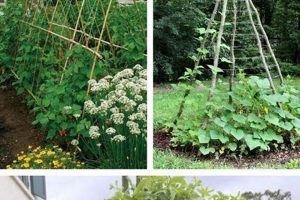
Structures designed to hold and elevate plants within a cultivated setting represent a vital component of horticultural practice. These fixtures, often constructed from materials such as wood, metal, or plastic, provide vertical assistance to climbing or sprawling vegetation. Examples include trellises for vines, stakes for tomatoes, and cages for peppers, each facilitating optimal growth and fruit production.
The employment of such aids offers numerous advantages, including improved air circulation around the plant, reduced risk of soilborne diseases, and enhanced accessibility for harvesting. Historically, these methods have been utilized across various cultures to maximize crop yields and improve the aesthetic appeal of gardens. Furthermore, the strategic placement of such implements can create visual interest and define spatial organization within the landscape.
The subsequent sections will delve into various types of plant elevation methods, discuss material selection considerations, and explore the practical application of these tools in diverse horticultural contexts. Attention will also be given to proper installation techniques and maintenance protocols, ensuring long-term efficacy and visual harmony within the garden environment.
Essential Considerations for Plant Elevation in Horticultural Settings
The following points provide guidance on the selection, installation, and maintenance of structures used to support plants, optimizing growth and enhancing garden aesthetics.
Tip 1: Material Selection: Prioritize durable, weather-resistant materials such as treated wood, powder-coated metal, or UV-stabilized plastic. This ensures longevity and minimizes the need for frequent replacements.
Tip 2: Appropriate Sizing: Choose structures scaled to the mature size of the plant. Overly small supports will become ineffective, while excessively large ones can be visually obtrusive.
Tip 3: Secure Installation: Ensure that all supports are firmly anchored in the ground to prevent tipping or collapsing, particularly in windy conditions. Utilize stakes, ground screws, or concrete footings as necessary.
Tip 4: Proper Plant Attachment: Employ soft, plant-friendly ties such as horticultural tape or cloth strips to secure plants to the support. Avoid using wire or string, which can constrict growth and damage stems.
Tip 5: Regular Inspection: Conduct periodic inspections of supports and attachments to identify signs of wear, damage, or instability. Promptly repair or replace components as needed.
Tip 6: Pruning for Support: Prune plants regularly to maintain a manageable size and shape, distributing weight evenly across the supporting structure. Remove excessive growth that could overload the system.
Tip 7: Consider Plant-Specific Needs: Recognize that different plant species have unique requirements. Select support systems that are specifically designed for the plant’s growth habit, such as tomato cages or bean trellises.
Effective implementation of these considerations leads to enhanced plant health, increased yields, and an aesthetically pleasing garden environment. Neglecting these factors can result in structural failures, plant damage, and diminished horticultural outcomes.
The subsequent section will delve into advanced techniques for integrating these structures into the overall garden design, maximizing both functional benefits and visual appeal.
1. Material Durability

Material durability directly impacts the longevity and effectiveness of devices used to hold and elevate flora in horticultural settings. The inherent properties of construction materials dictate resistance to environmental stressors, including moisture, ultraviolet radiation, temperature fluctuations, and physical impact. When materials degrade, the structural integrity of plant-assisting systems diminishes, leading to potential failure and subsequent damage or loss of the supported plant. For example, untreated wooden stakes exposed to constant moisture are susceptible to rot, weakening their load-bearing capacity and necessitating premature replacement. Conversely, powder-coated steel trellises offer superior resistance to corrosion, ensuring prolonged structural stability and minimizing maintenance requirements.
The selection of materials with appropriate durability characteristics is crucial for cost-effectiveness and sustainable horticultural practices. Initial investment in higher-quality, weather-resistant materials, such as recycled plastic lumber or galvanized steel, often translates to reduced long-term expenses associated with repairs and replacements. This approach also minimizes the environmental impact associated with the production and disposal of less durable alternatives. Furthermore, the lifespan of a plant support system directly influences its functional contribution to the garden ecosystem. A trellis that collapses mid-season due to material failure not only compromises the plant’s growth but also disrupts the overall aesthetic and functionality of the garden.
In summary, material durability is a fundamental consideration in the design and implementation of effective assistance for horticulture. Prioritizing durable materials ensures structural integrity, reduces long-term costs, promotes sustainable practices, and safeguards the health and aesthetic value of the cultivated environment. Understanding the relationship between material properties and environmental stressors is essential for making informed decisions that optimize the performance and lifespan of these critical garden components. The challenge lies in balancing cost considerations with the long-term benefits of selecting durable, high-quality materials appropriate for specific plant support applications.
2. Structural Integrity

The stability and load-bearing capacity of structures designed to support cultivated flora are paramount to horticultural success. Structural integrity, in this context, refers to the ability of an item to withstand applied forces without deformation or failure, ensuring sustained support for the plant throughout its growth cycle. The absence of adequate structural integrity can lead to collapse, plant damage, and compromised yields.
- Material Strength
The inherent strength of the materials used in construction directly dictates the system’s ability to bear weight. For instance, bamboo, while lightweight, may lack the tensile strength required for supporting heavy vines compared to steel rebar. Inadequate material strength leads to bending, cracking, or breaking, resulting in structural failure.
- Joint Stability
Connections between component parts represent critical points of potential failure. Weak joints, whether from inadequate welding, loose fasteners, or decaying adhesives, compromise the overall integrity. A trellis with poor
ly secured joints may buckle under the weight of a mature climbing plant, rendering it ineffective. - Load Distribution
Even distribution of weight across the entire structure is essential. Concentrated loads, resulting from uneven plant growth or improper design, can overstress specific areas, leading to localized failures. For example, supporting a heavy fruit-bearing vine with a single thin stake creates a point of weakness prone to breakage.
- Environmental Resistance
Exposure to environmental factors like wind, rain, and soil conditions can degrade materials over time. Rusting of metal components, wood rot, or UV degradation of plastics weaken the structure, reducing its ability to withstand external forces. Regular maintenance and the use of weather-resistant materials are crucial for mitigating these effects.
The interconnectedness of these facets highlights the importance of a holistic approach to ensuring structural soundness. Selecting appropriate materials, employing robust construction techniques, and implementing regular maintenance practices are all essential for maintaining the functional effectiveness of garden plant supports and ensuring long-term horticultural productivity. Consideration should be given to the specific needs of the plant being supported and the environmental conditions to which the structure will be exposed, to ensure a long-lasting, stable support system.
3. Plant Compatibility

The effectiveness of horticultural assistance is inextricably linked to the compatibility between the structure employed and the plant it is intended to support. This compatibility encompasses considerations of growth habit, weight distribution, stem structure, and environmental needs. A mismatch between the plant and the support system can result in inhibited growth, structural failure, or increased susceptibility to disease. For instance, a sprawling ground cover plant would not benefit from a vertical trellis, whereas a climbing vine lacking a suitable climbing aid will be unable to reach its full potential and may become susceptible to fungal diseases due to poor air circulation. The practical significance of understanding plant compatibility lies in maximizing plant health, optimizing yields, and creating aesthetically pleasing garden designs. Selecting the correct assistance facilitates proper growth patterns, prevents physical damage to the plant, and reduces the need for corrective measures, such as excessive pruning or restaking.
Diverse examples demonstrate the importance of considering plant-specific needs. Tomatoes, with their heavy fruit and tendency to sprawl, thrive with the support of sturdy cages or stakes that prevent fruit from contacting the soil and becoming vulnerable to rot. Peas and beans, possessing tendrils that naturally cling to vertical surfaces, benefit from trellises or netting that provide a framework for climbing and maximizing sunlight exposure. Conversely, plants with delicate stems, such as clematis, require assistance with fine-mesh netting or soft ties to prevent damage from wind or excessive weight. The consequences of neglecting these factors include reduced fruit production, increased disease incidence, and a less visually appealing garden. Careful consideration of the plant’s natural growth patterns and the specific environmental conditions of the garden is crucial for successful implementation of support systems.
In summary, plant compatibility is a critical factor in maximizing the benefits derived from supporting structures. Challenges include accurately assessing the specific requirements of different plant species and selecting appropriate materials and designs that accommodate their individual needs. A deeper understanding of this relationship leads to enhanced plant health, improved yields, and a more sustainable and visually pleasing horticultural environment. Furthermore, recognizing the inherent needs of the plants being cultivated allows for a more harmonious integration of structural elements within the overall garden design.
4. Aesthetic Integration

The incorporation of structures designed to support horticultural specimens necessitates careful consideration of their visual impact on the surrounding environment. Aesthetic integration refers to the harmonious blending of these often functional elements with the overall design and ambiance of the garden. The absence of such integration can result in a visually jarring effect, detracting from the intended aesthetic appeal of the cultivated space. Structures, when poorly chosen or improperly placed, can become focal points for the wrong reasons, disrupting the balance and cohesiveness of the landscape. The presence of rusted metal stakes, poorly constructed wooden trellises, or haphazardly arranged supports can diminish the perceived value and tranquility of a garden.
Practical applications of aesthetic integration involve selecting materials, colors, and designs that complement the existing architectural style and plant palette. For example, a formal garden might benefit from the use of wrought iron supports with clean lines and symmetrical patterns, while a rustic cottage garden could incorporate more natural materials like willow branches or weathered wood. Furthermore, the placement of structures should be strategic, considering sightlines, focal points, and the overall flow of the garden space. A trellis positioned to frame a distant view or a series of supports arranged to create a sense of depth can enhance the visual interest and spatial dynamics of the garden. The use of climbing plants to soften the appearance of supports, obscuring harsh lines and integrating the structures more seamlessly into the landscape, represents another effective approach.
In conclusion, aesthetic integration is not merely an optional consideration but an essential aspect of designing and implementing effective horticultural assistance. Challenges include balancing the functional requirements of plant support with the aesthetic goals of the garden, as well as selecting materials and designs that are both durable and visually appealing. However, the benefits of successfully integrating structures into the landscape are significant, contributing to a more harmonious, visually pleasing, and ultimately more valuable garden environment. The key insight is that functionality and aesthetics should be viewed as complementary rather than competing objectives, leading to innovative solutions that enhance both the practical and visual aspects of horticulture.
5. Installation Stability
The enduring efficacy of any element designed to assist the growth of cultivated flora is fundamentally contingent upon the unwavering solidity of its foundation. This principle, termed installation stability, transcends mere placement, demanding a meticulously planned and executed process to ensure long-term functional integrity.
- Soil Anchorage
The primary mechanism for achieving installation stability resides in the secure anchorage of supports within the soil. Adequate depth and proper soil compaction are critical. Shallow placement or loose soil conditions predispose the support to tilting or up
rooting, particularly under the load of a mature plant or during periods of inclement weather. Deeper insertion and tamping the soil around the base distribute the load more effectively, bolstering resistance to external forces. Examples include using longer stakes for taller plants and amending sandy soils with organic matter to improve compaction. - Structural Bracing
For larger or more complex frameworks, supplementary bracing provides enhanced rigidity and resistance to lateral forces. This often involves the strategic placement of crossbars, diagonal supports, or guy wires. These additions distribute stress across the entire structure, mitigating localized strain and preventing deformation. In the context of sprawling plants such as cucumbers or melons, a braced trellis system can withstand the considerable weight of the mature crop.
- Material Compatibility
The material composition of the support and its interaction with the surrounding soil environment influences long-term stability. Corrosive materials can degrade over time, weakening the foundation and compromising structural integrity. For example, untreated metal stakes exposed to acidic soils are prone to rust, diminishing their holding power and potentially contaminating the soil. Selecting materials resistant to corrosion and degradation, or employing protective coatings, extends the lifespan and reinforces the installation stability.
- Environmental Factors Mitigation
The successful installation must account for the prevailing environmental conditions of the garden location. Regions prone to high winds necessitate deeper anchorage and more robust bracing. Areas with heavy rainfall require well-draining soil to prevent waterlogging, which can destabilize the foundation. Implementing windbreaks, employing raised beds, and amending soil composition are strategies to mitigate the effects of adverse environmental factors on installation stability.
The interconnectedness of these elements dictates that effective installation stability for structures intended to assist the growth of cultivated flora constitutes a holistic process. A failure to address even one of these considerations can undermine the entire system, leading to compromised plant health, reduced yields, and premature structural failure. Thorough pre-installation assessment and meticulous execution are paramount to ensuring long-term functional integrity.
Frequently Asked Questions
The following addresses common inquiries regarding the selection, installation, and maintenance of structures designed to aid the growth of horticultural specimens.
Question 1: What are the primary benefits of utilizing plant supports within a garden setting?
Employing such structures enhances air circulation around plants, minimizes the risk of soilborne diseases, facilitates easier harvesting, and optimizes sunlight exposure for improved growth and yield.
Question 2: What materials are most suitable for constructing durable and weather-resistant plant supports?
Durable options include treated wood, powder-coated metal, UV-stabilized plastic, and naturally rot-resistant materials like cedar or redwood. The choice depends on the plant’s needs and the desired aesthetic.
Question 3: How should the size of a support be determined relative to the plant it will support?
Supports must be sized appropriately to accommodate the plant’s mature dimensions. Overly small supports will become ineffective, while excessively large ones may be visually obtrusive.
Question 4: What are the recommended methods for securely installing plant supports to prevent tipping or collapse?
Employ robust anchoring techniques, such as driving stakes deep into the ground, using ground screws, or encasing the base in concrete, particularly in windy areas.
Question 5: What type of ties should be used to attach plants to supports without causing damage?
Opt for soft, plant-friendly ties like horticultural tape, cloth strips, or specialized plant clips. Avoid using wire or thin string, which can constrict growth and injure stems.
Question 6: How frequently should plant supports be inspected and maintained?
Regular inspections, conducted at least monthly during the growing season, allow for the early detection of wear, damage, or instability. Promptly repair or replace compromised components to maintain structural integrity.
In summary, the judicious selection, installation, and maintenance of assistance for horticulture ensure optimal plant health, increased productivity, and an aesthetically pleasing garden environment.
The next section will examine specific types of assistance suitable for various plant species and growth habits.
Conclusion
The preceding exploration has elucidated the critical role of structures designed to hold and elevate vegetation within cultivated settings. Key aspects discussed included material selection, structural integrity, plant compatibility, aesthetic integration, and installation stability. The implementation of appropriate methods is crucial for optimizing plant health, maximizing yields, and enhancing the overall visual appeal of the garden.
Diligent consideration of these factors ensures the long-term functionality and aesthetic contribution of implements designed to aid in horticulture. Prudent application of these principles will cultivate an environment conducive to thriving vegetation and horticultural success. Further research and continued refinement of techniques in this field are essential for advancing sustainable and efficient gardening practices.