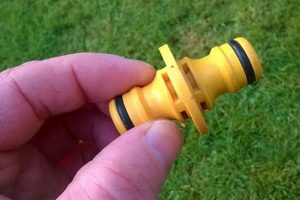
The standardized coupling system employed to connect hoses to various water sources and accessories is a crucial element in irrigation and fluid transfer. This system typically involves a male-threaded component on one end of the hose and a corresponding female-threaded component on the spigot or attachment. For example, a standard outdoor faucet features external threads that mate with the internal threads of a hose end.
Adherence to uniform dimensions and thread patterns facilitates compatibility between products from different manufacturers. This standardization simplifies the process of connecting hoses to sprinklers, nozzles, and other devices, enhancing the efficiency of watering tasks and reducing the likelihood of leaks. The widespread adoption of this standardized approach has significantly streamlined gardening and landscaping practices over time.
Understanding the specific dimensions and materials used in these connections is essential for ensuring proper functionality and longevity. Factors such as thread type, diameter, and the presence of sealing washers all contribute to a secure and leak-free connection. Subsequent sections will delve into the specific types of these couplings, their dimensions, and best practices for maintenance and repair.
Optimizing Garden Hose Connections
Proper management of hose connections is crucial for efficient water delivery and preventing water wastage. The following guidelines provide best practices for ensuring secure and leak-free connections.
Tip 1: Inspect Threads Regularly: Examine both male and female threads for damage, such as cross-threading or worn edges. Damaged threads compromise the seal and can lead to leaks. Replacement of damaged components is recommended.
Tip 2: Use Sealing Washers: Ensure a sealing washer is properly seated inside the female fitting before connecting. Replace worn or cracked washers to maintain a watertight seal. Consider using rubber or silicone washers for enhanced durability.
Tip 3: Apply Thread Seal Tape Sparingly: If minor leaks persist, apply thread seal tape (PTFE tape) clockwise around the male threads. Overuse can prevent proper seating and create additional issues. Two to three wraps of tape are typically sufficient.
Tip 4: Avoid Over-Tightening: Over-tightening can damage the threads and lead to premature failure. Tighten connections until snug, then add a quarter turn. If leaks persist, inspect the threads and sealing washer before applying further tightening.
Tip 5: Protect from Extreme Temperatures: Prolonged exposure to extreme heat or cold can degrade the materials, especially plastic components. Store hoses in a shaded area during hot weather and drain them completely before freezing temperatures to prevent damage.
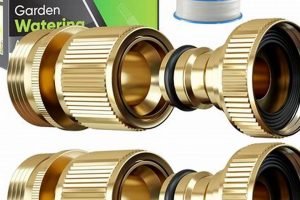
Tip 6: Consider Brass Fittings: For increased durability and resistance to corrosion, consider using brass fittings instead of plastic. Brass fittings are particularly beneficial for connections that are frequently used or exposed to harsh environmental conditions.
Tip 7: Use a Hose Connector Tool: For individuals with limited grip strength, a hose connector tool can provide additional leverage for tightening connections without overexertion. These tools can help prevent strain and ensure a secure connection.
Adhering to these guidelines will promote efficient water usage, extend the life of watering equipment, and prevent unnecessary water loss. Proper maintenance and attention to detail are essential for optimal performance.
The next section will address common issues encountered with hose connections and provide solutions for their repair.
1. Standard Dimensions

Standard dimensions are a foundational component of the garden hose threading system, directly influencing compatibility and interchangeability across various brands and products. The consistent implementation of specific thread diameters and pitches, most commonly the 3/4 inch GHT (Garden Hose Thread), allows users to connect hoses to spigots, sprinklers, and other accessories without the need for custom adapters or specialized fittings. Without these standardized dimensions, the functionality of a garden hose would be severely limited, requiring a complex and potentially unreliable assortment of connectors. For instance, the ability to effortlessly attach a universal sprinkler head to a standard hose is a direct result of adhering to the 3/4 inch GHT standard.
The precise measurement and standardization of these dimensions are also critical for ensuring a watertight seal. Improperly sized or mismatched threads are prone to leaks, leading to water wastage and reduced system efficiency. The standardization extends beyond thread size to encompass the depth and angle of the threads, ensuring a secure and leak-free connection when properly tightened. In practical terms, this means that a user can confidently connect a new hose to an existing faucet, knowing that the standardized threading will create a reliable seal, minimizing the risk of water loss and damage to surrounding areas.
In conclusion, adherence to standard dimensions is not merely a matter of convenience but a fundamental requirement for the effective operation of watering systems. The consistent application of these dimensional standards provides for universal compatibility, efficient water transfer, and minimized leakage. Challenges arise when non-standard or damaged threads are encountered, highlighting the need for regular inspection and replacement of worn components to maintain the integrity of the watering system.
2. Thread Material

Thread material selection exerts a significant influence on the performance, longevity, and overall reliability of garden hose threading connections. The material directly impacts resistance to corrosion, mechanical strength, and the ability to maintain a leak-proof seal under varying environmental conditions.
- Brass Composition
Brass, an alloy of copper and zinc, exhibits excellent resistance to corrosion and possesses inherent durability. Brass threads are commonly found in higher-end garden hose fittings and provide a reliable connection for extended periods. However, brass can be more expensive than alternative materials and, under certain conditions, may be susceptible to dezincification, a form of corrosion where zinc is leached from the alloy.
- Plastic Polymers
Plastic, typically polypropylene or ABS, offers a cost-effective alternative to brass. Plastic threads are lightweight, corrosion-resistant, and suitable for many residential applications. However, plastic threads are generally less durable than brass and can be prone to cracking or stripping under excessive torque or prolonged exposure to ultraviolet radiation. The lower mechanical strength of plastic may limit its use in high-pressure applications.
Aluminum AlloysAluminum alloys provide a balance between weight and strength, offering a lightweight alternative to brass with improved corrosion resistance compared to steel. Aluminum threads are sometimes found in specialized garden hose fittings, particularly where weight is a concern. However, aluminum is susceptible to galvanic corrosion when in contact with dissimilar metals, requiring careful selection of mating components to prevent degradation.
- Stainless Steel
Stainless steel offers superior corrosion resistance and strength, making it suitable for demanding applications and harsh environments. Stainless steel threads are less common in standard garden hose fittings due to their higher cost and increased weight. However, they may be preferred in commercial or industrial settings where durability and longevity are paramount.
The choice of thread material is a critical consideration in garden hose threading, balancing cost, performance, and application requirements. Understanding the properties of each material and its suitability for specific operating conditions is essential for ensuring a reliable and long-lasting watering system. The material directly impacts connection strength, sealing integrity, and resistance to environmental degradation, ultimately affecting the efficiency and effectiveness of the watering process.
3. Thread Count

Thread count, referring to the number of threads per inch (TPI) on a fitting, plays a critical role in the performance and reliability of garden hose threading. It directly influences the sealing capacity, mechanical strength, and compatibility of connections. Deviation from standard thread counts can compromise the integrity of the water system, leading to leaks and potential damage.
- Sealing Efficiency
A higher thread count generally provides a more effective seal. Increased thread density creates a tighter interface between the male and female fittings, minimizing the potential for water to escape through the connection. For instance, fittings with a higher TPI require less torque to achieve a watertight seal compared to fittings with a lower TPI, reducing the risk of over-tightening and damaging the threads.
- Mechanical Strength
Thread count impacts the mechanical strength of the connection. A greater number of threads per inch distributes stress more evenly along the joint, enhancing its resistance to pressure and physical strain. Fittings with a lower TPI may be more susceptible to stripping or shearing under high pressure or repeated use, particularly when constructed from less durable materials like plastic.
- Compatibility Considerations
Proper thread count is essential for ensuring compatibility between different components in a watering system. Mismatched thread counts can prevent fittings from properly engaging, resulting in a loose or unstable connection. While slight variations in thread count may sometimes be accommodated with the use of sealing tape, significant discrepancies will likely lead to leaks or connection failure.
- Material Dependence
The optimal thread count for a garden hose threading connection depends on the material used. For example, brass fittings may utilize a different TPI than plastic fittings to achieve the desired balance of sealing efficiency and mechanical strength. The choice of thread count is often dictated by the material’s inherent properties, such as its tensile strength and resistance to deformation under pressure.
In summary, thread count is a critical parameter in garden hose threading, influencing sealing, strength, and compatibility. Understanding the implications of thread count variations is essential for selecting appropriate fittings and maintaining a leak-free, efficient watering system. Improper thread count can quickly degrade the integrity and longevity of your watering system.
4. Seal Integrity
Seal integrity is paramount in garden hose threading to prevent water leakage and maintain efficient water delivery. The connection relies on a tight, reliable seal formed between the male and female threaded components. Compromised seal integrity results in water loss, reduced water pressure at the output end of the hose, and potential damage to surrounding areas due to uncontrolled water exposure. A common example is a garden hose connection to an outdoor spigot. If the seal is compromised, water escapes at the connection point instead of flowing through the hose to its intended destination, such as a sprinkler or nozzle.
The primary cause of compromised seal integrity is often related to worn or damaged sealing washers, improperly aligned threads, or overtightening of the connection. Sealing washers, typically made of rubber or synthetic materials, compress between the mating surfaces to create a watertight barrier. Over time, these washers can deteriorate, crack, or become deformed, losing their ability to effectively seal the connection. Cross-threading, where the threads are forced together at an angle, damages the threads and prevents a proper seal from forming. Overtightening, conversely, can strip the threads or crush the sealing washer, also leading to leaks. A real-world scenario might involve connecting a hose to a pressure washer; insufficient seal integrity at the connection point reduces the pressure available for cleaning and wastes water.
Maintaining seal integrity in garden hose threading involves regular inspection of sealing washers, proper alignment of threads during connection, and avoiding excessive torque when tightening. Replacing worn washers, ensuring threads are clean and undamaged, and using appropriate tools for tightening connections are critical steps in preventing leaks. Understanding the importance of seal integrity and practicing proper connection techniques maximizes water efficiency and extends the lifespan of watering equipment. A poorly maintained system not only wastes water but can also lead to premature failure of the hose and connected accessories.
5. Connection Strength
Connection strength in garden hose threading is a critical attribute that determines the system’s ability to withstand internal water pressure and external forces without failing. Insufficient connection strength leads to leaks, bursts, and separation of components, resulting in water wastage and potential property damage. This aspect is directly linked to the materials used in the threading, the precision of the thread design, and the proper application of torque during assembly. For instance, a plastic fitting subjected to high water pressure may fail at the threads if the material is not sufficiently robust or if the threads are poorly formed. Similarly, excessive force applied during tightening can strip the threads, weakening the connection and predisposing it to failure under pressure. A common occurrence is the separation of a hose from a sprinkler head during peak water demand, rendering the sprinkler ineffective and causing localized flooding. Therefore, adequate connection strength is essential for the reliable operation of any garden hose system.
The selection of materials with high
tensile strength, such as brass or reinforced polymers, significantly contributes to the overall connection strength. These materials resist deformation and fracture under stress, maintaining the integrity of the threaded joint. Furthermore, precise thread manufacturing ensures a close fit between the male and female components, maximizing the contact area and distributing the load evenly across the threads. Regular inspection of the threads for signs of wear or damage is crucial, as weakened threads compromise the connection’s ability to withstand pressure. The use of appropriate tools and techniques when tightening fittings also minimizes the risk of over-tightening or cross-threading, both of which reduce connection strength. Consider the case of a hose connected to a pressure washer. The intense water pressure necessitates a robust connection to prevent blowouts. Employing a brass fitting with well-defined threads, tightened to the manufacturer’s specifications, enhances the connection’s ability to endure the pressure.
In conclusion, connection strength is a foundational requirement for safe and efficient water transfer in garden hose systems. It is a multifaceted property influenced by material selection, thread design, and assembly practices. Maintaining adequate connection strength prevents leaks, bursts, and component separation, ensuring reliable performance and minimizing water wastage. A proactive approach to inspecting, maintaining, and properly assembling garden hose connections ensures the longevity and effectiveness of the entire watering system, thus reducing operational costs and preventing potential water damage.
6. Compatibility
Compatibility, as it relates to garden hose threading, is the measure of how readily different components of a watering system, such as hoses, spigots, sprinklers, and nozzles, can be connected and function together without leaks or mechanical failures. The existence of standardized thread patterns is the primary enabler of compatibility in this context. Without such standardization, connecting a hose from one manufacturer to a sprinkler from another would be problematic, often requiring specialized adapters or resulting in unreliable connections. The 3/4 inch Garden Hose Thread (GHT) is the most prevalent standard in North America, and its widespread adoption ensures that products adhering to it are generally interchangeable. A practical example is the ability to purchase a new hose from a hardware store and confidently connect it to an existing outdoor faucet without needing to verify thread dimensions or purchase additional fittings.
The practical significance of understanding compatibility lies in the ability to efficiently assemble, maintain, and modify watering systems. When components are compatible, the user can easily adapt the system to changing needs, such as extending the hose length or adding a new sprinkler head. Conversely, a lack of compatibility can lead to frustration, wasted time, and increased costs associated with acquiring specialized adapters or replacing incompatible parts. Furthermore, incompatible connections are more likely to leak, leading to water wastage and potential damage to landscaping or structures. Consider a scenario where a homeowner attempts to connect an older European hose, which uses metric threading, to a standard North American faucet. The resulting mismatch would prevent a secure connection, necessitating the use of an adapter or replacement of one of the components.
In conclusion, compatibility is a cornerstone of effective garden hose threading, underpinned by adherence to standardized thread patterns. This compatibility simplifies system configuration, reduces the likelihood of leaks, and minimizes the need for specialized adapters. Challenges arise when dealing with older equipment or components from regions with different threading standards, but awareness of these issues and the availability of adapters can mitigate the problems. Understanding the importance of thread compatibility in gardening is fundamental to ensuring an efficient and well-maintained watering system.
7. Durability
Durability, within the context of garden hose threading, denotes the ability of the threaded connection to withstand prolonged use, environmental exposure, and mechanical stress without degradation or failure. It is a critical factor determining the lifespan and reliability of watering systems, influencing both efficiency and cost-effectiveness.
- Material Composition and Degradation
The choice of materials, such as brass, plastic, or aluminum, directly affects the durability of garden hose threads. Brass, for instance, exhibits superior resistance to corrosion and physical wear compared to plastic. Prolonged exposure to ultraviolet radiation, temperature fluctuations, and chemical treatments can degrade materials, causing threads to weaken, crack, or deform. An example is the embrittlement of plastic threads exposed to sunlight over several seasons, leading to connection failure under pressure.
- Thread Design and Mechanical Stress
Thread design, including thread pitch and depth, contributes to the ability of the connection to withstand mechanical stress. Threads with a robust design are less prone to stripping or cross-threading under repeated tightening and loosening. A shallow or poorly defined thread can fail under stress, leading to leaks or complete separation of the connection. Consider the repeated attachment and detachment of a hose to a spigot; a well-designed thread will maintain its integrity, while a poorly designed one will wear down more rapidly.
- Environmental Factors and Corrosion
Environmental factors such as moisture, salinity, and acidity influence the rate of corrosion in metallic threads. Corrosion weakens the threads, reducing their ability to create a secure seal and withstand pressure. Brass threads, while generally corrosion-resistant, can still be susceptible to dezincification in certain conditions. Regular cleaning and protection from harsh chemicals can extend the lifespan of threaded connections in corrosive environments. An example is the deterioration of threads in coastal areas with high salt content.
- Usage Frequency and Wear
The frequency of use of garden hose threading contributes significantly to its wear and tear. Connections that are frequently tightened and loosened are more prone to thread damage, such as stripping or cross-threading. Regular inspection and careful handling during use can prolong the life of these connections. For instance, a hose connection that is used daily for irrigation will experience more wear compared to one that is only used occasionally for washing a car.
These factors collectively underscore the importance of selecting durable materials, employing robust thread designs, mitigating environmental exposure, and practicing careful handling to ensure the longevity and reliability of garden hose threading. Proper maintenance and proactive replacement of worn components are crucial for maximizing the operational lifespan and minimizing the costs associated with watering systems.
Frequently Asked Questions
The following section addresses common inquiries regarding the standards, maintenance, and troubleshooting of garden hose threading. The information presented aims to clarify best practices and resolve typical issues encountered with these connections.
Question 1: What
is the standard thread size for garden hoses in North America?
The standard thread size for garden hoses in North America is 3/4 inch Garden Hose Thread (GHT). This standard applies to most residential hoses, spigots, and related accessories.
Question 2: How can cross-threading be prevented when connecting a hose?
Cross-threading can be prevented by carefully aligning the male and female threads before tightening. Ensure the threads engage smoothly and without resistance. Avoid forcing the connection, and consider using a hose connector tool for added grip and control.
Question 3: What is the purpose of a sealing washer in garden hose connections?
The sealing washer, typically made of rubber or silicone, creates a watertight seal between the male and female fittings. It compresses under pressure to fill any imperfections in the threads, preventing leaks.
Question 4: How often should garden hose threads be inspected for damage?
Garden hose threads should be inspected regularly, ideally before each use or at least monthly. Look for signs of wear, corrosion, cracks, or stripped threads. Damaged threads should be repaired or replaced promptly.
Question 5: What is the best way to remove a stuck garden hose connection?
To remove a stuck garden hose connection, try applying penetrating oil to the threads and allowing it to soak for several minutes. Use a wrench or pliers to gently loosen the connection, avoiding excessive force that could damage the threads. A rubber strap wrench can also provide a better grip without damaging the fitting.
Question 6: Can thread seal tape be used on garden hose connections, and if so, how?
Thread seal tape (PTFE tape) can be used on garden hose connections to improve the seal and prevent leaks. Wrap the tape clockwise around the male threads two to three times, overlapping each layer. Ensure the tape is applied smoothly and evenly before connecting the fittings.
The information presented in these FAQs underscores the importance of proper maintenance and handling of garden hose threading to ensure efficient water delivery and prevent unnecessary water wastage.
The subsequent section will provide an overview of the tools and materials recommended for maintaining and repairing garden hose connections.
Conclusion
This exploration of garden hose threading has underscored its crucial role in effective water management. The investigation encompassed dimensional standards, material considerations, thread mechanics, sealing techniques, and overall system compatibility. Each aspect contributes significantly to the reliable transfer of water for irrigation, cleaning, and various other applications. An appreciation of these elements is fundamental for ensuring efficient and leak-free operation.
Proper maintenance and careful component selection are essential for maximizing the lifespan and performance of any water distribution system. A commitment to understanding and adhering to established guidelines for garden hose threading will not only conserve valuable resources but also prevent potential property damage. Continued diligence in this area will facilitate responsible water usage and contribute to a more sustainable approach to landscape management.
![Best 2 Inch Garden Hose For [X] & Reviews | The Ultimate Gardening Guide: Grow a Thriving Garden Year-Round](https://MyGardenPatch.com/wp-content/uploads/2025/07/th-5631-300x200.jpg "Best 2 Inch Garden Hose For [X] & Reviews The Ultimate Gardening Guide: Grow a Thriving Garden Year-Round")