



The standardized connection system employed for securing fittings to garden hoses relies on a specific set of dimensions and thread patterns. This ensures compatibility between various hoses, nozzles, sprinklers, and other watering devices. A common configuration involves a straight thread, adhering to established industry standards for both male and female couplings. These standards specify the outer diameter, thread pitch, and thread angle critical for creating a leak-proof seal. An example is the widely used GHT (Garden Hose Thread), also known as NH (National Hose) in some contexts.
Adherence to a uniform thread standard provides significant advantages. It allows consumers to readily interchange components from different manufacturers without concern for incompatibility. This standardization promotes convenience and reduces the likelihood of leaks, conserving water and preventing damage. The development of these unified specifications represents a significant advancement in gardening and irrigation technology, simplifying system setup and maintenance. Historically, inconsistent fittings often resulted in frustrating leaks and wasted time.
The remainder of this discussion will delve into specific measurements, materials utilized in constructing connectors, methods for identifying various sizes, and techniques for repairing damaged couplings. Attention will also be paid to adapters that enable connection to other types of plumbing systems.
Understanding and Utilizing Garden Hose Threads Effectively
This section offers practical advice for effectively using and maintaining connections, ensuring optimal performance and longevity of watering systems.
Tip 1: Correct Identification is Crucial. Before attempting to connect any components, accurately identify the type present. The GHT (Garden Hose Thread) is the most prevalent, but other sizes and thread types exist, particularly in older systems or commercial applications. Use a thread gauge or caliper for precise measurement.
Tip 2: Ensure Cleanliness of Threads. Foreign particles such as dirt, sand, or debris can impede a secure connection and lead to leaks. Before joining fittings, thoroughly clean both the male and female threads with a brush.
Tip 3: Use Appropriate Sealant for Optimal Sealing. While not always necessary for GHT connections, a Teflon tape or thread sealant can enhance the watertight seal, especially in older or worn fittings. Apply sealant sparingly and evenly, following manufacturer instructions.
Tip 4: Avoid Over-Tightening. Excessive force when tightening can damage the threads, leading to premature wear or cracking. Tighten fittings until snug, but avoid applying excessive pressure. Hand-tightening is often sufficient, especially with a good quality washer or sealant.
Tip 5: Protect Threads During Storage. When hoses and components are not in use, store them properly to prevent damage. Cover exposed ends with caps or plugs to protect the threads from dirt, impact, and exposure to the elements.
Tip 6: Inspect Regularly for Wear and Tear. Regularly examine connectors for signs of damage such as cracks, stripped threads, or deformation. Replace any compromised components promptly to prevent leaks and maintain system integrity.
By adhering to these guidelines, one can minimize the risk of leaks, extend the lifespan of watering equipment, and ensure efficient water usage. Understanding these practical aspects is key to maintaining a reliable and effective watering system.
Next, the article will conclude with a summary of critical factors related to these connection points and their impact on effective irrigation.
1. Standardization

Standardization within the context of connections ensures interoperability and ease of use across diverse equipment. Its impact on functionality and maintenance is significant. This section explores key facets of standardization relevant to this kind of fitting.
- Unified Dimensions
Standardization mandates specific, consistent dimensions for both male and female threads. This eliminates compatibility issues between different brands and models. An example is the adherence to GHT (Garden Hose Thread) or NH (National Hose) specifications, defining parameters such as thread diameter, pitch, and angle. Deviation from these established dimensions results in incompatibility, leading to leaks or a complete inability to connect components.
- Material Specifications
While thread dimensions are paramount, material standards also contribute to overall system reliability. Specifications often outline acceptable materials, such as brass, plastic, or specific alloys, ensuring resistance to corrosion, pressure, and environmental factors. Standardized materials reduce the risk of premature failure and contribute to the longevity of the connection, ultimately minimizing maintenance requirements.
- Manufacturing Tolerances
Standardization encompasses acceptable manufacturing tolerances, defining the allowable deviation from ideal dimensions. Tighter tolerances result in a more precise fit and enhanced sealing performance. These tolerances are critical for ensuring a leak-proof connection, even under varying pressure or temperature conditions. Standardization bodies establish and maintain these tolerance standards, facilitating consistent product quality across manufacturers.
- Testing and Certification
Adherence to standards is often verified through rigorous testing and certification processes. Independent organizations assess products to ensure they meet the specified requirements for dimensions, materials, and performance. Certification marks, such as those from ANSI or other recognized bodies, provide assurance to consumers and professionals that the connector meets established quality and compatibility criteria. This certification process supports the widespread adoption of standardized and reduces the risk of using substandard components.
Collectively, unified dimensions, standardized materials, controlled manufacturing tolerances, and rigorous testing regimes associated with these connectors contribute to a highly reliable and universally compatible connection system. This system simplifies the assembly and maintenance of irrigation and watering systems, reducing the likelihood of leaks and promoting efficient water usage.
2. Compatibility

Compatibility is paramount in systems using hose connections, ensuring seamless integration and functionality. The standardized thread patterns are the foundation for universal connections across diverse watering devices and accessories. Understanding the facets of compatibility guarantees efficient system operation and minimizes potential connection issues.
- Interoperability of Components
The primary advantage of standardized threads is the ability to interchange components from various manufacturers without modification. For instance, nozzles, sprinklers, timers, and quick connectors adhering to the GHT (Garden Hose Thread) standard can be connected to any compliant hose, irrespective of brand. This facilitates system customization and simplifies replacement of damaged or worn parts.
- Adaptability to Different Plumbing Systems
While GHT is prevalent, situations arise requiring connection to other plumbing standards, such as NPT (National Pipe Thread). Adapters designed to bridge these differences are essential. These adapters allow for seamless transition between a standard hose and a household faucet, irrigation valve, or other non-GHT fitting, expanding the system’s connectivity options.
- Material Compatibility Considerations
Although thread standards ensure physical fit, material compatibility also plays a crucial role. Connecting dissimilar metals, such as brass and aluminum, can lead to galvanic corrosion over time, compromising the joint’s integrity. Selecting components with compatible materials and using dielectric unions when necessary mitigates this risk and prolongs the lifespan of the system.
- Sealing Performance and Leak Prevention
Compatibility extends beyond physical fit to include the ability to create a watertight seal. Even with compatible threads, worn or damaged threads, or the absence of a suitable washer, can result in leaks. Proper thread engagement, the use of Teflon tape or thread sealant, and regular inspection of sealing surfaces are critical for maintaining a leak-free connection.
The interoperability, adaptability, material considerations, and sealing performance intrinsically linked to standardized connection designs underscore its importance in facilitating efficient and leak-free watering systems. Recognizing these interconnected factors is crucial for selecting appropriate components and maintaining long-term system reliability.
3. Thread Dimensions

Thread dimensions are fundamental to ensuring compatibility and proper sealing within systems using hose fittings. Precisely defined measurements dictate the physical interface between connecting components. These specifications are not arbitrary but rather are crucial to achieving reliable performance and leak prevention.
- Diameter and its Significance
The outside diameter of the male thread and the inside diameter of the female thread are primary determinants of thread type. For instance, the standard GHT (Garden Hose Thread) has a designated outside diameter of approximately 1.0625 inches. Deviations from this dimension render components incompatible. This precise diameter is engineered to allow sufficient thread engagement for a secure and leak-resistant connection under typical water pressure.
- Thread Pitch and its Function
Thread pitch, measured as threads per inch (TPI), defines the distance between adjacent thread crests. GHT typically employs 11.5 TPI. This pitch dictates the rate at which components engage during tightening and influences the overall strength of the connection. A mismatched thread pitch will either prevent connection or create a weak, easily stripped joint.
- Thread Form and its Impact
The thread form, or profile, refers to the shape of the individual thread. While GHT typically utilizes a straight thread form, other systems employ tapered threads. The thread form affects the sealing mechanism and the distribution of force during tightening. The straight thread of GHT relies on a washer or gasket to create a watertight seal, whereas tapered threads achieve sealing through thread interference.
- Tolerance and Precision
Manufacturing tolerances define the permissible deviation from nominal thread dimensions. Tight tolerances are essential for ensuring consistent performance and minimizing the risk of leaks. Standard specifications include tolerance ranges for diameter, pitch, and thread angle. Adherence to these tolerances guarantees that components from different manufacturers will reliably connect and seal.
In summary, thread dimensions, encompassing diameter, pitch, form, and tolerance, are inextricably linked to the successful application of “garden hose thread type”. Precise adherence to these specifications is paramount for achieving compatibility, ensuring leak-free connections, and maintaining the overall integrity of watering systems.
4. Material Composition

Material composition is a critical determinant of the performance, durability, and longevity of garden hose thread type connections. The materials employed directly influence resistance to corrosion, physical strength, and the ability to maintain a reliable seal under pressure. Selection of appropriate materials is therefore paramount to ensure the proper functioning of watering systems.
- Brass and its Applications
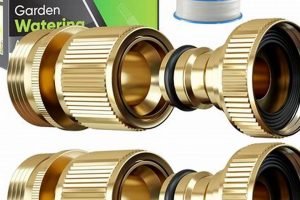
Brass, an alloy of copper and zinc, is a common material in couplings due to its inherent resistance to corrosion and its machinability. Brass fittings are frequently used in applications demanding high durability and resistance to degradation from water exposure. However, brass can be more expensive than alternative materials and may be susceptible to dezincification in certain water conditions, potentially weakening the fitting over time.
- Plastic Polymers and their Characteristics
Plastic polymers, such as polypropylene and ABS, offer a lightweight and cost-effective alternative to brass. These materials exhibit good resistance to chemical degradation and are less prone to corrosion. However, plastic fittings typically possess lower mechanical strength and may be more susceptible to damage from impact or high temperatures. The selection of specific plastic polymers should align with the anticipated operating conditions and the required level of durability.
- Aluminum and its Limitations
Aluminum fittings are less common than brass or plastic due to aluminum’s susceptibility to corrosion in certain environments. While lightweight and relatively strong, aluminum can form galvanic corrosion when in contact with dissimilar metals in the presence of an electrolyte (water). Therefore, aluminum fittings require careful consideration and appropriate isolation techniques to prevent premature failure.
- Stainless Steel and its Premium Attributes
Stainless steel offers superior corrosion resistance and high strength, making it a premium material choice for garden hose thread type connections. Stainless steel fittings are particularly suitable for applications involving harsh chemicals or extreme environmental conditions. The higher cost of stainless steel often limits its use to specialized applications where durability and resistance to degradation are paramount.
The selection of material in garden hose thread type connections is a complex decision involving trade-offs between cost, strength, corrosion resistance, and compatibility. Each material offers distinct advantages and limitations, requiring careful consideration of the operating environment and performance requirements to ensure long-term reliability and optimal system performance.
Improper material selection can lead to premature failure, leaks, and compromised system integrity.
5. Sealing Methods

Effective sealing is a critical aspect of any connection, particularly in systems employing garden hose threads. The inherent design of these threads, typically straight rather than tapered, necessitates specific sealing methods to prevent leaks and maintain system pressure. These methods ensure a watertight joint, vital for efficient water usage and system integrity.
- Gaskets and Washers
The most common sealing method involves the use of a gasket or washer positioned between the mating surfaces of the male and female connectors. These components, typically made of rubber, silicone, or other elastomeric materials, compress upon tightening, creating a seal that fills any imperfections in the thread surfaces. The material selected must be compatible with water and resistant to degradation from UV exposure and temperature variations. Examples include flat rubber washers and specialized O-rings designed to fit within specific thread configurations. Failure to use a suitable gasket or washer is a primary cause of leaks in GHT connections.
- Thread Seal Tape (Teflon Tape)
Thread seal tape, commonly known as Teflon tape, is a polytetrafluoroethylene (PTFE) film wrapped around the male threads before connection. The tape acts as a gap filler, conforming to the thread contours and creating a tighter seal. While not always necessary with new, properly fitting connections, Teflon tape is particularly useful for older or slightly damaged threads, as it helps to compensate for surface irregularities and improve sealing performance. Proper application involves wrapping the tape in the direction of thread engagement to prevent unwinding during tightening.
- Thread Sealant Compounds
Thread sealant compounds, also known as pipe dope, are paste-like substances applied to threads to create a watertight seal. These compounds typically contain a mixture of solids and oils that fill thread gaps and provide lubrication during tightening. Sealant compounds are especially useful for applications involving high pressure or aggressive fluids. When using sealant compounds with garden hose connections, it is important to select a product specifically formulated for potable water applications to avoid contamination. Examples include PTFE-based pastes and anaerobic sealants.
- Proper Torque and Tightening Techniques
Regardless of the sealing method employed, proper tightening is essential to achieve a reliable seal. Over-tightening can damage threads or deform sealing components, while under-tightening may result in leaks. Hand-tightening, followed by a slight additional turn with a wrench, is often sufficient. The appropriate torque depends on the materials and the size of the connection. It is advisable to consult manufacturer recommendations for specific torque values. Regular inspection of connections and re-tightening, if necessary, can help maintain a leak-free system.
In conclusion, effective sealing in systems employing garden hose thread type relies on a combination of appropriate sealing components, proper application techniques, and adherence to recommended tightening procedures. The choice of sealing method depends on factors such as thread condition, operating pressure, and material compatibility. Implementing best practices in sealing ensures optimal system performance, minimizes water waste, and extends the lifespan of watering equipment.
6. Durability
The durability of connections is a critical factor influencing the long-term performance and reliability of systems utilizing “garden hose thread type”. The operational environment, including exposure to UV radiation, varying temperatures, and water pressure, places significant demands on the materials and construction of these connections. This section explores several key facets that contribute to the overall lifespan and robustness of such systems.
- Material Selection and Corrosion Resistance
The choice of materials, such as brass, stainless steel, or engineered polymers, directly impacts the connection’s ability to withstand corrosion, a primary cause of failure. Brass, while generally durable, can be susceptible to dezincification in certain water conditions. Stainless steel offers superior corrosion resistance but at a higher cost. Polymers provide a cost-effective alternative, but their long-term resistance to UV degradation and chemical exposure must be considered. Selecting materials appropriate for the specific environmental conditions is crucial for maximizing durability. For example, in coastal areas with high salt exposure, stainless steel or high-grade polymers would be preferable.
- Thread Design and Mechanical Strength
The thread design itself contributes to the mechanical strength and resistance to stripping or deformation under stress. A well-defined thread profile, proper thread depth, and adequate thread engagement are essential for distributing force evenly and preventing premature failure. Thicker-walled connectors and reinforced thread designs enhance the ability to withstand high pressures and repeated use. Instances of stripped threads are common when low-quality materials or poorly designed threads are subjected to excessive torque or pressure, leading to leaks and requiring replacement.
- UV Resistance and Environmental Degradation
Exposure to ultraviolet (UV) radiation can degrade certain materials, particularly polymers, causing them to become brittle and prone to cracking. UV stabilizers can be incorporated into the material formulation to mitigate this effect, extending the lifespan of the connection. Similarly, resistance to temperature extremes is important. Repeated cycles of freezing and thawing can cause expansion and contraction, leading to stress fractures and leaks. Fittings designed for outdoor use should be tested and rated for UV resistance and temperature cycling to ensure long-term reliability.
- Impact Resistance and Physical Protection
Garden hose connections are often subjected to physical impacts, such as being stepped on or struck by objects. The material’s ability to withstand these impacts without cracking or breaking is a significant factor in durability. Reinforcing ribs, thicker walls, and protective shrouds can enhance impact resistance. Examples include the use of metal sleeves or plastic overmolds to protect the threads from damage. In environments where physical abuse is likely, choosing more robust materials and designs is essential for minimizing the risk of failure.
The interconnected factors of material selection, thread design, UV resistance, and impact resistance collectively determine the long-term durability of “garden hose thread type” connections. Careful consideration of these aspects, based on the specific application and environmental conditions, is crucial for selecting components that will provide reliable and leak-free performance over an extended period.
7. Interchangeability

Interchangeability, a cornerstone of efficient
garden and irrigation systems, is significantly enabled by the standardized thread designs utilized in hose connections. The ability to readily swap components without modification or specialized tools streamlines maintenance, enhances system flexibility, and reduces overall costs. The impact of this feature on user experience and operational efficiency is substantial.
- Universal Component Compatibility
The implementation of standards, such as Garden Hose Thread (GHT), facilitates direct compatibility between various components irrespective of manufacturer. Nozzles, sprinklers, quick connectors, and timers adhering to GHT specifications can be seamlessly integrated with any compliant garden hose. This eliminates the need for specialized adaptors or brand-specific components, promoting flexibility and reducing inventory complexities. For example, a user can replace a damaged nozzle from one brand with a readily available alternative from a different brand, without concern for thread incompatibility.
- Simplified System Maintenance and Repair
Interchangeability significantly simplifies system maintenance and repair operations. Damaged or worn components can be quickly replaced with readily available alternatives, minimizing downtime and reducing labor costs. The standardization of connections allows for rapid swapping of components, even in the field, without requiring specialized expertise or tools. A leaking quick connect, for instance, can be easily replaced with a new unit, ensuring continued system functionality with minimal interruption.
- Enhanced System Customization and Expansion
The ease of interchanging components enables users to readily customize and expand their watering systems according to specific needs. Different nozzles and sprinkler heads can be easily connected to achieve desired watering patterns and coverage areas. Timers and automated control devices can be integrated seamlessly to optimize water usage and scheduling. This adaptability allows for the creation of tailored watering systems that meet the unique requirements of individual gardens and landscapes. As an example, adding a soaker hose attachment for targeted plant watering becomes a simple task due to GHT standardization.
- Reduced Inventory and Cost Savings
The reliance on standardized threads reduces the need to maintain a large inventory of brand-specific components. This simplification translates to cost savings for both consumers and retailers. Consumers can purchase replacement parts from various sources, fostering competition and driving down prices. Retailers benefit from reduced inventory carrying costs and streamlined logistics. The widespread adoption of standardized threads ultimately promotes a more efficient and cost-effective market for garden and irrigation equipment.
In summary, the interchangeability facilitated by standardized connection threads provides significant advantages in terms of component compatibility, system maintenance, customization, and cost savings. The widespread adoption of these standards has fundamentally transformed the design and operation of modern watering systems, promoting efficiency, flexibility, and ease of use.
Frequently Asked Questions About Garden Hose Thread Type
The following addresses common inquiries regarding the characteristics, applications, and maintenance of the standard connection used for hoses.
Question 1: What defines a “garden hose thread type” connection?
A standardized connection relies on defined dimensions, most commonly based on Garden Hose Thread (GHT) or National Hose (NH) specifications. These specifications detail the outer diameter, thread pitch, and thread angle, ensuring compatibility across different manufacturers.
Question 2: Are all connections interchangeable?
While adherence to standards promotes interchangeability, variations exist. Older systems, specialized equipment, or non-standard imports may employ different thread types. Visual inspection and measurement with a thread gauge are recommended to confirm compatibility before connecting.
Question 3: What materials are commonly used in connection construction?
Common materials include brass, plastic polymers (such as polypropylene or ABS), and occasionally, stainless steel. Brass offers durability and corrosion resistance, plastics provide cost-effectiveness and lightweight properties, and stainless steel provides superior corrosion resistance.
Question 4: How should leaks be addressed in connections?
Leaks typically arise from damaged threads, improper sealing, or insufficient tightening. Inspect the threads for damage and replace worn washers. Apply Teflon tape or a suitable thread sealant compound. Ensure proper tightening, avoiding excessive force that can strip the threads.
Question 5: Can I connect to non-standard plumbing fittings?
Adapters are available to transition from the thread standard to other plumbing standards, such as National Pipe Thread (NPT). These adapters facilitate connections to faucets, irrigation valves, and other non-standard fittings. Ensure the adapter material is compatible with both connection types to prevent corrosion.
Question 6: How can connections be maintained for optimal lifespan?
Regularly inspect for damage, clean threads to remove debris, and protect threads during storage with caps or plugs. Avoid over-tightening and use appropriate sealing methods. Periodically replace washers and seals as needed to maintain a watertight connection.
Proper understanding and maintenance of these connections ensures efficient operation, minimizes water waste, and extends the longevity of watering systems.
The following article section details resources for identifying different connection standards.
Conclusion
This examination of garden hose thread type has illuminated critical aspects of this ubiquitous connection standard. The preceding sections have detailed the importance of standardization, the nuances of thread dimensions, the impact of material selection, the methodologies for achieving reliable seals, the factors contributing to durability, and the advantages of interchangeability. A thorough understanding of these elements is essential for both professionals and consumers to ensure efficient operation and longevity of watering systems.
Ultimately, informed application and maintenance of garden hose thread type connections contribute to responsible water management and sustainable gardening practices. Continued adherence to established standards, coupled with careful selection and proper installation of components, remains paramount for maximizing the effectiveness and minimizing the environmental impact of irrigation systems.
![Best 2 Inch Garden Hose For [X] & Reviews | The Ultimate Gardening Guide: Grow a Thriving Garden Year-Round](https://MyGardenPatch.com/wp-content/uploads/2025/07/th-5631-300x200.jpg "Best 2 Inch Garden Hose For [X] & Reviews The Ultimate Gardening Guide: Grow a Thriving Garden Year-Round")