



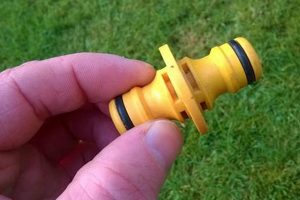
This plumbing fitting connects to a water hose, allowing the attached implement to rotate freely without causing kinks or strain on the hose. It typically features a rotating joint or ball bearing mechanism, facilitating ease of movement. An example of its utility is found when attaching a spray nozzle to wash a car; the fitting enables the user to move around the vehicle without tangling the hose.
The implementation of such a device provides enhanced maneuverability and extends the lifespan of water hoses. The reduction of stress prevents wear and tear, leading to fewer replacements. Historically, solutions to hose kinking were cumbersome, relying on hose guides or careful handling. This fitting represents a significant improvement by automating the solution and requiring minimal user intervention. Its value is evident in gardening, car washing, and other applications that necessitate flexible hose movement.
The subsequent sections will detail the various types available, common materials used in their construction, factors to consider when selecting a suitable fitting, and best practices for installation and maintenance.
Optimizing Usage
The following recommendations aim to maximize the functionality and longevity of this specialized fitting, ensuring efficient and reliable water delivery.
Tip 1: Material Compatibility: Ensure the material composition is compatible with the intended water source and any connected cleaning solutions. Certain chemicals can degrade specific materials over time.
Tip 2: Regularly Inspect the Seals: Prior to each use, examine the O-rings and other sealing components for signs of wear or damage. Replace any compromised seals to prevent leaks and maintain optimal water pressure.
Tip 3: Proper Thread Engagement: When attaching the fitting, ensure proper thread engagement to prevent cross-threading and potential damage. Apply Teflon tape to the threads for a secure, watertight connection.
Tip 4: Avoid Over-Tightening: Excessive tightening can damage the internal mechanisms and compromise the fitting’s swivel function. Tighten only until a secure connection is established.
Tip 5: Winter Storage Considerations: In regions prone to freezing temperatures, disconnect the fitting and drain any residual water to prevent ice formation and potential damage.
Tip 6: Lubrication of Swivel Mechanism: Periodically lubricate the swivel joint with a silicone-based lubricant to maintain smooth rotation and prevent corrosion.
By adhering to these recommendations, users can significantly extend the lifespan of the fitting, reduce the risk of leaks, and ensure consistent performance.
The concluding section will summarize the key features and benefits discussed, providing a comprehensive overview of the fitting’s utility.
1. Durability

Durability, in the context of this specific plumbing fitting, dictates its operational lifespan and resistance to environmental factors. A fittings ability to withstand consistent use, exposure to water and chemicals, and physical stress directly correlates to its long-term effectiveness.
- Material Composition and Corrosion Resistance
The choice of materials, such as brass, stainless steel, or reinforced polymers, fundamentally impacts the fitting’s resistance to corrosion. Brass, while exhibiting good initial resistance, may corrode over extended periods in acidic water conditions. Stainless steel offers superior corrosion resistance, while certain polymers provide resistance to specific chemicals commonly found in garden environments. This corrosion resistance directly affects the integrity of the swivel joint and the sealing surfaces.
- Mechanical Stress and Joint Integrity
The swivel joint is subject to constant mechanical stress from hose movement and water pressure. A robust design and high-quality materials are crucial to prevent premature failure. Components must withstand repeated twisting and turning without developing cracks or weaknesses. Poor joint integrity leads to leaks and diminished functionality.
- Impact Resistance and Environmental Factors
The fitting is often exposed to harsh environmental conditions, including extreme temperatures, sunlight, and physical impacts. Materials with low impact resistance can crack or shatter when subjected to accidental drops or collisions. UV degradation from sunlight can also weaken certain polymers, reducing their lifespan and increasing the risk of leaks.
- Seal Integrity and Material Degradation
The sealing components, typically O-rings or gaskets, are critical for preventing leaks. These components are susceptible to degradation from chemical exposure and temperature fluctuations. Over time, seals can harden, crack, or lose their elasticity, leading to water leakage and reduced performance. Durable materials and proper maintenance can significantly extend the life of these seals.
Ultimately, the durability of this fitting is a multifaceted attribute, dependent on material selection, design considerations, and environmental factors. A fitting engineered for enhanced durability ensures consistent performance, reduces the frequency of replacements, and minimizes the risk of water wastage and potential damage.
2. Compatibility

The concept of compatibility, when applied to this specific plumbing component, refers to its ability to seamlessly integrate with existing systems and components, ensuring optimal functionality and preventing operational issues. A lack of proper compatibility can result in leaks, reduced water pressure, and potential damage to connected equipment.
- Thread Standards and Size Matching
Thread standards (e.g., National Pipe Thread – NPT) and size matching are fundamental aspects of compatibility. The fitting must possess threads that precisely match those of the water hose and any connected implements (e.g., spray nozzles, sprinklers). Mismatched threads can lead to cross-threading, resulting in damaged threads and a compromised seal. Size differences, even within the same thread standard, necessitate adapters or can render the connection impossible. For example, attempting to connect a fitting with ” threads to a hose with ” threads will require a reducer or adaptor to ensure a proper fit and prevent leaks.
- Material Compatibility and Chemical Resistance
Material compatibility involves selecting a fitting constructed from materials that are resistant to degradation from the water source and any chemicals used in conjunction with it (e.g., fertilizers, detergents). Certain materials, such as aluminum, can corrode when exposed to specific chemicals, leading to premature failure. The fitting’s material must be compatible with both the water being conveyed and any external agent
s it may encounter. An unsuitable material choice can result in leaks and contamination of the water supply. - Pressure Rating and System Requirements
The pressure rating of the fitting must meet or exceed the maximum pressure of the water system to which it is connected. Exceeding the fitting’s pressure rating can lead to structural failure, resulting in leaks and potential damage. Compatibility extends to ensuring the fitting can safely handle the pressure fluctuations and surges within the system. Operating the fitting beyond its intended pressure range is a hazardous practice.
- Swivel Mechanism Compatibility and Movement Constraints
The design of the swivel mechanism must be compatible with the intended range of motion required for the application. A swivel with limited range may restrict movement and create unnecessary strain on the hose, defeating the purpose of its inclusion. The swivel joint’s design should allow for smooth and unhindered rotation, accommodating the necessary angles and movements without binding or kinking the hose.
The overarching importance of compatibility lies in ensuring a secure, leak-free, and efficient connection. Addressing these facets of compatibility, from thread standards to material selection, minimizes the risk of operational issues and contributes to the longevity and reliability of the entire watering system.
3. Flow Rate

The flow rate, quantified as the volume of water passing through a point per unit time, is a critical performance parameter significantly influenced by the design and construction of a water hose swivel adapter. The adapter’s internal diameter and the smoothness of its internal surfaces directly impact the water’s velocity and, consequently, the overall flow rate. A constricted internal diameter or rough surface texture increases frictional resistance, impeding water flow and reducing pressure at the output end. Consider, for instance, a gardener using a sprinkler connected via an adapter with a reduced internal diameter; the sprinkler’s spray pattern would be noticeably diminished compared to a direct hose connection, highlighting the adverse effect on flow rate. The selection of an adapter with an appropriately sized and smoothly finished internal pathway is, therefore, paramount to maintaining optimal water delivery.
Further, the design of the swivel mechanism itself can present obstacles to unimpeded flow. Sharp bends or narrow passages within the swivel joint introduce turbulence, disrupting laminar flow and causing a pressure drop. This is especially pertinent in applications requiring high flow rates, such as pressure washing. An adapter with a poorly designed swivel joint may significantly reduce the pressure at the nozzle, rendering it less effective for removing stubborn dirt or grime. Conversely, adapters engineered with streamlined swivel mechanisms minimize turbulence, preserving flow rate and ensuring consistent performance across a range of applications.
In conclusion, the flow rate through a water hose swivel adapter is inextricably linked to its internal design characteristics. A well-designed adapter maximizes flow by minimizing internal obstructions and turbulence, ensuring consistent water pressure and optimal performance of connected devices. Understanding the interplay between adapter design and flow rate is crucial for selecting an adapter that meets the specific demands of the intended application, whether it be simple garden irrigation or high-pressure cleaning.
4. Swivel Range
Swivel range, in the context of a garden hose swivel adapter, denotes the extent to which the fitting can rotate, thus impacting the hose’s maneuverability and resistance to kinking. This parameter is crucial for operational efficiency and hose longevity.
- Degrees of Rotation and User Ergonomics
The degrees of rotation, typically expressed in degrees (e.g., 360), define the fitting’s ability to rotate freely. A wider range allows for more flexible movement, reducing strain on the user and minimizing the effort required to maneuver the hose. Limited rotation necessitates more physical repositioning of the hose, potentially leading to fatigue. For example, a swivel adapter with only 180 of rotation may require the user to frequently adjust their stance and the hose’s position when watering a large garden bed, while a 360 swivel eliminates this need. Ergonomically, a greater swivel range promotes ease of use and reduces the risk of repetitive strain injuries.
- Hose Kinking and Internal Component Design
Adequate swivel range directly mitigates hose kinking, a common cause of reduced water flow and hose damage. Kinks form when the hose is twisted beyond its natural flexibility. A swivel adapter with a broad range of motion allows the hose to rotate freely, preventing the build-up of torsion that leads to kinking. The internal design of the swivel, including the bearing type and the smoothness of the rotating surfaces, influences its ability to prevent kinking. A poorly designed swivel may bind or resist rotation, negating its intended benefit. High-quality bearings and smooth internal surfaces ensure effortless rotation, even under pressure, effectively preventing kinks.
- Material Selection and Environmental Factors
The materials used in the swivel adapter’s construction significantly influence its long-term performance and resistance to environmental factors. Materials prone to corrosion or degradation can impede the swivel’s rotation, reducing its effective range. Exposure to sunlight, chemicals, and extreme temperatures can alter the material properties, leading to increased friction or binding within the swivel mechanism. For example, a swivel adapter made from low-grade plastic may become brittle and crack after prolonged exposure to UV radiation, restricting its rotation. Conversely, adapters constructed from corrosion-resistant metals and UV-stable polymers maintain their swivel range and functionality over extended periods.
- Pressure Drop and Swivel Mechanism Efficiency
The design of the swivel mechanism and the materials used can influence the pressure drop experienced as water flows through the adapter. A poorly designed swivel with tight tolerances or rough internal surfaces may restrict water flow, resulting in a noticeable reduction in water pressure at the output end of the hose. This is particularly relevant in applications requiring high water pressure, such as pressure washing or fire suppression. Swivel adapters engineered for minimal flow restriction maximize water pressure, ensuring optimal performance of connected equipment. Efficient swivel mechanisms prioritize smooth internal contours and generous flow paths to minimize pressure drop and maintain consistent water pressure.
These interwoven facets of swivel range collectively determine the effectiveness of a garden hose swivel adapter in enhancing user experience, preventing hose damage, and maintaining optimal water flow. The choice of adapter should, therefore, consider the specific application and the trade-offs between swivel range, material properties, and pressure drop.
5. Leak Prevention

center>
Leak prevention in the context of a garden hose swivel adapter is paramount to efficient water usage and the avoidance of property damage. The occurrence of leaks directly translates to wasted water, increased utility costs, and potential erosion or water damage to surrounding areas. A compromised seal within the adapter can result from a variety of factors, including improper installation, material degradation, or mechanical stress exceeding the component’s designed tolerance. For example, a poorly tightened adapter or one with worn O-rings will inevitably lead to a slow but persistent leak, gradually saturating the soil around the connection point and potentially damaging nearby structures. The efficacy of leak prevention mechanisms, therefore, is a direct determinant of the adapter’s overall performance and its economic and environmental impact. The material selection and build-quality of the swivel adapter are instrumental to preventing leak formation.
The practical implementation of effective leak prevention strategies necessitates a thorough understanding of the potential failure points within the adapter. Threaded connections, for instance, are prone to leakage if not properly sealed with Teflon tape or pipe sealant. Moreover, the swivel joint itself requires robust sealing mechanisms to prevent water from escaping as the adapter rotates. High-quality O-rings, manufactured from durable materials like EPDM or Viton, provide a critical barrier against leakage. Consider the scenario where a homeowner utilizes a pressure washer connected via a swivel adapter; the high water pressure amplifies the risk of leakage, underscoring the importance of selecting an adapter with a high-pressure rating and robust sealing features. Regular inspection of the adapter for signs of wear or damage is also essential for proactive leak prevention, allowing for timely replacement of worn components before a leak develops. Thread sealant applied correctly and consistently is also necessary.
In summation, the effectiveness of a garden hose swivel adapter hinges significantly on its ability to prevent leaks. Implementing proper installation techniques, selecting adapters constructed from durable materials with reliable sealing mechanisms, and conducting routine inspections are all crucial steps in minimizing the risk of leakage. Addressing leak prevention proactively not only conserves water and reduces utility costs but also contributes to the long-term preservation of property and the environment. A design focused on leak prevention is a marker of quality for these fittings.
Frequently Asked Questions About Garden Hose Swivel Adapters
This section addresses common inquiries regarding garden hose swivel adapters, providing concise and informative answers to enhance understanding and promote informed decision-making.
Question 1: What is the primary function of a garden hose swivel adapter?
The primary function is to permit free rotation of a water hose relative to a connected device, such as a spray nozzle or sprinkler. This mitigates hose kinking and enhances maneuverability during watering or cleaning tasks.
Question 2: What materials are commonly used in the construction of garden hose swivel adapters?
Common materials include brass, aluminum, stainless steel, and various polymers (plastics). Material selection dictates durability, corrosion resistance, and suitability for different environmental conditions and chemical exposures.
Question 3: How does a garden hose swivel adapter prevent leaks?
Leak prevention is typically achieved through the use of O-rings or similar sealing elements within the swivel joint and at the threaded connections. Proper tightening and maintenance of these seals are crucial for leak-free operation.
Question 4: What factors should be considered when selecting a garden hose swivel adapter?
Key factors include material compatibility, pressure rating, flow rate capacity, swivel range (degrees of rotation), and thread standards. The intended application dictates the relative importance of each of these factors.
Question 5: How does a garden hose swivel adapter impact water flow?
The internal design of the adapter can influence water flow. A well-designed adapter minimizes flow restriction, while a poorly designed one may reduce flow rate and water pressure. The internal diameter of the adapter matters.
Question 6: What is the recommended maintenance for a garden hose swivel adapter?
Recommended maintenance includes regular inspection for leaks or damage, cleaning to remove debris, and lubrication of the swivel joint with a silicone-based lubricant. Proper winterization in freezing climates is also advised.
In conclusion, garden hose swivel adapters offer practical benefits, but their effectiveness depends on proper selection, installation, and maintenance.
The next section will present a summary of the key features of garden hose swivel adapters.
Conclusion
This exploration has detailed the multifaceted nature of the garden hose swivel adapter. Its core function of facilitating free hose rotation to mitigate kinking and enhance maneuverability has been examined. Critical design parameters such as material composition, pressure rating, flow rate, and swivel range are vital factors in ensuring optimal performance. The importance of leak prevention mechanisms and adherence to maintenance protocols has also been emphasized. The selection and proper employment of this device significantly influence water conservation and system longevity.
The effective utilization of the garden hose swivel adapter hinges on a comprehensive understanding of its characteristics and limitations. Prudent selection, installation, and maintenance practices are paramount to maximizing its utility and minimizing potential drawbacks. Continued advancements in materials and swivel mechanisms promise enhanced durability and efficiency in future iterations of this essential plumbing component.
![Best 2 Inch Garden Hose For [X] & Reviews | The Ultimate Gardening Guide: Grow a Thriving Garden Year-Round](https://MyGardenPatch.com/wp-content/uploads/2025/07/th-5631-300x200.jpg "Best 2 Inch Garden Hose For [X] & Reviews The Ultimate Gardening Guide: Grow a Thriving Garden Year-Round")