



A device designed to divide the water flow from a single outdoor spigot into multiple streams, typically two or more. These are commonly constructed from brass, aluminum, or durable plastics and feature independent shut-off valves for each outlet, allowing for selective water delivery. A frequent application involves connecting it to an existing water source, then attaching separate hoses for watering different areas of a garden simultaneously.
These implements offer enhanced convenience and efficiency in outdoor watering tasks. By permitting the use of several hoses from one source, they minimize the need for hose switching, saving time and effort. The ability to independently control water flow to each outlet reduces water waste and allows for targeted watering. Early versions likely involved simple T-shaped connectors, but modern designs have evolved to incorporate ergonomic features and improved durability. Their widespread adoption reflects the increasing demand for efficient landscape management solutions.
The following sections will delve into selecting appropriate models, installation procedures, troubleshooting common issues, and exploring alternative watering methods.
Practical Advice for Utilizing a Water Distribution Connector
Optimizing the functionality and longevity of a water distribution connector requires attention to several key considerations. These guidelines provide practical advice for effective and reliable operation.
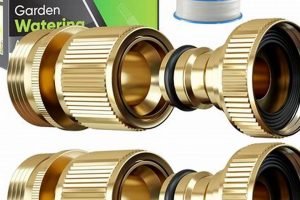
Tip 1: Material Selection. Evaluate the intended application and select a connector constructed from a suitable material. Brass connectors offer superior durability and resistance to corrosion, making them appropriate for frequent use and challenging environmental conditions. Plastic connectors may be suitable for lighter-duty applications and cost-sensitive projects, but their lifespan is generally shorter.
Tip 2: Inspect for Leaks. Prior to each use, carefully inspect all connections for leaks. Even minor leaks can lead to significant water wastage over time. Tighten connections as necessary, and replace worn or damaged washers to ensure a watertight seal.
Tip 3: Regulate Water Pressure. Excessive water pressure can damage the connector and connected hoses. Consider installing a pressure regulator at the water source to maintain a safe and consistent pressure level. This is particularly important in areas with known high water pressure.
Tip 4: Winterization Procedures. In regions subject to freezing temperatures, proper winterization is essential to prevent damage. Disconnect the connector from the water source and drain all remaining water. Store the connector indoors in a frost-free environment.
Tip 5: Avoid Cross-Threading. Exercise caution when attaching hoses to prevent cross-threading. Cross-threading can damage the threads on both the connector and the hose, leading to leaks and rendering the components unusable. Ensure proper alignment before tightening.
Tip 6: Secure the Connector. Secure the connector to the spigot to prevent strain on the threads. If the connector is heavy or multiple hoses are attached, use a bracket or support to stabilize it.
These recommendations, if consistently followed, will contribute to the extended lifespan and efficient operation of the selected water distribution connector, reducing water waste and maintenance requirements.
The concluding section will synthesize the key points discussed and offer a final perspective on effective landscape irrigation practices.
1. Material Composition

The material composition of a distribution device directly influences its durability, resistance to environmental degradation, and overall lifespan. Construction materials typically include brass, aluminum, various plastics, or a combination thereof. Brass, an alloy of copper and zinc, offers inherent resistance to corrosion from water and soil, making it a preferred choice for prolonged outdoor exposure. The increased weight of brass also lends to a perceived robustness. Conversely, aluminum, while lighter and potentially more affordable, is more susceptible to corrosion, particularly in acidic soil conditions. Plastic variants, often constructed from polypropylene or acrylonitrile butadiene styrene (ABS), provide a cost-effective alternative but generally exhibit lower pressure tolerances and a higher susceptibility to UV degradation, leading to premature cracking and failure.
The selection of material composition directly impacts the practical performance of the system. For instance, a homeowner in a region with hard water may find that brass distribution devices outperform plastic alternatives due to their resistance to mineral buildup and subsequent clogging. A landscape professional, managing multiple irrigation zones, may prioritize the lightweight nature of aluminum for ease of handling and installation, accepting the trade-off in potentially reduced longevity. The specific application and environmental context, therefore, heavily influence the optimal material choice.
In summary, the material composition is a crucial determinant of a distribution device’s functionality and lifespan. Selecting the appropriate material, based on environmental conditions, usage frequency, and budgetary constraints, is essential for maximizing efficiency and minimizing the need for frequent replacements. Ignoring this consideration can lead to increased maintenance costs and potentially compromised water delivery, ultimately impacting landscape health and water conservation efforts.
2. Outlet Number

The outlet number is a primary characteristic of a water distribution component, dictating the extent to which a single water source can be simultaneously channeled for multiple applications. It directly influences the operational flexibility and overall utility of such a device.
- Simultaneous Task Capacity
The number of outlets directly determines how many independent watering tasks can be performed concurrently. A two-outlet model enables the simultaneous operation of two hoses, whereas a four-outlet model doubles that capacity. This functionality is particularly relevant in scenarios involving diverse plant types with varying watering requirements, or when irrigating geographically separated areas within a landscape.
- Flow Rate Distribution
The total available water pressure must be divided among the active outlets. A higher outlet number inherently results in a reduced flow rate per outlet, assuming a constant input pressure. This can be a limiting factor for applications requiring high flow, such as filling large containers or operating certain types of sprinkler systems. Understanding the supply pressure and the needs of each connected device is crucial for optimal performance.
- Complexity and Size
The physical size and mechanical complexity of
a distribution device generally increase with the number of outlets. This can impact ease of installation and maneuverability, particularly in confined spaces. Furthermore, a greater number of outlets necessitates a more robust construction to withstand the cumulative stress and potential for leakage. Users must weigh the benefits of increased outlet capacity against the potential challenges associated with larger, more intricate designs. - Potential for Increased Leak Points
Each additional outlet presents a potential point of failure and source of leaks. With more connections, the chances of leaks increase if the fittings are not properly sealed or maintained. Selecting a high-quality splitter with durable materials and secure connections can help mitigate this risk. Regular inspection and timely replacement of worn washers or fittings are essential for maintaining a leak-free system.
In conclusion, outlet number is a fundamental consideration when evaluating distribution devices. While a higher outlet count offers increased versatility, it also introduces potential tradeoffs in terms of flow rate, physical size, and potential for increased leakage. Careful assessment of these factors is essential for selecting a model that aligns with specific watering needs and resource constraints.
3. Pressure Rating

The pressure rating of a water distribution manifold is a critical specification that defines the maximum water pressure the device can safely withstand without experiencing failure. This parameter is paramount for ensuring reliable operation and preventing potential damage to the device, connected hoses, and surrounding property. A pressure rating mismatch can lead to leaks, bursts, and subsequent water damage.
- Material Integrity and Structural Design
The pressure rating is directly correlated with the material composition and structural design of the distribution manifold. Components constructed from higher-strength materials, such as brass or reinforced polymers, generally exhibit higher pressure ratings compared to those made from less robust materials. The wall thickness, connection design, and valve mechanisms are all engineered to withstand specific pressure limits. Exceeding the rated pressure can compromise the structural integrity of the device, leading to catastrophic failure. For example, a thin-walled plastic splitter rated for 60 PSI, when subjected to 80 PSI, may deform or rupture, while a brass model rated for 150 PSI would likely remain intact under the same conditions.
- System Compatibility
Matching the pressure rating of the distribution manifold to the available water pressure from the source is crucial for system compatibility. Municipal water supplies typically operate within a specified pressure range, often between 40 and 80 PSI. However, well systems or pumps can generate significantly higher pressures. Installing a splitter with a pressure rating lower than the supply pressure poses a significant risk of failure. Conversely, selecting a splitter with an excessively high pressure rating may be unnecessary and economically inefficient. Therefore, assessing the source pressure and choosing a splitter with a compatible rating is essential for safe and effective operation. A practical example includes a homeowner with a well system installing a pressure regulator before the splitter to ensure the pressure is within the splitter’s rated capacity.
- Impact on Connected Devices
The pressure rating also affects the performance and longevity of connected hoses and irrigation devices. Exceeding the pressure rating of a hose, for instance, can cause it to burst, leading to water loss and potential damage. Similarly, sprinkler heads or drip emitters may malfunction or suffer reduced lifespan if subjected to pressures outside their specified operating range. A properly rated splitter ensures that the pressure delivered to downstream devices remains within acceptable limits. An illustration is the use of a splitter with a pressure rating high enough to support multiple high-pressure spray nozzles without compromising their function.
- Safety Considerations
Failure to adhere to the pressure rating can have serious safety implications. A burst distribution manifold can release a high-pressure jet of water, potentially causing injury to individuals in the vicinity. Furthermore, uncontrolled water flow can lead to flooding, property damage, and electrical hazards. Therefore, selecting and installing a splitter with an appropriate pressure rating is a critical safety precaution. For example, using a splitter with a burst pressure well above the domestic water main pressure (typically around 50-60 psi) reduces the likelihood of failure and associated hazards.
In summary, the pressure rating is a fundamental attribute of a water distribution manifold that directly impacts its reliability, system compatibility, and safety. Careful consideration of this parameter, in relation to the available water pressure and the requirements of connected devices, is essential for ensuring optimal performance and preventing potential hazards. Neglecting this aspect can lead to costly repairs, water damage, and potential injuries.
4. Connection Integrity

Connection integrity, in the context of water distribution devices, signifies the robustness and reliability of the interfaces between the device and its connected components, namely the water source and the outflow hoses. It is a crucial aspect determining the overall performance and longevity of the system.
- Thread Engagement and Seal Quality
Thread engagement, the degree to which the threads of the splitter and the hose connectors interlock, directly impacts the strength of the connection. Insufficient thread engagement, often resulting from mismatched thread types or damaged threads, weakens the joint and increases the likelihood of leakage. Similarly, the quality of the sealing material, typically rubber or silicone washers, is paramount. Deteriorated or improperly sized washers fail to create a watertight seal, leading to water loss and reduced system efficiency. A common scenario involves cross-threading during hose attachment, which damages the threads and prevents a secure seal. The consequences range from minor drips to significant water wastage and potential damage to surrounding areas.
- Material Compatibility and Corrosion Resistance
The compatibility of the materials used in the splitter and the hose connectors is crucial for maintaining long-term connection integrity. Dissimilar metals, when in contact, can promote galvanic corrosion, weakening the joint and leading to failure. For instance, connecting a brass splitter directly to an aluminum hose connector can accelerate corrosion of the aluminum. Furthermore, exposure to harsh environmental conditions, such as ultraviolet radiation and extreme temperatures, can degrade certain materials, compromising the seal and structural integrity of the connection. Selection of compatible materials and protective measures, such as using dielectric unions, are essential for mitigating corrosion and ensuring reliable performance over time. Regular visual inspection of the connectors can help identify potential corrosion issues before they compromise connection integrity.
- Torque Specification and Mechanic
al StressThe amount of torque applied during hose attachment significantly affects connection integrity. Over-tightening can damage the threads or deform the sealing surfaces, while under-tightening can result in a loose connection prone to leakage. Adhering to recommended torque specifications, when available, is essential for achieving a secure and reliable seal. Additionally, mechanical stress from hose movement or external forces can strain the connection, potentially leading to loosening or failure. Providing adequate support to the hoses and the splitter itself can minimize stress and prolong the lifespan of the connection. Consider situations where a long, heavy hose is connected to a splitter; the weight of the hose can create undue stress on the fitting, leading to leaks over time.
- Prevention of Contamination and Debris
The presence of dirt, debris, or other contaminants within the connection interfaces can compromise the seal and reduce connection integrity. These contaminants can prevent the sealing surfaces from mating properly, creating pathways for water leakage. Regular cleaning of the threads and sealing surfaces before hose attachment is crucial for maintaining a tight seal. Additionally, using hose end caps when the hoses are not in use can prevent debris from entering the system. In arid environments, windblown sand and dust can easily contaminate the threads, necessitating frequent cleaning to ensure a secure and leak-free connection.
Maintaining connection integrity is paramount for maximizing the efficiency and lifespan of a water distribution system. Neglecting these factors can result in water wastage, reduced system performance, and potential damage to property. Proper installation techniques, material selection, and routine maintenance are essential for ensuring a reliable and leak-free connection between the splitter and its connected components.
5. Valve Operation

Valve operation within a water distribution adapter is integral to its functionality, providing independent control over water flow to each outlet. This control is crucial for efficient water management and tailored irrigation practices.
- Flow Regulation and Shut-off
The primary function of valves is to regulate the volume of water flowing through each outlet. Individual valves allow users to adjust the flow rate according to the specific needs of the connected device or plant type. Moreover, valves provide a means to completely shut off water flow to a particular outlet without affecting others. For example, a user might reduce flow to a delicate flower bed while simultaneously providing full pressure to a lawn sprinkler system. This level of control minimizes water wastage and optimizes irrigation efficiency.
- Valve Types and Mechanisms
Distribution adapters typically employ either ball valves or quarter-turn valves. Ball valves use a spherical ball with a hole bored through it to control flow. Quarter-turn valves operate with a 90-degree rotation of a handle, offering rapid shut-off capabilities. The choice of valve type impacts the ease of operation and the precision of flow control. Ball valves generally provide more gradual adjustments, while quarter-turn valves offer quick on/off functionality. The selection should align with the anticipated usage patterns. For example, if frequent on/off switching is required, quarter-turn valves are advantageous; for precise flow adjustments, ball valves are preferable.
- Durability and Leak Prevention
The design and materials used in valve construction directly influence their durability and resistance to leakage. High-quality valves feature robust construction and tight seals to prevent water loss and maintain consistent performance over time. Valves exposed to continuous use and harsh environmental conditions are prone to wear and tear. Regular inspection and maintenance, including lubrication and seal replacement, are essential for prolonging their lifespan and ensuring reliable operation. A poorly constructed valve may exhibit leaks or become difficult to operate, undermining the effectiveness of the entire water distribution system.
- Impact on Water Pressure and Flow Rate
The valve design can impact the overall water pressure and flow rate delivered to connected devices. Restrictive valve designs may introduce pressure drops, reducing the flow available to downstream equipment. It is crucial to select valves with adequate flow capacity to meet the demands of the connected devices. Using smaller diameter valves may cause lower pressure than using larger diameter valves. For instance, using a narrow valve to feed a high-output sprinkler system may result in inadequate pressure for proper sprinkler function. Choosing appropriate valve sizes is key to maintaining optimal pressure and flow rates for all connected applications.
The operational characteristics of the valves profoundly influence the functionality and efficiency of water distribution adapters. Therefore, careful consideration of valve type, construction quality, and operational requirements is essential for maximizing performance and minimizing water wastage in any irrigation setup.
6. Flow Control

Flow control, in relation to a device designed to split a water stream, represents the mechanism by which the volume of water exiting each port can be independently adjusted. The presence of functioning flow control mechanisms is not merely an added feature but a critical component that dictates the device’s versatility and utility. Without it, the device becomes a simple divider, incapable of catering to the diverse watering needs often present in a garden setting. The absence of individual flow regulation leads to an equal distribution of water pressure across all outlets, potentially starving some plants while overwatering others. For instance, a setup requiring a high-pressure stream for cleaning and a gentle trickle for delicate seedlings necessitates individual control valves to achieve the desired outcomes. Such a scenario highlights the direct cause and effect relationship: the presence of flow control enables tailored water delivery, while its absence results in inefficient and potentially damaging water distribution.
Practical application further underscores the importance of flow control. Consider a scenario where a gardener wishes to simultaneously water a vegetable garden, wash a car, and fill a small pond. Each task demands a different water flow rate. The vegetable garden benefits from a slow, consistent soak, the car wash requires a high-pressure spray, and the pond filling needs a moderate stream. Without individual flow control, achieving this multi-faceted approach is impossible. The gardener would be forced to compromise, potentially damaging the vegetables with excessive water pressure or failing to adequately clean the car. Furthermore, the inclusion of flow control mechanisms allows for scheduled irrigation practices. One can pre-set the desired flow rate for each outlet, ensuring consistent watering even when the user is absent. This becomes particularly valuable in drought-prone regions or when managing water-sensitive plants.
In conclusion, flow control transforms the utility of a water distribution device from a rudimentary splitter to a sophisticated water management tool. Its presence empowers users to tailor water delivery to specific needs, optimiz
e water usage, and enhance the overall health of their gardens. The absence of flow control leads to inefficient and potentially damaging water distribution, highlighting the critical role it plays in effective irrigation practices. The practical significance lies in the ability to optimize water consumption, cater to diverse plant needs, and ultimately, cultivate a thriving garden ecosystem.
7. Durability Factors

Durability factors directly dictate the operational lifespan and long-term reliability of a water distribution adapter. The inherent nature of its application, involving constant exposure to environmental elements, fluctuating water pressure, and physical handling, makes the selection of durable materials and robust construction methods paramount. A device constructed from inferior materials or lacking adequate structural reinforcement is prone to premature failure, resulting in water wastage, inconvenience, and potential property damage. The link between robust components and an extended service life is a direct cause-and-effect relationship; investments in higher-quality components translate to decreased maintenance demands and fewer replacements over time.
The practical significance of understanding these factors manifests in several ways. Consider the material composition: brass, for instance, offers superior corrosion resistance compared to plastic alternatives, making it suitable for environments with harsh water or soil conditions. Similarly, the design of the connection points, which are often the weakest links in the system, should incorporate reinforced threading and high-quality sealing washers to prevent leaks and withstand repeated attachment and detachment cycles. Moreover, the valve mechanisms, crucial for regulating water flow, should be constructed from durable materials and designed for smooth, reliable operation to minimize the risk of jamming or failure. Neglecting these durability factors can lead to frequent replacements, increased operational costs, and compromised irrigation efficiency. An example is a homeowner who initially purchases a low-cost plastic splitter that cracks after only one season, necessitating a replacement with a more durable brass model. This illustrates the trade-off between initial cost savings and long-term value.
In summary, durability factors are integral to the overall performance and cost-effectiveness of a water distribution adapter. While initial cost considerations may be tempting, investing in a device constructed from high-quality materials and designed for long-term reliability ultimately results in a superior return on investment. Addressing these aspects during the selection process can mitigate the risks of premature failure, minimize water wastage, and ensure consistent and efficient irrigation practices, linking back to the core goal of effective landscape management. The challenge lies in educating consumers to recognize the long-term benefits of durable components over short-term cost savings, thereby promoting sustainable and responsible water usage.
Frequently Asked Questions
The following section addresses common inquiries concerning the selection, application, and maintenance of water distribution manifolds used in outdoor irrigation systems.
Question 1: What constitutes the typical lifespan of a water distribution device?
The longevity of such a device is contingent upon several factors, including material composition, frequency of use, and environmental conditions. Brass units generally exhibit greater durability than plastic alternatives, potentially lasting for five years or more with proper care. Frequent exposure to extreme temperatures or corrosive substances may shorten the lifespan.
Question 2: Is it feasible to connect multiple units in series to increase the number of outlets?
While theoretically possible, connecting units in series is generally not recommended. Doing so can significantly reduce water pressure at the terminal outlets and may place undue stress on the connections, increasing the risk of leaks and potential failure.
Question 3: What is the recommended procedure for winterizing a water distribution manifold?
Prior to the onset of freezing temperatures, disconnect the manifold from the water source and remove all attached hoses. Open all valves to allow for complete drainage. Store the unit indoors in a frost-free location to prevent damage from ice expansion.
Question 4: How does the number of outlets affect water pressure?
Increasing the number of outlets divides the available water pressure among them. The pressure at each outlet decreases proportionally as the number of open outlets increases, assuming a constant source pressure.
Question 5: What are the implications of using a distribution device with a pressure rating lower than the source pressure?
Exceeding the pressure rating of the device poses a significant risk of structural failure. This can result in leaks, bursts, and potential water damage to the surrounding area. Always ensure that the pressure rating of the device meets or exceeds the maximum pressure of the water source.
Question 6: What maintenance procedures are recommended for ensuring optimal performance?
Regularly inspect connections for leaks and tighten as needed. Clean the threads and sealing surfaces to remove any debris that may compromise the seal. Lubricate valve mechanisms to ensure smooth operation. Replace worn or damaged washers promptly.
Understanding these considerations aids in the proper utilization and prolonged service life of outdoor water distribution components.
The subsequent section will address troubleshooting common operational issues.
Conclusion
This exposition has examined the multifaceted characteristics of the water distribution device, emphasizing material selection, outlet configuration, pressure tolerance, connection dependability, valve control, flow regulation, and overall durability. Each attribute contributes to the device’s functional efficacy and long-term suitability for irrigation and related outdoor tasks. The analysis has demonstrated that selecting an appropriate model necessitates a comprehensive understanding of these elements and their interdependencies.
The information presented should empower users to make informed decisions regarding acquisition and deployment. While seemingly simple, its effective application demands careful consideration of system requirements and environmental factors. Responsible utilization promotes water conservation and enhances landscape management practices. Continued adherence to the principles outlined will ensure prolonged functionality and optimized performance.
![Best 2 Inch Garden Hose For [X] & Reviews | The Ultimate Gardening Guide: Grow a Thriving Garden Year-Round](https://MyGardenPatch.com/wp-content/uploads/2025/07/th-5631-300x200.jpg "Best 2 Inch Garden Hose For [X] & Reviews The Ultimate Gardening Guide: Grow a Thriving Garden Year-Round")