



A device that splits a single water source into multiple outlets. It enables the concurrent use of several hoses or watering tools from one faucet. For example, this facilitates watering different sections of a garden simultaneously or operating a sprinkler system alongside a soaker hose.
Its utility lies in increased efficiency and time savings for gardening and landscaping tasks. Historically, individual connections to multiple faucets were required, creating logistical challenges. The advent of these devices streamlined the watering process, allowing for better water pressure distribution and reduced setup time.
The following sections will detail various types available, factors to consider when selecting one, proper installation techniques, and maintenance tips to ensure optimal performance and longevity. Considerations such as material durability and flow rate will also be discussed.
Optimizing Use
Effective utilization of a device designed to divide water flow requires adherence to specific guidelines to ensure optimal performance and longevity.
Tip 1: Evaluate Flow Requirements. Prior to installation, calculate the combined flow rate requirements of all connected hoses and devices. This assessment helps prevent pressure drops and ensures adequate water delivery to each outlet.
Tip 2: Select Appropriate Material. Consider the material composition based on the intended environment and water quality. Brass offers durability and corrosion resistance, while plastic is lighter and more affordable; however, each is predisposed to specific vulnerabilities based on their construction.
Tip 3: Regulate Water Pressure. Implement a pressure regulator upstream of the splitting device if the source water pressure exceeds the recommended operating range for connected devices. This prevents damage to hoses, sprinklers, and the device itself.
Tip 4: Secure Connections Properly. Ensure all connections are tightened securely to prevent leaks and water wastage. Utilize Teflon tape or pipe sealant on threaded connections to create a watertight seal.
Tip 5: Avoid Overloading. Refrain from connecting an excessive number of hoses or devices that exceeds the designed capacity of the splitting device. Overloading can compromise water pressure and potentially damage the system.
Tip 6: Implement Freeze Protection. In climates prone to freezing temperatures, disconnect and drain the device during the off-season to prevent cracking and damage from ice expansion. Store it in a sheltered location.
Tip 7: Periodically Inspect for Leaks. Regularly inspect all connections and the body of the splitting device for signs of leaks, cracks, or corrosion. Address any issues promptly to prevent water wastage and further damage.
Adhering to these guidelines maximizes the efficiency and lifespan of this type of water distribution system, ensuring reliable water delivery for diverse gardening and landscaping needs.
The concluding section will summarize key considerations and provide guidance on troubleshooting common issues that may arise during operation.
1. Material Composition

The material from which a garden hose manifold is constructed dictates its durability, resistance to environmental factors, and overall lifespan. Careful consideration of material composition is paramount for ensuring reliable performance and minimizing the risk of failure.
- Brass Construction
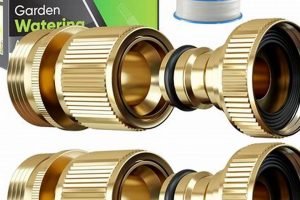
Brass offers exceptional resistance to corrosion, making it suitable for prolonged exposure to water and outdoor conditions. It is also capable of withstanding high water pressures, reducing the likelihood of leaks or bursts. Brass manifolds are often favored for their longevity and robustness in demanding environments.
- Plastic Construction
Plastic, typically polypropylene or ABS, offers a lightweight and cost-effective alternative to brass. While less resistant to high pressure and extreme temperatures, plastic manifolds can be suitable for residential applications with moderate water pressure and climate conditions. The choice of plastic type impacts durability, with some plastics being more UV resistant than others.
- Connection Integrity
The material used for connection points (e.g., threaded fittings, hose barbs) is crucial for preventing leaks. Brass fittings provide a secure and durable connection, while plastic fittings may be more prone to cracking or stripping under stress. The compatibility of fitting material with the manifold body is also important to prevent galvanic corrosion.
- Internal Components
The internal components, such as valve mechanisms or flow dividers, also contribute to the overall performance and longevity. The material used for these components should be resistant to corrosion and wear. The design and material of the internal components influence the flow rate and pressure regulation capabilities of the manifold.
In summary, the choice of material for a garden hose manifold is a critical factor influencing its performance, durability, and suitability for specific applications. Selecting the appropriate material based on environmental conditions, water pressure, and usage frequency is essential for maximizing the lifespan and effectiveness of the device.
2. Outlet Number

The number of outlets on a garden hose manifold directly dictates its operational versatility. This specification determines the quantity of independent water streams available from a single source, influencing its suitability for various watering and irrigation applications.
- Simultaneous Operation
A greater number of outlets permits the simultaneous operation of multiple watering devices, such as sprinklers, soaker hoses, or spray nozzles. This feature is beneficial for large gardens or landscapes requiring concurrent irrigation of different zones. The capacity for simultaneous operation improves efficiency and reduces the time required for watering tasks.
- Flow Distribution
The outlet number impacts the water pressure available at each individual outlet. As the water source is divided across multiple outlets, the flow rate and pressure at each outlet may decrease. Understanding the relationship between outlet number and flow requirements is essential for selecting a manifold that provides adequate water delivery to all connected devices.
- Application Versatility
Manifolds with varying outlet numbers cater to different application needs. A two-outlet manifold may suffice for simple tasks such as connecting a sprinkler and a hose for spot watering. Conversely, a four- or six-outlet manifold is more suitable for complex irrigation systems with multiple zones or devices.
- Sy
stem ExpansionThe outlet number influences the potential for future expansion of the watering system. Selecting a manifold with more outlets than currently needed provides the flexibility to add additional watering devices or zones without requiring replacement of the entire manifold.
The choice of outlet number is a critical consideration when selecting a garden hose manifold. It directly affects the system’s capacity, flow distribution, application versatility, and potential for future expansion, ultimately influencing the efficiency and effectiveness of watering and irrigation tasks.
3. Flow Capacity

The flow capacity of a garden hose manifold is a critical performance parameter that dictates its ability to efficiently deliver water to multiple outlets. This capacity, typically measured in gallons per minute (GPM) or liters per minute (LPM), represents the maximum volume of water that the manifold can accommodate without a significant reduction in pressure at each outlet. A mismatch between the manifold’s flow capacity and the combined flow requirements of connected devices results in inadequate water delivery, potentially damaging equipment or hindering irrigation effectiveness. For instance, connecting several high-flow sprinklers to a manifold with insufficient flow capacity will cause reduced sprinkler range and uneven watering patterns. Conversely, selecting a manifold with excessive flow capacity for a small number of low-flow devices results in unnecessary expense and may not improve system performance.
Proper understanding of flow capacity also enables informed decision-making regarding hose diameter and overall system design. A manifold with a high flow capacity necessitates the use of hoses with adequate diameter to minimize friction losses and ensure efficient water transport from the source to the outlets. Real-world applications, such as large-scale irrigation systems in agricultural settings, require meticulous flow capacity calculations to ensure uniform water distribution across fields. Similarly, in residential gardens, accurate flow capacity assessment prevents common issues such as low water pressure for washing cars or insufficient sprinkler coverage.
In conclusion, flow capacity is an indispensable consideration when selecting and utilizing a garden hose manifold. Careful calculation of flow requirements, matched with the appropriate manifold capacity and hose diameter, optimizes water delivery, prevents equipment damage, and ensures effective irrigation or water distribution. Disregarding this parameter leads to system inefficiencies, wasted water, and compromised performance.
4. Connection Threading

Connection threading, the standardized system of ridges on fittings used to join hoses and the manifold, is a critical element affecting system integrity. Incompatible or damaged threading leads to leaks, reduced water pressure, and potential system failure. The cause of such problems stems from imprecise manufacturing or physical damage, underscoring the importance of selecting manifolds with robust, precisely machined threading. A real-life example involves a homeowner who purchased a manifold with poorly defined threading, leading to repeated leaks despite numerous attempts to tighten the connections. This scenario illustrates the practical significance of understanding connection threading as a fundamental component of a reliable watering system. Threads need to properly mesh with the hose to provide a water tight seal.
The practical application of this understanding extends to preventative maintenance. Regular inspection of connection threading for wear or damage is crucial. Utilizing thread seal tape, such as Teflon tape, during installation creates a watertight seal and minimizes the risk of leaks. When connecting a manifold to existing systems, ensuring compatibility between the manifold’s threading and the existing hose threading is essential to prevent cross-threading, which damages both components and necessitates replacement. Selecting brass connections are more durable and help in preventing cross threading.
In summary, connection threading serves as a foundational element in ensuring the secure and leak-free operation of a garden hose manifold. Challenges associated with incompatible or damaged threading can be mitigated through careful selection, proper installation techniques, and routine inspection, ensuring the long-term effectiveness of the watering system. These details emphasize the importance of matching materials in the hoses connected and the manifolds.
5. Pressure Rating

The pressure rating of a garden hose manifold is a critical specification indicating the maximum water pressure it can safely withstand. Exceeding this rating can result in leaks, bursts, and component failure, posing potential safety hazards and property damage. A common scenario involves homeowners connecting a manifold with a low-pressure rating to a high-pressure municipal water supply. This mismatch often leads to catastrophic failure of the manifold, resulting in water damage and the need for costly repairs. The selection of a manifold with an appropriate pressure rating is, therefore, paramount to ensure operational safety and prevent system malfunctions.
Practical applications of understanding pressure ratings extend to system design and component compatibility. When integrating a manifold into an existing irrigation system, the pressure rating of the manifold should be equal to or greater than the maximum operating pressure of the system. Furthermore, the pressure ratings of all connected hoses, sprinklers, and other watering devices must also be considered to prevent bottlenecks or weak points in the system. Regular inspection of the manifold and connected components for signs of stress or damage is also essential, particularly in systems operating near the pressure rating limit.
In conclusion, the pressure rating is an indispensable consideration when selecting and using a garden hose manifold. Its significance lies in ensuring safe and reliable operation, preventing equipment failure, and protecting property from water damage. Ignoring this specification introduces significant risks and can lead to costly and potentially dangerous consequences.
6. Valve Type
Valve type constitutes a critical functional aspect of a garden hose manifold, directly influencing the control and distribution of water flow to individual outlets. Different valve designs offer varying degrees of precision, durability, and ease of use, impacting the overall efficiency and effectiveness of the watering system. The absence of valves, or the presence of poorly functioning valves, renders the manifold unable to isolate specific outlets, leading to wasted water and reduced pressure at other active connections. For example, a manifold lacking individual shut-off valves necessitates turning off the main water supply to disconnect or adjust any single hose, disrupting water flow to all other connected devices. Therefore, the selection of an appropri
ate valve type is essential for optimized water management.
Practical applications of understanding valve types include the ability to customize water delivery for different plant needs. Ball valves, characterized by their robust construction and simple on/off operation, are suitable for applications requiring high flow rates and minimal flow restriction. Quarter-turn ball valves offer quick and convenient shut-off capabilities. Gate valves, while offering precise flow control, are more prone to wear and corrosion and are generally less suitable for frequent use in outdoor environments. Furthermore, the material composition of the valve components, such as brass or plastic, influences its resistance to corrosion and longevity. The selection should be based on the intended application and the water quality to which the manifold will be exposed.
In summary, valve type significantly impacts the functionality and control of a garden hose manifold. Choosing a valve design and material appropriate for the intended application ensures efficient water management, prevents unnecessary water waste, and extends the lifespan of the overall watering system. Careful consideration of valve characteristics is crucial for achieving optimal performance and realizing the full potential of the device.
7. Mounting Options
Mounting options for a garden hose manifold significantly influence its stability, accessibility, and protection from environmental factors. The chosen mounting method directly affects the manifold’s resistance to stress from hose connections, water pressure, and physical impact. Insufficiently secured manifolds are prone to movement, potentially damaging connections, causing leaks, and reducing the lifespan of the device and connected hoses. For instance, a manifold left unsupported at the end of a faucet may experience undue strain, leading to premature failure of the faucet connection or cracking of the manifold body. Secure mounting distributes the weight and forces, mitigating these risks.
Practical applications of understanding mounting options extend to tailoring the installation to specific environments. Wall-mounted manifolds offer a fixed and secure solution, ideal for permanent installations where space is limited. Faucet-mounted manifolds provide convenience and portability but require careful consideration of faucet stability and potential weight limitations. Ground-mounted options, often involving stakes or anchors, offer stability on uneven surfaces but may be more susceptible to environmental exposure. Selecting the appropriate mounting method based on location, usage frequency, and environmental conditions ensures optimal performance and minimizes maintenance requirements.
In summary, mounting options are integral to the proper functioning and longevity of a garden hose manifold. The selection of an appropriate mounting method, considering stability, accessibility, and environmental factors, prevents damage, reduces maintenance, and ensures efficient water distribution. Disregarding mounting considerations introduces risks of system instability, leaks, and premature equipment failure, undermining the intended benefits of the manifold.
Frequently Asked Questions
The following addresses prevalent inquiries regarding these devices, providing guidance for optimal selection and utilization.
Question 1: What is the optimal material for a garden hose manifold?
The optimal material depends on application and environment. Brass offers superior durability and corrosion resistance, suitable for high-pressure and demanding conditions. Plastic, such as polypropylene, provides a cost-effective, lightweight alternative for lower-pressure residential use. Stainless steel is a premium option with excellent corrosion resistance and durability.
Question 2: How many outlets should a device splitting water have?
The number of outlets depends on the intended use. Consider the number of devices to be operated simultaneously. Ensure that the water supply can adequately support the flow requirements of all connected devices. Overloading will reduce the water pressure.
Question 3: What is the significance of flow capacity in a water flow splitter?
Flow capacity dictates the maximum volume of water the device can handle without significant pressure drop. Matching the device’s flow capacity to the combined flow requirements of connected hoses and devices is essential for optimal performance. Insufficient flow will result in inadequate water delivery.
Question 4: How should leaks be prevented at connection points?
Prevent leaks by ensuring proper thread engagement, using Teflon tape or pipe sealant on threaded connections, and avoiding over-tightening. Inspect connections regularly for signs of wear or damage. Utilizing quality hoses and fittings designed for the intended water pressure is also recommended.
Question 5: What is the function of individual shut-off valves?
Individual shut-off valves enable independent control of water flow to each outlet. This allows for isolating specific hoses or devices without disrupting water supply to others. Valves enable versatility and efficient water management.
Question 6: How does one protect a device splitting water in freezing climates?
In freezing climates, disconnect and drain the device before the onset of freezing temperatures. Store it indoors to prevent cracking or damage due to ice expansion. Insulating the device provides only minimal protection in sub-freezing conditions.
Effective utilization of a garden hose manifold requires careful consideration of material, outlet number, flow capacity, connection integrity, valve function, and climate conditions.
The subsequent discussion will transition to troubleshooting common issues encountered with garden hose manifolds.
Conclusion
This exploration of the garden hose manifold has underscored its role as a vital component in efficient water distribution for diverse applications. The selection criteria, including material composition, flow capacity, connection threading, valve type, and mounting options, directly impact its operational effectiveness and longevity. Proper installation, maintenance, and adherence to pressure ratings are crucial for preventing system failures and ensuring safe operation.
The informed application of knowledge regarding the garden hose manifold facilitates responsible water management and maximizes the utility of irrigation systems. Continued attention to technological advancements and best practices in water conservation will further enhance the value of this device in both residential and commercial settings. Prudent selection and diligent maintenance will ensure reliable performance for the long-term.
![Best 2 Inch Garden Hose For [X] & Reviews | The Ultimate Gardening Guide: Grow a Thriving Garden Year-Round](https://MyGardenPatch.com/wp-content/uploads/2025/07/th-5631-300x200.jpg "Best 2 Inch Garden Hose For [X] & Reviews The Ultimate Gardening Guide: Grow a Thriving Garden Year-Round")