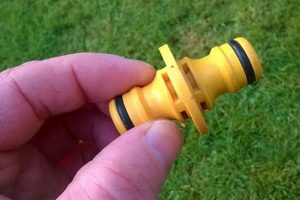
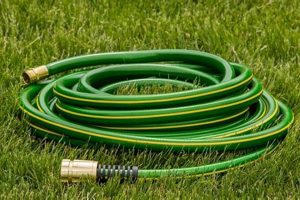
An essential component in any outdoor water system, these connectors facilitate the secure and leak-proof attachment of a flexible conduit to a water source or other implements. For example, these small, often brass or plastic, pieces connect the end of a watering line to a spigot, sprinkler, or nozzle, enabling efficient water delivery for irrigation or cleaning purposes.
These small parts are critical for effective water management in gardens and landscapes. Their proper use prevents water wastage through leaks, ensures consistent water pressure at the point of application, and contributes to the longevity of the connected water-carrying lines. Historically, their evolution has paralleled the development of more efficient and durable watering solutions, moving from simple clamps to threaded connectors designed for higher pressure and repeated use.
The subsequent sections will delve into the various types available, materials used in their construction, installation techniques, maintenance best practices, and factors to consider when selecting the most appropriate option for a given application.
Essential Usage Guidelines
This section provides practical advice to maximize the lifespan and effectiveness of these crucial plumbing components.
Tip 1: Select the Correct Size: Ensure compatibility between the size of the connector and the conduit. Mismatched sizes can lead to leaks or damage.
Tip 2: Use Appropriate Materials: Choose materials suited to the water quality and pressure. Brass fittings are generally more durable than plastic options, particularly for high-pressure applications.
Tip 3: Apply Thread Seal Tape: When installing threaded connectors, use thread seal tape (Teflon tape) to create a watertight seal and prevent leaks. Wrap the tape clockwise around the male threads.
Tip 4: Avoid Overtightening: Overtightening can damage the threads, leading to future leaks. Tighten until snug, then add a quarter turn.
Tip 5: Protect from Freezing: In colder climates, disconnect and drain watering lines before winter to prevent damage from freezing water.
Tip 6: Inspect Regularly: Periodically inspect the condition of the connectors for signs of wear, cracks, or corrosion. Replace damaged parts promptly.
Tip 7: Store Properly: When not in use, store them in a dry place to prevent corrosion or degradation of the material.
By following these recommendations, users can extend the life of their watering systems, minimize water waste, and ensure reliable performance.
The concluding segment will summarize the key aspects discussed and offer final recommendations for optimizing water management practices.
1. Material Durability

The service life and performance of these connectors are intrinsically linked to the inherent properties of the constituent materials. Selection of appropriate materials dictates resistance to environmental factors, physical stresses, and chemical exposure, directly influencing operational longevity and system reliability.
- Brass Composition and Longevity
Brass, an alloy of copper and zinc, exhibits superior resistance to corrosion compared to many alternative materials. Its inherent strength allows it to withstand higher water pressures and repeated connection cycles without degradation. Consequently, brass fittings are often favored for applications where durability is paramount, such as in commercial landscaping or environments with aggressive water chemistry.
- Plastic Polymers and UV Degradation
Polymeric materials, such as polypropylene and nylon, offer cost-effective alternatives to metals. However, prolonged exposure to ultraviolet (UV) radiation can induce polymer chain scission, leading to embrittlement and eventual failure. Stabilizing additives are often incorporated into plastic formulations to mitigate UV degradation, but the effectiveness of these additives varies depending on the specific polymer and environmental conditions. Regular inspection and replacement of plastic fittings may be necessary in high-UV exposure environments.
- Impact of Water Chemistry on Material Degradation
The chemical composition of the water supply can significantly impact the durability of connector materials. Highly acidic or alkaline water can accelerate corrosion of metallic components, while certain dissolved chemicals can promote the degradation of polymeric materials. Prior to selecting a material, an assessment of water quality is advisable to ensure compatibility and prevent premature failure.
- Mechanical Stress and Fatigue Resistance
Repeated connection and disconnection cycles induce mechanical stress on these connectors, particularly on threaded portions. Materials with high fatigue resistance, such as brass, are better suited to withstand these cyclical stresses compared to materials with lower yield strengths. Furthermore, the design of the fitting, including thread depth and wall thickness, can influence its ability to withstand mechanical stress without failure.
The correlation between material durability and the performance of these components is undeniable. Careful consideration of material properties, environmental factors, and operational demands is essential to ensure long-term reliability, minimize maintenance requirements, and optimize the efficiency of irrigation systems. Regular inspection and proactive replacement of worn or damaged connectors contribute to the overall sustainability and cost-effectiveness of water management practices.
2. Thread Compatibility

Thread compatibility constitutes a foundational element for the secure and efficient operation of watering systems. Incompatibility between the threads of a connector and its mating component inevitably leads to leaks, system inefficiencies, and potential equipment damage. Proper adherence to standardized thread specifications is therefore paramount for ensuring reliable connections.
- National Pipe Thread (NPT) Standards
NPT represents a widely adopted standard for tapered threads used on pipes and fittings. Within the context of these connectors, NPT compatibility ensures a tight seal through mechanical deformation of the threads upon tightening. However, mixing NPT with non-NPT threads invariably results in leakage due to mismatched thread angles and pitches.
- Garden Hose Thread (GHT) Specifications
GHT, also known as NH (National Hose), defines the thread dimensions specifically for watering lines and related accessories. Deviation from GHT specifications renders a secure connection unattainable. For instance, attempting to attach a fitting with metric threads to a GHT spigot will result in cross-threading and an incomplete seal.
p> - Thread Pitch and Diameter Considerations
Thread pitch, measured as the distance between threads, and thread diameter, the overall size of the thread, must precisely match for a proper fit. Even slight discrepancies can compromise the integrity of the connection. A fitting with an incorrect pitch will not fully engage with the mating threads, leading to instability and leakage.
- Material Compatibility and Thread Deformation
The material composition of the fitting influences its ability to conform to the mating threads. Softer materials, such as plastic, may be more forgiving of slight thread imperfections, but they are also more prone to deformation under pressure. Harder materials, like brass, require precise thread matching to achieve a reliable seal without damaging the threads.
The intricacies of thread compatibility extend beyond simple visual inspection. Employing thread gauges and adhering to established standards are essential steps in ensuring a leak-free and durable connection. Disregarding these considerations invariably leads to compromised system performance and increased water wastage, underscoring the critical importance of precise thread matching in all watering system installations.
3. Leak Prevention
Leak prevention is a fundamental characteristic of properly functioning watering system connectors. A deficient connection results in uncontrolled water loss, leading to resource depletion, elevated water bills, and potential damage to surrounding landscapes or structures. These connectors, when selected and installed correctly, establish a watertight seal, preventing water from escaping at the junction between the flexible line and a water source or accessory. For example, a faulty connection on a sprinkler system’s distribution network can waste significant amounts of water over time, impacting both the efficiency and sustainability of the irrigation process. The structural integrity and thread design of the fitting are therefore integral to its ability to maintain a leak-proof seal under pressure and varying environmental conditions.
Effective leak prevention relies on several factors, including the material composition, thread compatibility, and installation technique. A durable, corrosion-resistant material, such as brass or appropriately stabilized plastic, ensures the connector’s structural integrity over extended periods. Correct thread matching, whether NPT or GHT, guarantees a secure engagement between the fitting and its mating component. Furthermore, proper installation, often involving the application of thread seal tape and appropriate tightening torque, maximizes the seal’s effectiveness. Consider the case of a homeowner who neglected to apply thread seal tape during installation; the resulting leaks not only wasted water but also eroded the soil around the spigot, necessitating costly repairs. This demonstrates the direct correlation between proper installation and long-term leak prevention.
In conclusion, leak prevention is not merely a desirable attribute but a critical function of these components. The consequences of neglecting this aspect range from financial losses and environmental damage to structural instability. By prioritizing the selection of high-quality connectors, ensuring correct thread compatibility, and adhering to established installation protocols, users can significantly minimize water waste and enhance the overall efficiency and sustainability of their watering systems. Regular inspection and timely replacement of worn or damaged connectors are also essential components of a comprehensive leak prevention strategy.
4. Pressure Resistance
The ability of a watering system connector to withstand internal water pressure is a critical determinant of its performance and longevity. Pressure resistance directly influences the connector’s ability to maintain a secure and leak-free seal under operational conditions. Insufficient pressure resistance leads to failures such as bursting, cracking, or separation from the water conduit, resulting in water loss, system downtime, and potential property damage. For example, a connector rated for 60 PSI (pounds per square inch) used in a system with 80 PSI operating pressure is highly likely to fail prematurely. The material composition, design, and manufacturing process of the connector directly impact its ability to withstand pressure.
The practical implications of pressure resistance extend beyond simply preventing catastrophic failure. Connectors with higher pressure ratings generally exhibit greater durability and a longer service life, even when used in systems with lower operating pressures. This is because they are less susceptible to fatigue and degradation over time. Consider the difference between a plastic connector and a brass connector; the brass connector, typically possessing a higher pressure rating, is less prone to cracking or deformation from repeated pressure cycles and temperature fluctuations. Furthermore, selecting connectors with appropriate pressure ratings is essential for ensuring the efficient operation of downstream devices such as sprinklers or nozzles. Insufficient pressure at these points reduces their effectiveness and can lead to uneven water distribution.
In summary, pressure resistance is an indispensable characteristic of a reliable watering system connector. Proper selection based on the anticipated operating pressure is crucial for preventing failures, maximizing system efficiency, and ensuring long-term durability. Overlooking this aspect can lead to a cascade of problems, from water wastage to equipment damage. Therefore, a thorough understanding of pressure ratings and the factors that influence them is essential for effective water management.
5. Connection Security

Connection security is a paramount attribute of watering system connectors, directly influencing the reliability and efficiency of water delivery. A compromised connection, characterized by slippage or complete detachment, results in uncontrolled water discharge, potential property damage, and system downtime. The structural design, material selection, and installation technique collectively determine the degree of connection security achieved. A connector with inadequate gripping strength or incompatible threading is prone to failure, especially under pressure or mechanical stress. Consider a scenario where a quick-connect fitting disengages due to insufficient locking mechanisms; the immediate release of water can flood a garden bed, damage delicate plants, and erode the surrounding soil.
The integration of robust locking mechanisms, such as threaded collars or positive-locking clamps, significantly enhances connection security. These mechanisms provide a physical barrier against accidental disconnections, especially in systems subject to vibrations or external forces. For instance, threaded connectors, when properly tightened and sealed, create a friction-based bond that resists separation under pressure. Conversely, push-to-connect fittings, while convenient, may be more susceptible to disengagement if not properly secured or if subjected to excessive force. Regular inspection and maintenance of connectors are crucial for identifying
and addressing potential vulnerabilities before they lead to system failures. A cracked or corroded connector, regardless of its initial design, poses a significant risk to connection security.
In conclusion, connection security is not merely a desirable feature but an essential prerequisite for the dependable operation of watering systems. Compromised connections lead to inefficiencies, damage, and resource wastage. By prioritizing the selection of connectors with robust locking mechanisms, ensuring proper installation, and implementing regular maintenance protocols, users can significantly mitigate the risks associated with connection failures and ensure the long-term reliability of their watering infrastructure.
6. Corrosion protection

Corrosion protection is a critical attribute dictating the longevity and reliability of watering system connectors. Degradation from corrosive agents weakens the structural integrity, leading to leaks, failures, and ultimately, system inefficiencies. Selecting connectors with adequate corrosion resistance is therefore essential for minimizing maintenance, reducing water waste, and ensuring prolonged operational lifespan.
- Galvanic Corrosion Mitigation
Galvanic corrosion occurs when dissimilar metals are in electrical contact in the presence of an electrolyte (e.g., water). This electrochemical process accelerates the corrosion of the more anodic metal. To mitigate this, using connectors made of a single metal or employing dielectric unions to electrically isolate dissimilar metals is crucial. A brass connector directly coupled to a steel pipe, without dielectric insulation, will exhibit accelerated corrosion of the steel.
- Material Selection for Chemical Resistance
Watering systems often encounter varying water chemistries, including acidic or alkaline conditions, as well as exposure to fertilizers and pesticides. Selecting connector materials that are inherently resistant to these chemicals is vital. For example, polypropylene fittings offer excellent resistance to many agricultural chemicals, while brass fittings may corrode under prolonged exposure to highly acidic water.
- Protective Coatings and Surface Treatments
Applying protective coatings or surface treatments provides a barrier against corrosive agents. Chrome plating on brass fittings, for instance, enhances their resistance to oxidation and staining. Similarly, powder coating on metal connectors creates a durable, non-reactive layer that shields the underlying metal from corrosive attack. The effectiveness of these coatings depends on their integrity and adherence to the substrate.
- Environmental Considerations and UV Resistance
Connectors exposed to outdoor environments are subject to UV radiation, which can degrade certain materials, particularly plastics, making them more susceptible to cracking and subsequent corrosion. Selecting UV-resistant materials or applying protective coatings can extend the lifespan of these connectors. Black polyethylene fittings, for example, typically incorporate UV stabilizers to minimize degradation from sunlight exposure.
The interplay between these facets underscores the importance of a holistic approach to corrosion protection in the context of watering system connectors. While material selection is paramount, design considerations, installation practices, and environmental factors all contribute to the overall resistance to corrosion. A comprehensive strategy that addresses these aspects ensures long-term reliability and minimizes the lifecycle costs associated with watering system maintenance.
Frequently Asked Questions
This section addresses common inquiries regarding the selection, installation, and maintenance of watering system connectors, providing essential insights for optimal system performance.
Question 1: What constitutes the most appropriate material for a garden hose fitting intended for high-pressure applications?
Brass is generally recommended for high-pressure environments due to its inherent strength and resistance to deformation under stress. While plastic variants offer cost-effectiveness, they are less durable and prone to failure when subjected to elevated pressures.
Question 2: How can thread compatibility be definitively verified prior to installation?
Thread compatibility is best confirmed through the use of thread gauges that precisely measure thread pitch and diameter. Visual inspection alone is insufficient, as minor discrepancies can lead to leaks and compromised connections. Adherence to established standards, such as NPT or GHT, is also critical.
Question 3: What is the recommended procedure for applying thread seal tape to ensure a watertight connection?
Thread seal tape should be wrapped clockwise around the male threads, overlapping each layer and applying moderate tension. Multiple wraps are recommended to ensure complete coverage and create a reliable seal. Overtightening the connection can damage the threads and compromise the seal’s effectiveness.
Question 4: What are the primary indicators of corrosion in watering system connectors?
Visible signs of corrosion include rust, discoloration, pitting, and the accumulation of a powdery residue on the connector’s surface. These indicators suggest material degradation and a potential reduction in structural integrity, necessitating prompt replacement.
Question 5: Is it necessary to drain watering systems in cold climates to prevent damage to connectors?
Draining watering systems prior to freezing temperatures is strongly advised to prevent water expansion from damaging the connectors and associated piping. Ice formation exerts significant pressure on enclosed components, leading to cracks and leaks upon thawing.
Question 6: What is the recommended frequency for inspecting watering system connectors?
A visual inspection of watering system connectors should be conducted at least twice annually, ideally at the beginning and end of the watering season. More frequent inspections may be necessary in environments with harsh conditions or known water quality issues.
In essence, informed selection, meticulous installation, and proactive maintenance are paramount for ensuring the reliable performance and longevity of these components.
The concluding section will provide a concise summary of the key insights discussed in this article, reinforcing best practices for optimizing watering system performance.
Conclusion
The preceding exploration has emphasized the criticality of each aspectmaterial durability, thread compatibility, leak prevention, pressure resistance, connection security, and corrosion protectionin ensuring the effective functioning of watering systems. Selection criteria must extend beyond mere convenience, accounting for environmental factors, operational demands, and potential degradation mechanisms.
A comprehensive understanding of these factors facilitates informed decision-making, contributing to efficient water management, reduced operational costs, and the long-term sustainability of irrigation practices. Neglecting these considerations invariably leads to compromised system performance and avoidable resource wastage; therefore, diligent adherence to best practices is paramount.
![Best 2 Inch Garden Hose For [X] & Reviews | The Ultimate Gardening Guide: Grow a Thriving Garden Year-Round](https://MyGardenPatch.com/wp-content/uploads/2025/07/th-5631-300x200.jpg "Best 2 Inch Garden Hose For [X] & Reviews The Ultimate Gardening Guide: Grow a Thriving Garden Year-Round")