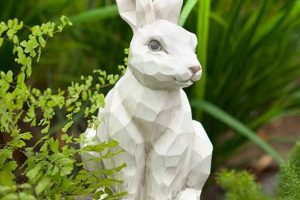
These ornamental figures, often crafted from stone or resin, depict grotesque or fantastical creatures and are placed within outdoor spaces. A common example is a winged, horned figure perched on a pedestal, overlooking a flower bed.
Their presence can serve multiple purposes. Historically, such figures were believed to ward off evil spirits and protect homes. Today, they primarily function as decorative elements, adding character and a touch of gothic aesthetic to landscapes. The incorporation of these sculptures can enhance visual interest and create focal points in garden design.
The following sections will delve into the various materials used in their creation, their stylistic evolution throughout history, and practical considerations for their placement and maintenance in outdoor environments.
Essential Placement and Maintenance Considerations
Integrating these sculptural pieces into a garden requires careful consideration of their placement and upkeep to maximize their aesthetic impact and ensure longevity.
Tip 1: Assess Structural Integrity: Prior to installation, thoroughly inspect the item for cracks or weaknesses, particularly if it is vintage or made of porous material. Address any structural issues to prevent further deterioration.
Tip 2: Secure Placement on Stable Surfaces: Choose a level and stable base to prevent tipping, especially in high-wind areas. A concrete paver or buried foundation may be necessary for larger or heavier figures.
Tip 3: Consider Material Compatibility with Environment: Stone and resin react differently to weather. Stone may weather naturally, while resin may require UV protection. Select materials appropriate for the local climate.
Tip 4: Regular Cleaning to Prevent Moss and Algae Growth: Bi-annual cleaning with a soft brush and mild detergent removes organic growth that can stain and damage the surface over time.
Tip 5: Winter Protection in Freeze-Thaw Climates: In regions with freezing temperatures, consider covering the figure or moving it indoors to prevent cracking due to water expansion within the material.
Tip 6: Thoughtful Integration with Garden Design: Position the piece to complement existing garden features and create a visual focal point, considering sight lines and the overall aesthetic.
Tip 7: Strategic Lighting for Enhanced Visibility: Subtly illuminate the statue with landscape lighting to highlight its details and create an atmospheric effect, especially during evening hours.
Adhering to these recommendations will not only preserve the aesthetic appeal of the garden sculpture but also extend its lifespan, ensuring it remains a cherished feature for years to come.
The concluding section will summarize the key aspects of integrating these figures into the garden landscape.
1. Material Composition

The material from which a garden gargoyle statue is crafted fundamentally dictates its durability, aesthetic qualities, and suitability for specific environmental conditions. Stone, resin, and metal represent the primary materials employed, each imparting distinct characteristics to the final product. The choice of material is not merely an aesthetic consideration but directly impacts the statues resistance to weathering, its weight, and its long-term maintenance requirements. For instance, a limestone statue, while offering a classic appearance, is susceptible to acid rain erosion, whereas a resin counterpart, though lighter and potentially more affordable, may degrade under prolonged exposure to ultraviolet radiation. The material, therefore, functions as a primary determinant of longevity and overall value.
Consider the practical implications of material choice in different garden settings. In a temperate climate with frequent rainfall, a bronze statue would likely develop a desirable patina over time, enhancing its visual appeal. Conversely, the same statue placed in a coastal environment would be prone to accelerated corrosion due to salt exposure, necessitating more frequent maintenance. Similarly, a concrete statue, chosen for its affordability and ease of molding, may exhibit cracking after repeated freeze-thaw cycles in colder regions. These examples underscore the necessity of carefully evaluating the local climate and environmental factors before selecting a statue crafted from a specific material.
In summary, material composition serves as a cornerstone in determining the functional and aesthetic attributes of a garden gargoyle statue. Understanding the inherent properties of stone, resin, and metal, and their respective reactions to environmental stressors, allows for informed decisions that ensure the lasting beauty and structural integrity of the chosen ornament. Failure to account for material-specific vulnerabilities can lead to premature degradation and ultimately negate the intended aesthetic impact, highlighting the critical importance of this consideration.
2. Stylistic Variation

The stylistic variation observed in garden gargoyle statues directly reflects prevailing artistic movements, architectural trends, and cultural interpretations across different historical periods. This variation extends beyond mere aesthetics, providing valuable insight into the socio-cultural context in which each piece was conceived.
- Gothic Revival
Characterized by intricate detailing, pointed arches, and a generally imposing presence, Gothic Revival styles aim to emulate the architectural features of medieval cathedrals. Statues produced during this period often exhibit exaggerated features, such as prominent wings, sharp claws, and menacing expressions, adhering to the original function of gargoyles as apotropaic figures believed to ward off evil spirits. Examples include statues with highly ornamented surfaces and exaggerated anatomical features.
- Neoclassical Influence
In contrast to the Gothic Revival, Neoclassical styles favor more restrained and idealized forms. Statues influenced by this movement often depict gargoyles with smoother lines, less pronounced features, and a greater emphasis on anatomical accuracy, albeit within the confines of a grotesque figure. The influence of ancient Greek and Roman sculpture is evident in the simplified forms and balanced proportions. One can see an example in a winged figure with subtly defined musculature and a calm expression.
- Art Nouveau Interpretation
The Art Nouveau period brought a more organic and flowing aesthetic to gargoyle design. Statues from this era often incorporate stylized depictions of natural elements, such as vines, leaves, and flowing water, seamlessly integrating the figure with its surrounding environment. The emphasis shifts from imposing power to graceful ornamentation. Instances of this can be found in sculptures with sinuous lines and floral motifs intertwining with the gargoyle form.
- Contemporary Abstraction
Modern interpretations of gargoyle statues frequently depart from traditional representational forms, embracing abstract shapes and unconventional materials. These pieces may prioritize texture, color, and form over realistic depictions, challenging conventional notions of what a gargoyle can be. The focus is on artistic expression and individual interpretation. For example, sculptures with fragmented forms or made from recycled materials are prevalent.
The stylistic evolution of garden gargoyle statues demonstrates a dynamic interplay between artistic expression, cultural values, and technological advancements in sculpture. The careful selection of a statue style can significantly influence the overall aesthetic of a garden, reflecting the personal taste and historical sensibilities of the homeowner. The contrasting examples highlight the importance of understanding stylistic variations when integrating such features into landscape design.
3. Placement Aesthetics

Placement aesthetics, in the context of garden gargoyle statues, encompass the art and science of strategically positioning these decorative elements within an outdoor space to maximize visual impact and achieve a desired atmosphere. The careful consideration of factors such as sightlines, scale, surrounding flora, and overall garden design is paramount in ensuring that the statue complements rather than detracts from the environment.
- Sightline Integration
Effective placement utilizes established sightlines within the garden. Positioning a statue at the end of a path or in a direct line of view from a window creates a focal point that draws the eye and adds depth to the landscape. A gargoyle placed atop a stone wall, visible from the main entrance, can serve as a welcoming, albeit unconventional, guardian. Conversely, obscuring a statue behind dense foliage can diminish its impact and render it an afterthought.
- Scale and Proportion
The size of the statue must be proportional to the surrounding elements. A diminutive gargoyle placed in an expansive garden may appear insignificant, while an oversized statue in a small courtyard can overwhelm the space. Balancing the dimensions of the statue with the scale of the garden features ensures visual harmony. For instance, a large, imposing gargoyle is better suited for a sprawling lawn, while a smaller, more delicate figure may be more appropriate for a secluded rock garden.
- Contextual Harmony
Statue placement should consider the overall aesthetic of the garden. A modern, abstract gargoyle statue may be incongruous in a traditional English garden filled with roses and manicured lawns. Conversely, a gothic-style gargoyle would be more fitting in a garden featuring stone pathways, wrought-iron furniture, and dark, leafy foliage. Coordinating the statue’s style with the existing garden design creates a cohesive and visually appealing environment.
- Focal Point Creation
A strategically placed statue can serve as a focal point, drawing attention to a specific area of the garden. Positioning a gargoyle near a water feature, such as a pond or fountain, can enhance the sense of tranquility and create a visually interesting composition. Similarly, placing a statue at the entrance to a hidden garden nook can create a sense of mystery and intrigue, inviting exploration.
Ultimately, the successful integration of a garden gargoyle statue hinges on a keen understanding of placement aesthetics. By considering sightlines, scale, contextual harmony, and the creation of focal points, one can transform a simple garden ornament into a powerful design element that enhances the beauty and atmosphere of the outdoor space. Disregarding these considerations can result in a statue that appears misplaced or out of sync with its surroundings, diminishing its intended aesthetic impact.
4. Weather Resistance
Weather resistance is a critical attribute dictating the longevity and aesthetic appeal of a garden gargoyle statue. The extent to which a statue can withstand environmental stressors such as precipitation, temperature fluctuations, ultraviolet radiation, and chemical pollutants directly impacts its structural integrity and surface appearance. Material selection is the primary determinant of weather resistance. For example, statues crafted from high-fired ceramic or certain types of treated stone exhibit superior resistance to cracking and erosion compared to those made from porous materials like untreated concrete or low-density resin. The geographical location of the garden and its prevailing climate conditions must, therefore, inform the choice of material to ensure long-term durability.
The effects of weathering can manifest in various forms. Freeze-thaw cycles, common in temperate climates, can cause water trapped within the statue’s pores to expand and contract, leading to cracking and spalling. Prolonged exposure to ultraviolet radiation can degrade the polymer matrix in resin statues, resulting in discoloration, embrittlement, and eventual structural failure. Acid rain, prevalent in industrialized areas, can corrode susceptible materials like limestone and marble, causing a gradual loss of detail and surface texture. Proper surface treatments, such as sealants and protective coatings, can mitigate these effects, but their efficacy depends on the specific material and the severity of the environmental conditions. Regular maintenance, including cleaning and reapplication of protective coatings, is essential to maximize the weather resistance of the statue.
In conclusion, the weather resistance of a garden gargoyle statue is a function of material selection, environmental conditions, and maintenance practices. Understanding the potential effects of weathering on different materials is crucial for selecting a statue that will endure the test of time. Neglecting this aspect can lead to premature degradation and the loss of a valuable garden ornament. Prioritizing weather resistance ensures that the statue retains its aesthetic appeal and structural integrity for years to come, providing lasting enjoyment and enhancing the overall beauty of the garden landscape.
5. Symbolic Interpretation

The symbolic interpretation associated with a garden gargoyle statue extends beyond mere aesthetic appreciation, delving into a complex interplay of historical beliefs, cultural associations, and personal meanings. This interpretation imbues the statue with a significance that transcends its physical form, transforming it into a symbol with layered implications.
- Apotropaic Function
Historically, gargoyles served a protective, or apotropaic, function, intended to ward off evil spirits and malevolent influences. Their grotesque visages were believed to frighten away demons and safeguard the spaces they adorned. In the context of a garden, a gargoyle statue positioned near an entrance or boundary line can be interpreted as a symbolic guardian, offering a sense of security and protection to the home and its occupants. For example, a winged gargoyle placed near a doorway might be viewed as a sentinel, vigilantly protecting the threshold from negative energies.
- Grotesque Beauty and the Subversion of Norms
The inherent ugliness and distortion characteristic of gargoyles challenge conventional notions of beauty, prompting viewers to confront the darker, more unsettling aspects of human nature. This deliberate subversion of aesthetic norms can be interpreted as a statement against superficiality and a celebration of the unconventional. Placing a gargoyle statue amidst meticulously manicured flora can create a striking juxtaposition, highlighting the tension between the artificial order of the garden and the untamed forces of nature. For instance, a gargoyle with exaggerated features might be deliberately positioned near a bed of roses, creating a deliberate contrast between beauty and the grotesque.
- Memento Mori and the Acceptance of Mortality
The often decaying or monstrous appearance of gargoyles can serve as a memento mori, reminding viewers of their own mortality and the inevitability of death and decay. While seemingly morbid, this symbolic interpretation can foster a greater appreciation for life and a more profound understanding of the cyclical nature of existence. A weathered gargoyle statue, covered in moss and lichen, can be viewed as a poignant reminder of the passage of time and the transient nature of all things. The gradual erosion of its features can symbolize the ongoing process of decay and regeneration.
- Whimsical Eccentricity and Personal Expression
Beyond their historical and philosophical associations, garden gargoyle statues can also serve as expressions of personal eccentricity and whimsicality. Their unique and often unconventional appearance can add a touch of personality to a garden, reflecting the homeowner’s individual taste and sense of humor. A brightly painted gargoyle statue, adorned with playful accessories, can transform a mundane garden into a vibrant and engaging space. For example, a gargoyle wearing a miniature hat or holding a tiny garden tool can inject a sense of lightheartedness and charm into the landscape.
In essence, the symbolic interpretation of a garden gargoyle statue is multifaceted and highly subjective. While its historical roots lie in apotropaic beliefs and the grotesque aesthetics of the medieval era, its contemporary significance is shaped by individual perceptions and cultural contexts. Whether viewed as a guardian, a symbol of mortality, or a whimsical expression of personal style, the gargoyle statue offers a rich tapestry of symbolic meaning that enriches the garden landscape.
Frequently Asked Questions
This section addresses common inquiries regarding the selection, placement, and maintenance of garden gargoyle statues, offering concise and authoritative answers.
Question 1: What materials are most suitable for a garden gargoyle statue intended for long-term outdoor exposure?
Durable materials such as cast stone, high-fired ceramic, and bronze exhibit superior resistance to weathering and are generally recommended. Resin statues, while lighter and more affordable, may require UV protectant coatings to prevent degradation.
Question 2: How does the size of a garden gargoyle statue impact its overall aesthetic within a landscape?
Scale is crucial. A statue should be proportional to its surroundings. An excessively large statue can overwhelm a small garden, while a diminutive statue may be lost in a sprawling landscape.
Question 3: Is it necessary to protect a garden gargoyle statue during the winter months?
In regions with freezing temperatures, protection is advised, particularly for statues made of porous materials. Covering the statue or moving it indoors can prevent cracking caused by water expansion during freeze-thaw cycles.
Question 4: What is the recommended method for cleaning a garden gargoyle statue?
Regular cleaning with a soft brush and mild detergent is recommended. Avoid harsh chemicals or abrasive cleaners, which can damage the statue’s surface. Bi-annual cleaning is typically sufficient.
Question 5: How does the placement of a garden gargoyle statue influence its visual impact?
Strategic placement is essential. Position the statue along a sightline or near a focal point to maximize its visual impact. Consider the surrounding foliage and architectural elements to create a harmonious composition.
Question 6: Does the style of a garden gargoyle statue need to match the overall aesthetic of the garden?
While not strictly necessary, stylistic consistency enhances the overall coherence of the landscape. A gothic-style gargoyle is typically more appropriate for a traditional garden, while a contemporary statue may complement a more modern design.
Understanding these frequently asked questions provides a solid foundation for selecting, placing, and maintaining garden gargoyle statues, ensuring their lasting beauty and contribution to the landscape.
The subsequent section will summarize the key considerations discussed in this comprehensive exploration of garden gargoyle statues.
Conclusion
The preceding exploration of garden gargoyle statues has illuminated their multifaceted nature, encompassing material composition, stylistic variation, placement aesthetics, weather resistance, and symbolic interpretation. These factors collectively influence the selection, integration, and long-term preservation of these ornamental features within outdoor spaces. A comprehensive understanding of these elements is paramount for maximizing their aesthetic impact and ensuring their enduring presence in the garden landscape.
The informed application of these principles will enhance the visual appeal of gardens and contribute to the preservation of these unique artistic expressions for future appreciation. Thoughtful consideration of these aspects will ensure these garden features remain a lasting and impactful element within any landscape design.