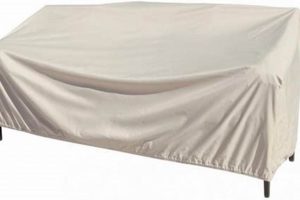
A substance applied to outdoor furnishings, protects against environmental elements. This protective layer shields materials like wood, metal, and plastic from moisture, UV radiation, and temperature fluctuations, extending the lifespan of the furniture. For example, a teak bench treated with this safeguard exhibits increased resistance to weathering and decay.
Its use is paramount in preserving the aesthetic appeal and structural integrity of outdoor pieces. Without such preventative care, furnishings are susceptible to damage, leading to costly repairs or replacements. Historically, natural oils and waxes served as rudimentary forms of safeguarding, but modern formulations offer superior and longer-lasting defense.
The selection and proper application of this protective measure depend on various factors, including the material of the furniture, the climate, and the desired finish. Subsequent sections will delve into the types available, application techniques, and maintenance best practices to ensure optimal performance and longevity.
Application Guidance
Optimal results from using a protective finish on outdoor furnishings are achieved through careful preparation and meticulous application. These guidelines ensure long-lasting protection and aesthetic preservation.
Tip 1: Material Assessment: Before application, identify the furniture’s composition. Wood, metal, and plastic require distinct formulations for effective adherence and protection. Employing the incorrect product may yield unsatisfactory results or damage the surface.
Tip 2: Surface Preparation: Thoroughly clean the item. Remove dirt, debris, and existing finishes using appropriate cleaning agents and tools. A clean, dry surface ensures proper bonding and prevents contaminant entrapment.
Tip 3: Environmental Conditions: Apply the finish in a well-ventilated area with moderate temperatures and low humidity. Extreme conditions can affect drying times and the final finish quality.
Tip 4: Application Technique: Apply thin, even coats using a brush, roller, or sprayer, following the manufacturer’s instructions. Avoid pooling or drips, as these can lead to uneven drying and aesthetic imperfections.
Tip 5: Multiple Coats: Two or three coats are generally recommended for optimal protection, allowing each coat to dry completely before applying the next. This layering approach provides enhanced durability and resistance to environmental factors.
Tip 6: Edge and Joint Attention: Pay close attention to edges and joints, as these areas are often the most vulnerable to moisture penetration and wear. Ensure thorough coverage in these critical zones.
Tip 7: Post-Application Curing: Allow the treated furniture to cure fully before exposing it to the elements. Refer to the product’s instructions for recommended curing times. Adequate curing ensures the finish reaches its maximum protective capabilities.
Adhering to these tips significantly enhances the longevity and appearance of treated outdoor furnishings. Proper execution safeguards against weathering, extending the life and maintaining the value of the items.
The subsequent sections will provide details on evaluating product types to find one that aligns with specific needs and requirements.
1. Material Compatibility

Material compatibility represents a critical factor in the successful application of protective treatments to outdoor furnishings. Selecting a substance that is chemically and physically suited to the furniture’s composition directly impacts the longevity and effectiveness of the protective barrier. Mismatched products can lead to aesthetic flaws, structural damage, and ultimately, premature degradation of the item.
- Wood Porosity and Sealant Penetration
Different wood types possess varying degrees of porosity, influencing how deeply a preservative can penetrate. Softwoods like pine require sealants that offer substantial impregnation to counter moisture absorption and prevent rot. Conversely, dense hardwoods such as teak necessitate surface treatments to avoid over-saturation, which can lead to cracking or discoloration.
- Metal Reactivity and Corrosion Inhibition
Metals are susceptible to corrosion, particularly in outdoor environments. Compatibility involves selecting treatments that not only create a physical barrier but also contain corrosion inhibitors. For example, aluminum necessitates sealants with specific additives to prevent oxidation, while iron requires coatings that passivate the surface to minimize rust formation.
- Plastic Composition and Chemical Resistance
Plastics exhibit diverse chemical properties depending on their composition. Some sealants may contain solvents that react adversely with certain plastics, causing discoloration, softening, or structural weakening. Compatibility requires assessing the plastic type (e.g., polyethylene, polypropylene) and selecting a sealant formulated to resist chemical interaction.
- Adhesive Properties and Surface Adhesion
Effective protection relies on strong adhesion between the substance and the furniture surface. Compatibility encompasses selecting treatments with adhesive properties suited to the material’s surface energy. Smooth, non-porous surfaces like powder-coated metal require sealants with enhanced adhesive capabilities to ensure uniform coverage and prevent peeling or flaking.
The interaction between the furniture material and protective substance dictates the outcome of the application. Careful consideration of these factors ensures the chosen substance provides optimal protection without causing unintended damage, thereby extending the lifespan and maintaining the aesthetic appeal of outdoor furnishings.
2. UV Radiation Protection

Prolonged exposure to ultraviolet (UV) radiation initiates degradation processes in numerous materials commonly used in outdoor furnishings. This radiation, emanating from sunlight, causes chemical bonds within polymers, wood, and certain metals to break down, leading to discoloration, embrittlement, and a reduction in structural integrity. For instance, untreated plastic furniture exposed to intense sunlight becomes brittle and fades rapidly. Similarly, unprotected wood surfaces develop a grayed appearance and are more prone to cracking.
Effective safeguard formulations mitigate these effects through several mechanisms. Certain compounds absorb UV radiation, converting it into heat and dissipating it harmlessly. Others reflect or scatter the radiation, preventing it from penetrating the material’s surface. Examples include acrylic sealants containing UV absorbers that prevent the breakdown of plastic polymers, and varnishes applied to wooden furniture that incorporate UV-reflecting pigments. These safeguards, when properly applied, significantly extend the lifespan and maintain the aesthetic qualities of outdoor furniture.
In summary, UV radiation represents a significant threat to the durability of outdoor furnishings. The inclusion of UV radiation protection mechanisms within safeguard formulations is therefore essential. Understanding this relationship allows for informed selection of products, maximizing the longevity and appearance of outdoor furniture and minimizing the need for frequent replacements or repairs. This consideration ensures continued performance and enjoyment of outdoor spaces.
3. Moisture Resistance

Moisture, in its various forms, poses a significant threat to the integrity of outdoor furnishings. Rain, humidity, dew, and snow penetrate unprotected surfaces, initiating processes of decay and degradation. In wooden furniture, moisture absorption leads to swelling, warping, cracking, and the proliferation of wood-rotting fungi. Metal furniture is susceptible to corrosion and rust, compromising structural stability and aesthetic appeal. Fabric and cushioning materials retain moisture, fostering mold and mildew growth, resulting in discoloration, unpleasant odors, and material breakdown.
Sealants designed for outdoor furniture address these vulnerabilities by creating a barrier against moisture intrusion. These protective layers function through various mechanisms. Some are hydrophobic, repelling water and preventing absorption into the material. Others create a physical barrier, preventing moisture from reaching the underlying surface. The selection of a sealant with appropriate moisture resistance depends on the furniture’s material and the prevailing environmental conditions. For instance, teak oil is commonly used to protect teak furniture, providing water resistance and preventing the wood from drying out and cracking. Similarly, waterproof coatings are applied to metal furniture to inhibit rust formation. Failure to adequately address moisture exposure results in accelerated deterioration and reduced lifespan of outdoor furniture, necessitating frequent repairs or replacements.
Effective moisture resistance is a critical attribute of treatments for exterior furnishings. By understanding the mechanisms by which moisture damages different materials and selecting appropriately formulated sealants, one can significantly extend the lifespan and maintain the appearance of outdoor furniture. The selection process should consider factors such as the type of material, environmental conditions, and the desired level of protection. Prioritizing this consideration mitigates potential damage and preserves the furnitures value and functionality.
4. Application Method
The method by which a protective substance is applied to outdoor furnishings significantly influences its effectiveness and longevity. The correct approach ensures optimal coverage, penetration, and adhesion, thereby maximizing the product’s protective capabilities. Improper application can result in inadequate protection, premature failure, and aesthetic imperfections.
- Surface Preparation Techniques
Effective application begins with meticulous surface preparation. This may involve cleaning with specialized detergents, sanding to remove old finishes, or degreasing to eliminate contaminants. The choice of technique depends on the furniture’s material and existing condition. Failure to properly prepare the surface impedes adhesion and compromises the sealant’s ability to form a durable barrier. For example, applying a sealant to a dirty or oily surface will result in peeling and reduced water resistance.
- Application Tools and Equipment
The selection of appropriate tools is crucial for achieving uniform coverage and minimizing waste. Brushes, rollers, sprayers, and cloths each offer distinct advantages depending on the sealant’s viscosity and the furniture’s design. Using the wrong tool can lead to uneven distribution, runs, drips, or insufficient penetration. For instance, applying a thick sealant with a low-quality brush can result in streaks and inadequate protection of intricate details.
- Environmental Considerations During Application
Ambient temperature, humidity levels, and wind conditions significantly impact the sealant’s drying time, adhesion, and overall performance. Applying a sealant in excessively hot or cold temperatures can affect its viscosity and prevent proper curing. High humidity can impede drying, while wind can carry dust and debris onto the wet surface, creating imperfections. Adhering to the manufacturer’s recommended environmental conditions is essential for optimal results.
- Number of Coats and Drying Times
The number of coats and the duration of drying time between coats directly affect the thickness and durability of the protective layer. Multiple thin coats generally provide better protection than a single thick coat, allowing for more uniform coverage and reducing the risk of runs or blisters. Insufficient drying time between coats can trap moisture and solvents, leading to adhesion problems and premature failure. Following the manufacturer’s guidelines for coat application and drying times is crucial for achieving a long-lasting finish.
These elements are vital to consider, as they greatly influence the effectiveness of the treatment. Understanding the correct approach to each of these phases guarantees proper application.
5. Longevity and Maintenance
The correlation between the lifespan of outdoor furnishings and the application of protective substances underscores the importance of routine care. The service life of treated pieces is demonstrably extended, contingent upon adherence to recommended maintenance protocols.
- Initial Application Quality and Long-Term Performance
The efficacy of the primary application directly affects the duration of protection. A meticulously applied, high-quality substance provides superior resistance to environmental factors, delaying degradation processes. Conversely, a deficient initial application, characterized by uneven coverage or inadequate surface preparation, compromises long-term performance and necessitates more frequent maintenance interventions. For instance, an outdoor table with a thin, poorly applied sealant may require re-application within a year, whereas a properly treated table might last several years before requiring attention.
- Regular Cleaning and Inspection
Scheduled cleaning routines prevent the accumulation of dirt, debris, and biological growth, all of which accelerate the breakdown of protective films. Regular inspections facilitate early detection of damage such as cracks, peeling, or discoloration, enabling prompt remedial action. A regimen of cleaning and inspection, performed at least twice annually, serves to preserve the integrity and prolong the service life of the furniture.
- Re-application Intervals and Product Selection
Periodic re-application of the protective barrier is essential to maintain optimal performance. The frequency of re-application depends on factors such as the product type, environmental exposure, and the furniture’s material. Selecting a product compatible with the original treatment and appropriate for the intended application environment is crucial. Failure to use a compatible product or to re-apply at recommended intervals diminishes protective capacity and can lead to irreversible damage.
- Storage Practices During Off-Season
Proper storage during periods of non-use minimizes exposure to harsh environmental conditions. Covered storage or indoor placement significantly reduces the rate of degradation, extending the interval between maintenance interventions. For instance, covering outdoor chairs during winter months protects them from snow, ice, and prolonged exposure to moisture, thereby preserving the protective substance and prolonging the furniture’s lifespan.
These interconnected facets underscore the lifecycle of preserved outdoor furnishings. Proper execution of each facet ensures sustained defense against weathering. Regular inspection and proper application are crucial for upholding the long-term performance and safeguarding the initial investment in both the furniture and the protective treatment.
Frequently Asked Questions
The following section addresses common inquiries regarding treatments for outdoor furnishings. These answers are intended to provide clarity and guidance for proper selection, application, and maintenance.
Question 1: What constitutes the primary benefit of safeguard application?
The primary benefit lies in extending the lifespan and preserving the aesthetic integrity of outdoor furnishings by protecting them from environmental damage.
Question 2: How does one determine the appropriate safeguard for specific materials?
The selection depends on the material’s composition and porosity. Wood requires penetrating oils or sealants, metal necessitates corrosion-resistant coatings, and plastic demands formulations that prevent degradation.
Question 3: What is the recommended frequency for re-application of safeguards?
Re-application frequency varies based on product type and environmental exposure. Generally, annual or bi-annual re-application is advised for optimal protection.
Question 4: Can one product be used universally on all types of outdoor furnishings?
No, a single product is unlikely to provide adequate protection for all materials. Material-specific formulations are essential for optimal results.
Question 5: What potential consequences arise from improper safeguard application?
Improper application can lead to inadequate protection, premature product failure, aesthetic flaws, and potential damage to the furniture itself.
Question 6: What is the role of surface preparation in the application process?
Surface preparation is paramount. Cleaning and sanding ensure proper adhesion and penetration of the safeguarding, maximizing its protective capabilities.
In summary, the effective use of treatments hinges on proper selection, diligent application, and regular maintenance. Understanding these principles ensures prolonged protection and aesthetic preservation of outdoor furnishings.
The subsequent section provides additional insights.
Conclusion
The preceding discussion has elucidated the crucial role of specialized treatments in preserving outdoor furniture. From material compatibility to application techniques and maintenance schedules, each facet contributes to the longevity and sustained aesthetic appeal of treated items. The selection and appropriate use of such protective measures are not merely cosmetic considerations but fundamental practices for safeguarding valuable investments against the relentless forces of environmental degradation.
Therefore, a diligent and informed approach to preserving outdoor furniture should be prioritized. Ignoring the necessity of ongoing protection may result in significant financial losses due to premature replacement or extensive repair costs. Sustained vigilance ensures continued enjoyment and utility from outdoor furnishings for years to come.

![Protect & Extend: Garden Furniture Feet Protectors [Buy Now] | The Ultimate Gardening Guide: Grow a Thriving Garden Year-Round](https://MyGardenPatch.com/wp-content/uploads/2025/07/th-3169-300x200.jpg "Protect & Extend: Garden Furniture Feet Protectors [Buy Now] The Ultimate Gardening Guide: Grow a Thriving Garden Year-Round")