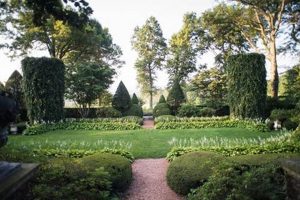
A cultivated outdoor space, often characterized by formal layouts, meticulously manicured lawns, and a blend of ornamental plants, sculptures, and water features, reflects a distinct tradition. This design approach emphasizes structure, symmetry, and a harmonious integration of natural elements within a defined framework. Examples include the gardens of Versailles in France and Stourhead in England, each illustrating a unique interpretation of the underlying principles.
These carefully crafted environments hold considerable significance, offering aesthetic pleasure, providing spaces for contemplation and recreation, and serving as cultural symbols. Historically, these spaces were statements of power and wealth, showcasing the owner’s ability to control and shape the natural world. The designs often incorporate symbolic elements, reflecting philosophical or religious beliefs prevalent during their creation.
The following sections will delve into specific design elements, horticultural practices, and regional variations that contribute to the enduring appeal of these designed landscapes. Exploration of plant selection, hardscaping techniques, and the evolution of stylistic trends will provide a more comprehensive understanding of this distinct horticultural art form.
Enhancing the Cultivated Outdoor Space
The following guidelines offer practical advice for establishing and maintaining a designed landscape reminiscent of established traditions. Adherence to these principles will promote a balanced and aesthetically pleasing environment.
Tip 1: Emphasize Formal Structure: Begin with a clearly defined layout. Geometric shapes, straight lines, and symmetrical arrangements are fundamental. Consider the use of pathways, hedges, and precisely shaped topiary to establish a strong architectural framework.
Tip 2: Implement Strategic Plant Selection: Prioritize plant species that lend themselves to controlled growth and shaping. Boxwood, yew, and hornbeam are suitable for hedging and topiary. Incorporate flowering plants in a limited palette to maintain visual coherence.
Tip 3: Incorporate Water Features: Integrate fountains, ponds, or canals to introduce an element of dynamism and reflection. Ensure the water features are appropriately scaled to the overall dimensions of the landscape and are maintained meticulously.
Tip 4: Employ Hardscaping Elements: Utilize stone, brick, or gravel to create durable pathways, patios, and terraces. The materials selected should complement the surrounding vegetation and architectural features.
Tip 5: Prioritize Regular Maintenance: Implement a rigorous maintenance schedule that includes pruning, weeding, and lawn care. Consistent attention is essential to preserving the intended aesthetic and preventing the encroachment of uncontrolled growth.
Tip 6: Integrate Sculpture and Ornamentation: Strategically position statues, urns, or other decorative elements to enhance focal points and add visual interest. Ensure these elements are proportional to the scale of the landscape and harmonize with the overall design.
Tip 7: Establish Clear Sightlines: Design the landscape to create unobstructed views and enhance the sense of perspective. This can be achieved through careful placement of plants and architectural features.
By focusing on structured design, controlled plant life, and diligent upkeep, one can cultivate a landscape embodying the hallmarks of a refined outdoor aesthetic. These design principles create visually appealing and harmonious outdoor areas.
The subsequent sections will examine specific examples and delve into the historical context, further enriching understanding and application of these principles.
1. Formal Layout

Formal layout constitutes a cornerstone of the overall aesthetic. It establishes the underlying structure and visual coherence that defines the entire space. This structural approach is not merely decorative; it reflects a philosophical emphasis on order, control, and the imposition of human will upon nature. The geometric patterns, straight lines, and symmetrical arrangements are deliberately implemented to create a sense of balance and harmony. For instance, in the gardens of Vaux-le-Vicomte, the precise arrangement of parterres, canals, and pathways exemplifies how a formal layout dictates the experience of the space, guiding the viewer’s eye and creating carefully framed vistas.
The importance of formal layout extends beyond mere aesthetics. It facilitates the integration of other key elements, such as water features, sculptures, and carefully selected plantings. A well-defined layout provides the framework within which these elements can be effectively displayed and appreciated. For example, the design of the gardens at the Palace of Queluz in Portugal, with its intricate topiary, statuary, and carefully positioned fountains, relies heavily on the formal layout to achieve its overall effect. Without this organizing principle, the individual elements would appear disparate and lack a cohesive narrative. Furthermore, the formal structure simplifies maintenance and allows for greater control over the garden’s appearance over time.
In essence, the formal layout is not merely a design choice; it is a fundamental principle. Its impact is considerable, influencing everything from the selection of plants to the placement of architectural features. Recognizing the crucial role of this structure is essential for anyone seeking to understand or replicate the design style. By mastering the principles of formal layout, practitioners can create outdoor spaces that are both visually stunning and deeply meaningful, upholding a long-standing tradition of horticultural excellence.
2. Symmetrical Design
Symmetrical design represents a cornerstone of the aesthetic, exerting a profound influence on the overall character and perceived harmony of such cultivated spaces. Its deliberate application contributes significantly to the sense of order and visual equilibrium characteristic of this style.
- Balanced Arrangement of Elements
Symmetry dictates a balanced arrangement of design elements around a central axis, resulting in mirrored halves that create a sense of formal elegance. This approach ensures visual harmony and reinforces the perception of order and control. Examples include the mirrored parterres in French formal gardens, where identical plantings and pathways are arranged on either side of a central walkway.
- Emphasis on Visual Equilibrium
Symmetry promotes visual equilibrium by creating a sense of stability and predictability. The careful placement of corresponding elements on either side of a central point contributes to a feeling of balance and tranquility. This can be observed in the positioning of statues, fountains, and architectural features within the garden, where i
dentical elements are often used to reinforce the symmetrical design. - Reinforcement of Formal Structure
Symmetry serves to reinforce the formal structure, highlighting the intentionality and artifice inherent in the design. By adhering to symmetrical principles, designers underscore the deliberate manipulation of nature and the imposition of human order. This is exemplified by the precisely trimmed hedges and geometrically shaped lawns that are commonly found in formal examples of the type.
- Enhancement of Grandeur and Scale
Symmetry can enhance the perceived grandeur and scale of the designed landscape. The repetition of elements and the creation of balanced vistas contribute to a sense of monumentality and visual impact. Large-scale symmetrical designs, such as those found in the gardens of Versailles, convey a sense of power and opulence through their sheer size and meticulous arrangement.
The consistent application of symmetrical design principles is paramount to realizing the desired effect. This approach reinforces visual equilibrium and the feeling of grandeur often seen. By carefully implementing symmetry, designers can create spaces that exemplify a refined aesthetic and evoke a sense of timeless beauty.
3. Manicured Lawns

Manicured lawns represent an integral element of the aesthetic, functioning as verdant carpets that accentuate the formal design and horticultural artistry. Their prevalence signifies a deliberate effort to control and refine nature, aligning with the overarching principles of the tradition.
- Foundation for Formal Design
Manicured lawns provide a smooth, uniform surface that serves as a backdrop for other design elements. The level expanse allows for the distinct articulation of geometric shapes, pathways, and parterres, which are central to the structured layout. For example, at Hampton Court Palace, the precisely cut lawns highlight the intricate patterns of the surrounding flower beds and topiary.
- Visual Contrast and Emphasis
The rich green color and even texture of a manicured lawn create a strong visual contrast with the surrounding elements, such as stone pathways, architectural features, and flowering plants. This contrast draws attention to these features and enhances their visual impact. The contrast can be seen in the gardens of Villandry, where the deep green lawns set off the vibrant colors of the potager.
- Symbol of Control and Order
Maintaining a manicured lawn requires significant effort and resources, representing a clear demonstration of human control over nature. The perfectly trimmed grass symbolizes order and refinement, reflecting the desire to create a harmonious and aesthetically pleasing environment. This is particularly evident in the gardens of Versailles, where the expansive lawns are meticulously maintained to project an image of power and control.
- Enhancement of Perspective and Scale
Expansive manicured lawns can enhance the perception of perspective and scale. The smooth, unbroken surface creates a sense of depth and allows the viewer’s eye to travel unimpeded, making the garden appear larger and more impressive. This is often achieved through the strategic placement of trees and shrubs, which frame the lawns and guide the viewer’s gaze toward distant focal points.
The commitment to maintaining such lawns emphasizes the dedication to creating and preserving a specific aesthetic. The manicured lawn integrates all aspects of design to produce a cohesive visual statement.
4. Ornamental Plants
Ornamental plants are fundamental to the visual and symbolic expression found within the established aesthetic. These cultivated species, selected for their aesthetic qualities rather than utilitarian value, directly shape the character and perception of these spaces. The choice and arrangement of ornamental plants dictate color palettes, textural contrasts, and the overall atmosphere. The gardens at Sissinghurst Castle, for example, demonstrate the importance of ornamental plants in creating themed garden rooms, each with a distinct character defined by its floral selection and arrangement. The horticultural skill in cultivating these plants to maximize their aesthetic appeal is integral to the tradition.
The impact of ornamental plants extends beyond mere decoration; they are integral to the symbolic language of the design. Specific plant species were often chosen for their historical, mythological, or religious associations, adding layers of meaning to the garden’s design. The formal parterres of French gardens, for instance, frequently incorporate boxwood and other evergreen shrubs to create intricate patterns that symbolize power, order, and the triumph of civilization over nature. Furthermore, the seasonal changes in ornamental plants provide a dynamic element, ensuring that the gardens evolve throughout the year, offering new visual experiences.
In summary, ornamental plants are not simply decorative additions; they are essential components that define the aesthetic, symbolic, and dynamic qualities of the designed landscape. Their selection, arrangement, and skillful cultivation directly influence the overall character. Understanding their role is crucial for appreciating the artistic intention and horticultural expertise embedded within the tradition. Without the careful consideration of ornamental plants, the key element of this space would be noticeably absent.
5. Water Features
Water features represent a defining element, contributing significantly to the aesthetic, auditory, and experiential qualities. Their integration reflects a sophisticated understanding of design principles and horticultural practices.
- Formal Ponds and Canals
Formal ponds and canals often serve as central organizing features, reinforcing the geometric layout and enhancing visual perspective. These features, exemplified by the canals at Versailles, create mirrored reflections of the surrounding architecture and landscaping, amplifying the grandeur and scale. The controlled nature of these water bodies symbolizes human dominion over nature.
- Fountains and Cascades
Fountains and cascades introduce dynamism and movement, providing a counterpoint to the static elements. The sound of flowing water adds an auditory dimension, creating a sense of tranquility or exuberance, depending on the design. Examples include the elaborate fountain displays at Peterhof Palace, where water jets and cascades are integrated with statuary to create theatrical spectacles.
- Reflecting Pools
Reflecting pools offer serene surfaces that enhance visual depth and create a sense of contemplation. These still bodies of water reflect the surrounding landscape, blurring the boundaries between the natural and the constructed environment. The reflecting pools at Stowe Landscape Gardens exemplify this effect, mirroring the surrounding temples and monuments.
- Hydraulic Systems and Engineering
The implementation of water features
often relies on complex hydraulic systems and engineering. The design and construction of fountains, canals, and other water features require considerable technical expertise. Historical examples, such as the fountains at Villa d’Este, showcase the advanced engineering capabilities and artistic vision that were employed to create these elaborate water displays.
The integration of water features involves intricate design, skillful engineering, and careful maintenance. Whether serving as focal points, adding auditory dimensions, or enhancing visual depth, these elements significantly shape the character. The historical examples underscore the enduring legacy and sophistication of this practice.
6. Sculptural Elements

Sculptural elements represent a crucial component, significantly contributing to the character, aesthetic, and historical narrative. These features, ranging from classical statues to ornate fountains, serve as focal points, directing the viewer’s gaze and enriching the overall composition. Their presence reflects a deliberate integration of art and nature, embodying the philosophical ideals and cultural values prevalent during the design’s creation. Examples such as the statues at the Belvedere in Vienna or the Borghese Gardens in Rome illustrate how strategically placed sculptures enhance the visual impact and contribute to the garden’s symbolic meaning. The careful selection and placement of these elements underscore the designer’s intent to create a harmonious and intellectually stimulating environment.
The integration of sculptural elements directly influences the perceived grandeur and sophistication of the designed space. Their presence adds layers of complexity and invites contemplation, transforming the garden from a mere collection of plants into a carefully curated artistic expression. The application extends to practical considerations, such as defining spatial boundaries, creating visual interest, and providing structural support for climbing plants. Understanding the relationship between sculptural elements and the broader design principles is essential for preserving and interpreting such outdoor spaces. Moreover, this knowledge informs contemporary design practices, allowing modern designers to draw inspiration from historical precedents while adapting to evolving aesthetic preferences.
In conclusion, sculptural elements are not simply decorative additions but integral components that enhance the aesthetic, symbolic, and functional aspects. Their strategic placement reflects a profound understanding of artistic principles and cultural values. Recognizing the significance is paramount for preserving these outdoor spaces and informing future designs. The challenge lies in balancing historical accuracy with contemporary sensibilities, ensuring that sculptural elements continue to enrich these areas and serve as compelling expressions of human creativity and cultural heritage.
7. Controlled Growth

Controlled growth represents a foundational principle in the maintenance and aesthetic realization. It is not merely a horticultural technique, but a deliberate strategy employed to impose order and shape upon the natural environment. The absence of controlled growth leads to a degradation of the intended formal design, resulting in an unkempt and visually discordant space. For instance, the meticulously shaped hedges at Villandry Castle would quickly lose their geometric precision and visual impact without consistent pruning and training. This highlights the causal relationship: consistent application of controlled growth techniques directly results in the preservation of formal garden design.
The importance of controlled growth extends beyond aesthetics; it contributes to the longevity and health. Strategic pruning and shaping techniques promote air circulation, reduce the risk of disease, and encourage robust growth patterns. Espaliered fruit trees, a common feature in these environments, demonstrate a practical application. By training these trees against walls or fences, growers maximize sunlight exposure, improve fruit production, and conserve space. The regular trimming of lawns prevents the encroachment of weeds and maintains a uniform surface, essential for emphasizing the formal layout and other design elements. The precise management of water features prevents algae growth and maintains the clarity necessary for reflection and aesthetic appeal.
Understanding the principles of controlled growth is paramount for preserving and replicating the design. Challenges include the time and resources required for consistent maintenance, the need for specialized knowledge of horticultural techniques, and the potential for damage from pests and diseases. Nevertheless, effective implementation of controlled growth strategies is essential for sustaining the visual harmony, structural integrity, and historical authenticity. These techniques guarantee the enduring presence of a distinctive form of horticultural art, continuing a centuries-old tradition.
Frequently Asked Questions
This section addresses common inquiries regarding the characteristics, maintenance, and historical significance of this cultivated landscape style.
Question 1: What are the defining characteristics?
Formal layouts, symmetrical design, manicured lawns, ornamental plants, water features, and sculptural elements constitute the core attributes. These features are deliberately integrated to create a harmonious and controlled environment.
Question 2: How does this design differ from other garden styles?
Emphasis on structure, symmetry, and human control distinguishes this approach from more naturalistic or informal garden designs. It prioritizes order and artifice over the unconstrained expression of nature.
Question 3: What are the key elements of a formal layout?
Geometric shapes, straight lines, and symmetrical arrangements are fundamental. These elements establish a clear framework within which other design features are integrated.
Question 4: What types of plants are typically used?
Boxwood, yew, and hornbeam are commonly used for hedging and topiary. Flowering plants are selected to complement the overall color palette and maintain visual coherence.
Question 5: How important is regular maintenance?
Consistent maintenance is essential for preserving the intended aesthetic and preventing the encroachment of uncontrolled growth. Pruning, weeding, and lawn care are crucial for sustaining the formal structure.
Question 6: What is the historical significance?
These landscapes often serve as cultural symbols, reflecting philosophical or religious beliefs prevalent during their creation. Historically, such gardens were statements of power and wealth.
Understanding these frequently asked questions provides a foundation for appreciating the complexities and nuances of the design.
The subsequent section will delve into the broader cultural impact and adaptations of this horticultural art form.
Conclusion
This exploration of the European garden has elucidated its defining characteristics, historical significance, and essential maintenance practices. From its formal layouts and symmetrical designs to the role of ornamental plants and scu
lptural elements, the article has underlined the commitment to order and control inherent in this landscape tradition. The consistent application of these principles is vital for preserving its aesthetic integrity.
Understanding the art of the European garden provides a framework for appreciating its enduring influence on landscape design. By acknowledging its historical context and striving for the meticulous maintenance it demands, one can ensure the continued relevance of this art form. The careful balance of nature and artifice serves as a testament to human creativity and the enduring pursuit of beauty within the cultivated landscape.