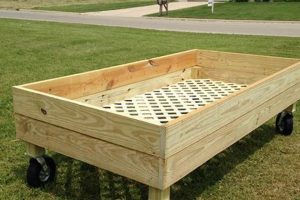
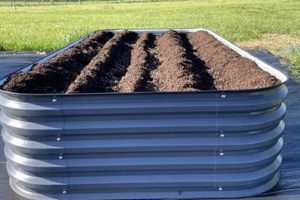
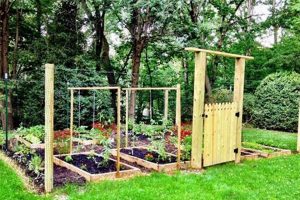
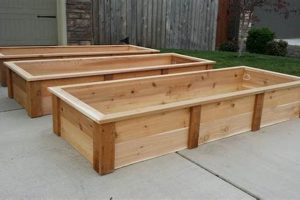
A system combining targeted water delivery with elevated planting structures offers an efficient method for cultivating plants. It utilizes a network of tubes or emitters to apply water directly to the root zone of plants grown in contained, above-ground structures. This approach minimizes water waste by reducing evaporation and runoff, while the raised beds provide improved drainage and soil control compared to traditional in-ground gardening.
This method presents several advantages. The precise application of water reduces the incidence of fungal diseases by keeping foliage dry. The elevated structures alleviate back strain and provide easier access for individuals with mobility limitations. Historically, raised beds have been used to improve soil quality and drainage in areas with poor soil conditions. The integration of targeted water delivery enhances resource utilization and promotes healthy plant growth.
The following sections will delve into the components of such a system, optimal design considerations, suitable plant varieties, and best practices for maintenance and troubleshooting. Furthermore, the discussion will explore the environmental benefits and economic advantages associated with this gardening technique.
Optimizing Water Use and Plant Health in Elevated Gardens
The following guidelines provide practical recommendations for maximizing efficiency and promoting thriving plants when employing a combination of targeted water application and elevated planting structures.
Tip 1: Soil Composition is Paramount: Employ a well-draining soil mix specifically formulated for raised beds. A blend of compost, peat moss, and vermiculite provides adequate drainage and nutrient retention, preventing waterlogging and root rot.
Tip 2: Emitter Placement Directly Impacts Efficiency: Position emitters close to the base of each plant to ensure water is delivered precisely where it is needed. This minimizes evaporation and reduces water waste by targeting the root zone directly.
Tip 3: Implement a Timer for Controlled Watering: Utilize a programmable timer to regulate water application frequency and duration. Adjust watering schedules based on plant needs, weather conditions, and soil moisture levels. Avoid overwatering, which can lead to fungal diseases and nutrient leaching.
Tip 4: Regular Inspection Prevents Issues: Routinely inspect the system for leaks, clogs, and damaged components. Repair or replace any faulty parts promptly to maintain optimal performance and prevent water loss. Clean emitters periodically to remove mineral buildup or debris.
Tip 5: Select Plants Suited to the Environment: Choose plant varieties that are well-suited to the raised bed environment and the prevailing climate. Consider factors such as sunlight exposure, soil type, and water requirements when selecting plants. Group plants with similar water needs together to simplify irrigation management.
Tip 6: Mulch Reduces Evaporation: Apply a layer of organic mulch around plants to conserve moisture, suppress weed growth, and regulate soil temperature. Mulch also helps to prevent soil erosion and compaction.
Tip 7: Monitor Soil Moisture Levels: Regularly monitor soil moisture levels to ensure plants are receiving adequate hydration. Use a soil moisture meter or conduct a simple hand test to assess soil moisture before watering. Adjust watering schedules accordingly.
Implementing these strategies will contribute to efficient water usage, healthier plants, and a more sustainable gardening practice. The precision of this system reduces water waste and optimizes resource allocation.
The next section will cover specific techniques for system installation, maintenance, and troubleshooting common problems encountered in elevated gardening environments.
1. Water Source Quality

Water source quality is a critical determinant of the long-term performance and viability of systems utilizing targeted water delivery within elevated planting structures. Impurities and chemical imbalances in the water can directly impact the functionality of the watering system and the health of the plants being cultivated.
- Total Dissolved Solids (TDS)
High levels of TDS, encompassing dissolved salts, minerals, and metals, can lead to mineral buildup within emitters, causing clogging and reduced flow rates. Over time, this necessitates more frequent maintenance and potential system replacement. Areas with hard water or well water are particularly susceptible to this issue. Pre-filtration and water softening techniques can mitigate these problems, ensuring consistent water delivery to plants.
- pH Levels
The pH of the water significantly influences nutrient availability to plants. Extremely acidic or alkaline water can inhibit the uptake of essential nutrients, leading to stunted growth or nutrient deficiencies. Ideally, water pH should be within the range of 6.0 to 7.0 for most plants. pH testing and adjustment, if necessary, are vital to ensure optimal plant health in elevated gardens. Incorrect pH can also corrode system components.
- Organic Matter
The presence of organic matter, such as algae or bacteria, can contribute to biofilm formation within the system. This biofilm can clog emitters and reduce water flow, requiring frequent flushing and cleaning. Surface water sources are particularly prone to organic contamination. Filtration systems, including UV sterilization, can effectively remove organic matter and prevent biofilm buildup.
- Sediment and Debris
Particulate matter, such as sand, silt, and debris, can physically block emitters and damage system components. This is especially prevalent in systems drawing water from unfiltered sources like ponds or streams. A pre-filtration system employing a screen or media filter is essential to remove sediment and debris, preventing system blockages and ensuring consistent water delivery.
Maintaining appropriate water quality is paramount for the sustainable operation and effectiveness of elevated planting structures with targeted watering. Failure to address water quality issues can result in decreased plant yields, increased maintenance costs, and a shortened lifespan of the watering system. Regular testing and treatment of the water source are crucial steps in ensuring long-term success.
2. System Pressure Regulation

Maintaining optimal pressure within targeted watering systems used in conjunction with elevated planting structures is crucial for ensuring consistent and efficient water delivery. Inadequate or fluctuating pressure can lead to uneven water distribution, negatively impacting plant health and overall system performance. Precise pressure regulation addresses these challenges, optimizing resource utilization and promoting uniform growth.
- Uniform Emitter Output
Consistent pressure ensures that each emitter delivers the specified flow rate, providing all plants with the appropriate amount of water. Pressure variations can cause some emitters to deliver too much water, leading to overwatering and root rot, while others may deliver too little, resulting in drought stress. Proper pressure regulation minimizes these discrepancies, fostering a more uniform growing environment within elevated beds. Examples include using pressure-compensating emitters or incorporating a pressure regulator into the main water line.
- Prevention of System Damage
Excessive pressure can damage system components, such as tubing, connectors, and emitters, leading to leaks and system failure. Conversely, insufficient pressure may prevent emitters from functioning correctly, resulting in inadequate water delivery. A properly regulated system operates within the manufacturer’s recommended pressure range, prolonging the lifespan of system components and minimizing maintenance requirements. Incorporating a pressure relief valve can also prevent damage from pressure spikes.
- Optimization of Water Use
Stable pressure allows for precise control over water usage, minimizing waste and conserving resources. By delivering the correct amount of water to each plant, a pressure-regulated system reduces the risk of overwatering and runoff, contributing to more sustainable gardening practices. This is particularly important in regions with limited water availability or where water conservation is a priority. Using pressure gauges to monitor system pressure allows for prompt adjustments to maintain optimal efficiency.
- Adaptability to Elevation Changes
In situations where elevated planting structures are located on slopes or uneven terrain, pressure regulation becomes even more critical. Elevation changes can significantly affect water pressure, leading to inconsistent flow rates across the system. Pressure regulators can compensate for these variations, ensuring that all plants receive the appropriate amount of water, regardless of their elevation. Zoning the watering system can also help manage pressure differences across different areas of the garden.
The effective implementation of pressure regulation techniques is essential for maximizing the benefits of combining targeted watering with elevated planting structures. By ensuring consistent water delivery, preventing system damage, optimizing water use, and adapting to elevation changes, proper pressure regulation contributes to a healthier, more sustainable, and more efficient gardening system. Neglecting pressure management can lead to decreased yields, increased maintenance costs, and a compromised growing environment.
3. Emitter Flow Rate

Emitter flow rate, measured in gallons per hour (GPH), is a fundamental parameter dictating the effectiveness of targeted water delivery systems within elevated planting structures. It defines the volume of water released by each emitter over a specific time, influencing soil saturation, nutrient availability, and ultimately, plant health. Selection of an appropriate flow rate is contingent upon factors such as plant species, soil type, and environmental conditions. A flow rate too low may result in insufficient hydration, leading to wilting and stunted growth. Conversely, an excessive flow rate can cause waterlogging, nutrient leaching, and increased susceptibility to root rot. For example, densely planted vegetable beds with moisture-demanding crops like tomatoes often benefit from higher flow rate emitters compared to drought-tolerant herbs in a separate, more arid section of the garden.
The practical application of understanding emitter flow rates involves careful calculation and system design. Pre-planning incorporates assessing the water requirements of different plant varieties to determine the appropriate emitter specifications. Installation requires meticulous placement of emitters, ensuring uniform coverage and preventing localized dry or saturated zones. Real-world scenarios demonstrate that inconsistencies in emitter flow rates, due to clogging or manufacturing defects, can lead to uneven growth patterns and reduced yields. Routine inspection and maintenance, including cleaning or replacing malfunctioning emitters, are essential to preserve optimal system performance. Furthermore, seasonal adjustments to watering schedules, accounting for variations in temperature and rainfall, necessitate modifying the duration of irrigation cycles rather than altering the selected emitter flow rate.
In summary, emitter flow rate represents a critical link in the functionality of targeted watering systems within elevated planting structures. Careful consideration of plant needs, soil characteristics, and environmental factors, coupled with diligent system maintenance, is paramount for maximizing the benefits of this gardening approach. The challenge lies in precisely matching water delivery to plant demand, requiring a nuanced understanding of emitter flow rates and their impact on the soil-water-plant relationship. Failing to address this connection compromises the efficiency of the system, potentially leading to decreased productivity and increased resource consumption.
4. Soil Media Composition

The composition of soil media within elevated planting structures significantly influences the effectiveness of targeted water delivery. Unlike in-ground gardens where plant roots can access a broader soil profile and natural water table, raised beds rely entirely on the properties of the contained soil mix. The soil’s ability to retain water, its drainage capacity, and its nutrient-holding capacity directly impact the frequency and duration of irrigation cycles required when using targeted water delivery. For example, a soil mix high in clay content will retain water for a longer duration, potentially leading to overwatering if the watering system is not carefully calibrated. Conversely, a sandy soil mix will drain rapidly, necessitating more frequent irrigation to prevent drought stress. Therefore, the soil media acts as the intermediary between the precisely delivered water and the plant roots, dictating the availability of water and nutrients.
The selection of appropriate soil components for raised beds utilizing targeted water delivery requires a thorough understanding of plant-specific needs. A blend of organic matter, such as compost or peat moss, and inorganic materials like vermiculite or perlite, is often recommended to achieve a balance between water retention, drainage, and aeration. For acid-loving plants like blueberries, the addition of peat moss or other acidic amendments is crucial to maintaining a suitable pH. The particle size distribution within the soil mix also plays a critical role. Finer particles increase water retention but can impede drainage, while coarser particles improve drainage but reduce water-holding capacity. Real-world applications demonstrate that adjusting the soil mix to accommodate the specific needs of the plants and the local climate can significantly improve plant health and yield.
In conclusion, soil media composition is an integral component of targeted water delivery systems in raised garden beds. The soil’s physical and chemical properties dictate the efficiency of water and nutrient uptake, ultimately impacting plant growth and productivity. Careful consideration of soil composition, coupled with precise system calibration and diligent monitoring, is essential for optimizing the performance of this gardening method. Overlooking the soil-water relationship can lead to inefficiencies, plant stress, and reduced yields, highlighting the importance of a holistic approach to elevated gardening.
5. Plant Water Requirements

The effectiveness of targeted water delivery systems in elevated planting structures hinges directly on a thorough understanding of plant water requirements. These requirements, varying significantly across species and developmental stages, dictate the frequency, duration, and volume of irrigation necessary for optimal growth. Mismatched watering regimes, arising from a lack of awareness of plant-specific needs, invariably lead to detrimental consequences. Underwatering results in stunted growth, wilting, and reduced yields, while overwatering promotes root rot, fungal diseases, and nutrient leaching. The controlled environment of elevated beds necessitates precision, as the limited soil volume offers little margin for error compared to in-ground cultivation. For instance, tomatoes, characterized as heavy feeders and water consumers, demand more frequent and substantial watering compared to drought-tolerant herbs like lavender. The specific needs of each plant species must be factored into the design and operation of the watering system.
Practical application involves assessing plant-specific needs through various methods, including observation, soil moisture monitoring, and referencing established horticultural guidelines. Visual cues, such as leaf turgor and color, provide initial indicators of water stress. Soil moisture sensors offer quantifiable data on soil water content, enabling data-driven irrigation decisions. Horticultural resources offer detailed information on the water requirements of various plant species, serving as a valuable reference for system calibration. Furthermore, consideration must be given to environmental factors influencing water loss, such as temperature, humidity, and wind exposure. Adjustments to irrigation schedules are necessary to compensate for seasonal variations and weather patterns. The integration of this data into the control system ensures targeted watering aligns precisely with plant demands. For example, a timer can be programmed to increase irrigation frequency during hot, dry periods and decrease it during cooler, wetter periods, thereby optimizing water use and promoting healthy plant growth.
In summary, aligning irrigation practices with plant water requirements is paramount for maximizing the benefits of targeted watering in elevated planting structures. Precise calibration of the system, informed by plant-specific knowledge, soil moisture monitoring, and environmental considerations, is essential for achieving optimal growth and resource utilization. Failure to address plant water requirements undermines the efficiency and effectiveness of the system, potentially leading to decreased yields and increased susceptibility to plant diseases. The ongoing monitoring and adaptive management of irrigation schedules are therefore critical for ensuring the long-term success of this gardening technique.
6. Maintenance Schedule Adherence
The long-term efficacy of a drip irrigation system integrated within raised garden beds is inextricably linked to consistent maintenance schedule adherence. The targeted delivery of water, while efficient, renders the system vulnerable to disruptions caused by clogging, leaks, or component degradation. A lack of systematic maintenance precipitates a cascade of negative effects, compromising water distribution uniformity, reducing plant health, and ultimately diminishing crop yields. For instance, neglecting to flush the lines periodically can lead to mineral buildup in emitters, restricting water flow and creating localized dry spots within the raised bed. Similarly, failure to inspect and repair minor leaks results in significant water wastage and potentially fosters conditions conducive to fungal diseases around affected plants. The implementation of a structured maintenance plan acts as a preventative measure, ensuring the system operates optimally and mitigating the risk of costly repairs or system failure.
A practical maintenance schedule encompasses several key tasks performed at regular intervals. Monthly inspections should include a visual assessment of all components for signs of damage or wear, coupled with a pressure check to verify proper system operation. Emitters should be individually examined for clogging, and cleaned or replaced as necessary. Flushing the main and lateral lines removes accumulated sediment and biofilm, maintaining optimal flow rates. Seasonal maintenance includes winterizing the system in colder climates to prevent freeze damage, and adjusting irrigation schedules based on plant growth stages and prevailing weather conditions. Utilizing a checklist or logbook to document maintenance activities ensures accountability and facilitates tracking of recurring issues. For example, noting the frequency of emitter clogging in a particular section of the garden may indicate a localized water quality problem requiring further investigation.
In conclusion, maintenance schedule adherence is not merely an ancillary task but a fundamental requirement for realizing the full potential of drip irrigation in raised garden beds. The benefits of this integrated system water conservation, reduced weed growth, and enhanced plant health are contingent upon consistent upkeep. The challenges of maintaining a system can be addressed through diligent planning, regular inspections, and prompt corrective action. The resulting increase in system longevity and sustained plant productivity underscores the practical significance of integrating a robust maintenance schedule into the overall garden management strategy.
Frequently Asked Questions
This section addresses common inquiries regarding the integration of targeted water delivery with elevated planting structures, providing clarity on best practices and addressing potential challenges.
Question 1: What is the optimal water pressure for a drip irrigation system in a raised garden bed?
Optimal water pressure typically ranges from 10 to 20 PSI. Exceeding this range can damage system components, while insufficient pressure may result in uneven water distribution. Employing a pressure regulator is essential for maintaining consistent water delivery.
Question 2: How frequently should drip irrigation systems be flushed in raised garden beds?
Drip irrigation systems should be flushed at least once per month, or more frequently if the water source contains high mineral content. This practice removes accumulated sediment and prevents emitter clogging, ensuring consistent water flow.
Question 3: What type of soil is best suited for raised garden beds using drip irrigation?
A well-draining soil mix consisting of equal parts compost, peat moss, and vermiculite is generally recommended. This blend provides adequate water retention, drainage, and aeration, promoting healthy root growth.
Question 4: Can fertilizer be applied through a drip irrigation system in a raised garden bed?
Fertilizer can be applied through a drip irrigation system using a process known as fertigation. Water-soluble fertilizers are diluted and injected into the system, delivering nutrients directly to the plant roots. Careful monitoring and adherence to recommended fertilizer rates are crucial to prevent over-fertilization.
Question 5: How can emitter clogging be prevented in a drip irrigation system for raised garden beds?
Emitter clogging can be minimized by using a water filter, flushing the system regularly, and employing pressure-compensating emitters. Additionally, selecting high-quality emitters designed to resist clogging is recommended.
Question 6: What are the key considerations for winterizing a drip irrigation system in a raised garden bed?
Winterization involves draining all water from the system to prevent freezing and subsequent damage. Disconnecting and storing sensitive components, such as timers and pressure regulators, in a frost-free location is also advisable. Insulating exposed pipes can further protect against freezing.
These FAQs provide a foundational understanding of the key aspects involved in effectively utilizing targeted water delivery within elevated planting structures. Adherence to these guidelines will contribute to efficient water use, healthier plants, and a more sustainable gardening practice.
The following section will explore advanced techniques for optimizing system performance and addressing specific challenges encountered in elevated gardening environments.
Drip Irrigation Raised Garden Beds
The preceding discussion has comprehensively examined the various facets of integrating targeted water delivery with elevated planting structures. Key considerations, including water source quality, system pressure regulation, emitter flow rate, soil media composition, plant water requirements, and maintenance schedule adherence, have been thoroughly explored. The implementation of best practices in each of these areas is essential for maximizing the efficiency and effectiveness of this gardening method.
The successful application of drip irrigation in raised garden beds necessitates a commitment to understanding the complex interplay between water, soil, and plants. Further research and innovation in this field are crucial for developing more sustainable and resource-efficient gardening practices. A continued focus on data-driven decision-making and adaptive management strategies will ensure the long-term viability and productivity of these systems.