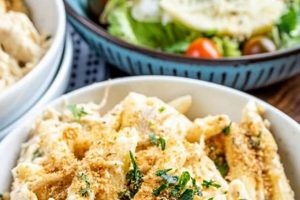
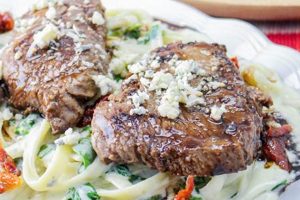
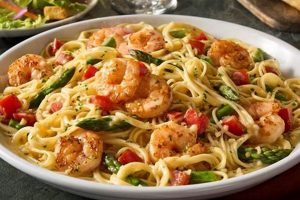
This culinary creation represents a homemade version of a popular pasta dish found on the Olive Garden restaurant menu. It typically involves shrimp sauted in a garlic-butter and white wine sauce, served over linguine. This dish exemplifies the widespread practice of recreating restaurant meals in a home kitchen.
Replicating dishes from established restaurants offers several advantages. It allows individuals to enjoy familiar flavors at a potentially lower cost, and to customize ingredients to suit dietary needs or preferences. The practice also fosters culinary creativity and enhances cooking skills. This trend gained significant momentum with the proliferation of online recipe sharing and the desire for cost-effective dining alternatives.
The following discussion will delve into specific recipes, techniques, and considerations for preparing a successful home-cooked iteration of this Olive Garden-inspired seafood pasta. Attention will be given to ingredient selection, sauce preparation, and methods for achieving a similar taste profile to the original restaurant offering.
Preparation Strategies
Achieving a successful replication of the Olive Garden shrimp scampi necessitates careful attention to detail and specific techniques. The following tips will enhance the outcome of this culinary endeavor.
Tip 1: Shrimp Selection. Opt for high-quality shrimp, preferably fresh or previously frozen but thoroughly thawed. Medium to large shrimp provide the best texture and visual appeal in the final dish. Ensure proper deveining for optimal taste and presentation.
Tip 2: Garlic Utilization. Fresh garlic is paramount. Mince it finely to release maximum flavor when sauted in butter. Avoid burning the garlic, as this will impart a bitter taste to the sauce.
Tip 3: Wine Choice. A dry white wine, such as Pinot Grigio or Sauvignon Blanc, adds complexity and acidity to the sauce. Avoid sweet wines, as they will alter the desired flavor profile. Alcohol reduction during cooking is crucial to prevent an overpowering wine flavor.
Tip 4: Sauce Emulsification. Gradually whisk in melted butter and white wine into garlic, creating a smooth and emulsified sauce. Proper emulsification ensures the sauce coats the pasta evenly and doesn’t separate.
Tip 5: Pasta Preparation. Cook linguine pasta al dente. Undercooking prevents a mushy texture when combined with the sauce. Reserve a portion of the pasta water, as it can be used to adjust the sauce’s consistency if it becomes too thick.
Tip 6: Ingredient Integration. Add the cooked shrimp to the sauce during the final stages of preparation to prevent overcooking. Toss the pasta and shrimp in the sauce until thoroughly combined and evenly coated.
Tip 7: Seasoning Refinement. Season the dish generously with salt, black pepper, and red pepper flakes to replicate the Olive Garden’s flavor profile. Taste and adjust seasoning as needed, considering individual preferences.
Incorporating these strategies will significantly improve the quality and authenticity of the homemade dish. Through meticulous attention to ingredients and technique, it is possible to achieve a close approximation of the original restaurant offering.
The subsequent sections will provide a detailed recipe and explore variations on this popular dish, allowing for further customization and culinary exploration.
1. Ingredient Quality

The fidelity of a homemade reproduction of Olive Garden’s shrimp scampi is inextricably linked to the quality of the ingredients employed. Substandard components invariably compromise the dish’s overall flavor profile and textural integrity, resulting in a deviation from the target culinary experience. For instance, using pre-minced garlic, rather than freshly minced, often yields a diminished aromatic intensity and a less nuanced flavor, subsequently detracting from the authenticity of the sauce. Similarly, using low-quality, previously frozen shrimp may lead to a rubbery texture upon cooking, contrasting starkly with the succulent and tender characteristics of high-grade, properly handled shrimp. The resultant dish fails to accurately replicate the intended Olive Garden experience.
The selection of olive oil, wine, and pasta also significantly impacts the outcome. Inferior olive oil often lacks the desired richness and may impart an undesirable flavor. A low-quality or inappropriately sweet wine will disrupt the sauce’s delicate balance, leading to an overtly acidic or cloying flavor profile. Likewise, pasta made from lower-grade flour may cook unevenly, resulting in a gummy or mushy texture. Conversely, using extra virgin olive oil, a crisp, dry white wine, and high-quality semolina pasta contributes to a closer approximation of the restaurant’s standard. Therefore, deliberate ingredient selection constitutes a pivotal stage in the pursuit of accurate replication.
In conclusion, achieving a convincing homemade version demands a conscientious approach to ingredient procurement. The pursuit of authenticity requires sourcing high-quality components, acknowledging that compromises in ingredient quality inevitably lead to a diminished culinary outcome. While cost considerations may influence choices, prioritizing quality within budgetary constraints proves crucial for capturing the essence of Olive Garden’s shrimp scampi.
2. Garlic Infusion
Garlic infusion is a critical element in replicating the flavor profile of a popular shrimp scampi dish. The flavor of garlic, when properly extracted, forms the foundation of the sauce. Inadequately infused garlic results in a bland sauce lacking the characteristic sharpness and aroma associated with Olive Garden’s offering. Overcooking or burning the garlic, conversely, yields a bitter, acrid flavor, negatively impacting the dish’s overall palatability. The manner and duration of garlic cooking directly affects the final taste.
The process of garlic infusion involves sauting minced garlic in butter or olive oil, or a combination of both. The heat causes the garlic to release its flavorful compounds, which dissolve into the fat. The timing of this process is crucial; the garlic should be cooked until fragrant and lightly golden, avoiding browning or burning. A proper infusion ensures that the garlic flavor permeates the entire sauce, creating a harmonious blend of flavors with the other ingredients. For example, if the garlic is added alongside the wine it would be more diluted. The heat and chemical process with white wine is more likely to bring out the flavors that when mixed with cold butter.
Achieving optimal garlic infusion in a copycat shrimp scampi recipe presents a specific challenge. The correct balance must be struck to avoid both under-extraction and over-cooking. Mastering this technique involves careful monitoring and precise timing. Successful garlic infusion significantly contributes to the overall success of the dish, creating a sauce that closely mimics the flavor characteristics of Olive Garden’s original creation. In short, the flavor profile requires precise execution of the infusion process, because it is a main point to this olive garden shrimp scampi.
3. Wine Reduction

Wine reduction plays a crucial role in developing the complex flavor profile sought in a copycat Olive Garden shrimp scampi. The process involves simmering wine to evaporate water and concentrate its flavors, resulting in a more intense and nuanced taste. This concentrated wine essence forms a fundamental component of the sauce, contributing depth and richness that would otherwise be lacking. Omitting or inadequately executing the wine reduction step directly impacts the authenticity of the replicated dish.
In the context of this recipe, the wine reduction achieves several objectives. It reduces the wine’s acidity, preventing the sauce from tasting overly tart. The concentration of sugars and aromatic compounds enhances the overall sweetness and complexity of the flavor. For example, using a full cup of unreduced white wine in the sauce may result in a thin, acidic, and less flavorful final product compared to using a half-cup of wine that has been reduced by half. The appropriate reduction level allows the wine’s characteristics to complement, rather than overwhelm, the other ingredients like garlic, butter, and shrimp. Practical application involves carefully monitoring the simmering wine, observing changes in volume and viscosity, to ensure optimal flavor concentration without scorching or caramelizing the wine’s sugars.
In summary, wine reduction is an indispensable step in creating a credible copycat Olive Garden shrimp scampi. The process concentrates the wine’s flavors, balances its acidity, and contributes to the sauce’s overall richness and complexity. While achieving the correct reduction level requires attention and experience, mastering this technique is essential for capturing the desired flavor profile of the original dish. Improper or absent wine reduction represents a significant challenge in replicating this popular pasta meal, directly impacting the final result.
4. Emulsification Process

The emulsification process directly influences the texture and overall quality of a successful copycat Olive Garden shrimp scampi. Emulsification, in this context, refers to the process of combining two immiscible liquids, typically the melted butter and white wine, into a stable and homogeneous mixture. Without proper emulsification, the sauce separates, resulting in an oily and unappetizing dish, far removed from the creamy texture characteristic of the restaurant’s version. In this dish this technique creates the sauce’s body and cohesiveness, allowing it to coat the pasta and shrimp evenly.
Achieving successful emulsification depends on several factors. Gradually adding the melted butter to the wine while continuously whisking creates the initial emulsion. The presence of emulsifiers, such as the lecithin found in butter, aids in stabilizing the mixture. The addition of pasta water, rich in starch, further enhances the emulsion and helps to bind the sauce. Insufficient whisking, adding the butter too quickly, or failing to incorporate enough pasta water can lead to a broken sauce. For example, if melted butter is simply poured into the wine without whisking, it will likely separate into a layer of oil on top of the wine. Practical significance resides in understanding these factors, enabling cooks to adjust their technique and rescue a separating sauce by adding more emulsifiers or modifying the mixing process. When adding pasta water to the emulsion you also have to be cautious, the sodium level from the pasta water could change the flavor if done wrong.
In conclusion, mastering emulsification is essential for creating a copycat Olive Garden shrimp scampi that replicates the desired texture and visual appeal. The absence of a stable emulsion results in a broken sauce, significantly detracting from the dish’s palatability and fidelity to the original. Consequently, a thorough understanding of the emulsification process, its underlying principles, and practical applications is critical for success in this culinary endeavor, thus, the importance of emulsification process to this dish is significant
5. Pasta Selection
Pasta selection is a critical variable directly influencing the authenticity of a copycat Olive Garden shrimp scampi dish. The restaurant employs linguine, a long, narrow, slightly flattened pasta, which serves as the expected and intended base for the sauce and shrimp. Substituting other pasta shapes alters the dish’s texture and the sauce-to-pasta ratio, deviating from the intended experience. For example, using thicker pasta, such as fettuccine, may overwhelm the delicate sauce, while using smaller pasta, like penne, can result in an unbalanced proportion of sauce relative to the pasta. The choice of pasta has a direct causal effect on the final sensory experience.
Linguine’s shape facilitates optimal sauce adherence and distribution. Its slightly flattened surface area allows the garlic-infused butter and wine sauce to cling effectively, ensuring each bite delivers a balanced flavor profile. Furthermore, the length of linguine provides a satisfying textural contrast to the tender shrimp. Using spaghetti, while visually similar, lacks the same surface area and slight textural variation, thus reducing the overall sauce coverage and subtly impacting the perceived flavor. Similarly, using short pasta shapes prevents the characteristic twirling of long strands, a significant component of the dining experience.
Therefore, selecting linguine pasta is essential for replicating Olive Garden’s shrimp scampi. While personal preferences may lead to experimentation with other pasta types, understanding the impact of pasta choice on the dish’s texture, flavor balance, and overall presentation is crucial. Deviations from linguine result in a dish that, while potentially palatable, no longer accurately represents the intended Olive Garden experience. The practical significance of this understanding lies in informed decision-making when preparing the dish, enabling cooks to prioritize authenticity and replicate the desired culinary outcome.
6. Shrimp Preparation

Shrimp preparation is a foundational element in replicating Olive Garden’s shrimp scampi. The manner in which the shrimp is handled, from selection to cooking, significantly impacts the texture, flavor, and overall success of the copycat dish. Incorrect preparation can lead to rubbery, flavorless shrimp, undermining the dish’s intended quality.
- Shrimp Selection and Sizing
The choice of shrimp, in terms of species and size, is crucial. Medium to large shrimp (31/40 or 26/30 count) are typically preferred, providing a substantial bite and visual appeal. Smaller shrimp may overcook easily and become lost within the pasta. Opting for quality shrimp, preferably fresh or properly thawed, is essential to avoid a rubbery texture. The type of shrimp (e.g., white, brown, pink) influences the subtle flavor notes of the final dish.
- Deveining and Cleaning
Proper deveining is essential for both hygiene and palatability. The “vein” is, in fact, the shrimp’s digestive tract, and its removal eliminates any potential grit or undesirable flavors. Thoroughly rinsing the shrimp after deveining is also important to remove any remaining impurities. Inadequate cleaning leads to a less refined taste and presentation.
- Cooking Technique and Timing
The cooking method and duration are paramount. Overcooked shrimp become tough and rubbery, while undercooked shrimp pose a safety risk. Sauting is the preferred method, allowing the shrimp to cook quickly and evenly in the garlic-infused butter and wine sauce. Timing is crucial; shrimp should be cooked just until they turn pink and opaque, typically within 2-3 minutes. Removing the shrimp from the heat source once cooked prevents overcooking.
- Marinating (Optional)
While not strictly necessary, a brief marinade can enhance the shrimp’s flavor. A simple marinade consisting of olive oil, garlic, lemon juice, and herbs can infuse the shrimp with additional complexity. However, marinating for too long can alter the shrimp’s texture. A 15-30 minute marinade is generally sufficient to impart flavor without compromising the shrimp’s integrity.
These facets of shrimp preparation collectively contribute to the quality and authenticity of the copycat dish. Paying meticulous attention to each step, from selection to cooking, is essential for replicating the desired flavor and texture of Olive Garden’s shrimp scampi. Shortcuts or compromises in shrimp preparation can lead to a significantly diminished culinary experience.
7. Seasoning Balance
Seasoning balance is paramount in replicating the flavor profile of Olive Garden’s shrimp scampi. It represents the equilibrium between various seasonings that, when properly calibrated, recreate the dish’s signature taste. Imbalances result in a dish that deviates significantly from the intended flavor, either lacking essential characteristics or exhibiting overpowering and undesirable notes.
- Salt Adjustment
Salt enhances the inherent flavors of the ingredients and binds them harmoniously. Insufficient salt leads to a bland, muted flavor, while excessive salt renders the dish unpalatable. The salt level should be adjusted considering the sodium content of other components, such as pasta water and butter. For example, salted butter requires a reduction in added salt compared to unsalted butter. Replicating this flavor requires careful measurements of salt content from the butter, shrimp, and garlic.
- Pepper Integration
Black pepper contributes a subtle heat and complexity to the dish. Both the quantity and type of pepper used influence the final flavor. Freshly ground black pepper provides a more robust and aromatic profile compared to pre-ground pepper. The amount added is often a matter of personal preference; however, over-pepper risks overwhelming other delicate flavors. The Pepper can either make or break the dish, if done the pepper seasoning can truly create a signature flavor.
- Garlic Powder Use
While fresh garlic forms the foundation of the flavor profile, a small amount of garlic powder can subtly amplify the garlic flavor and add depth. However, excessive garlic powder introduces an artificial or harsh taste. A delicate and measured approach is crucial. Too much garlic powder would make the dish hard to palate due to the strong flavors of the garlic powder mixing with sauteed garlic.
- Red Pepper Flakes Application
Red pepper flakes provide heat and a subtle fruity note. The quantity should be adjusted according to the desired spice level. Insufficient flakes leave the dish lacking a certain zest, while excessive flakes create an overpowering burning sensation. Red pepper flakes can be used to enhance shrimp scampi, in many cases it gives the flavor profile it needs. Balance is imperative; the red pepper flake application is critical to a wonderful olive garden copycat flavor.
Achieving proper seasoning balance necessitates careful attention to detail and iterative adjustments. The subtle interplay of salt, pepper, garlic powder, and red pepper flakes defines the authenticity of the copycat shrimp scampi. Mastery of this balance results in a dish that closely replicates the flavors of the original Olive Garden offering, while imbalances lead to a culinary experience that falls short of the intended goal. Achieving the proper level of seasoning the Olive Garden copycat dish is the most important part.
Frequently Asked Questions About Replicating Shrimp Scampi
This section addresses common inquiries regarding the preparation and flavor profile of a homemade version of the popular Olive Garden shrimp scampi dish. The answers provided aim to clarify key aspects and offer practical guidance for achieving a successful culinary outcome.
Question 1: What constitutes the most effective method for preventing shrimp from becoming rubbery during the cooking process?
Overcooking is the primary cause of rubbery shrimp. Saut the shrimp for a brief period, typically two to three minutes, until they turn pink and opaque. Remove them from the heat immediately upon reaching this stage to prevent further cooking from residual heat.
Question 2: Which type of white wine is most suitable for use in the sauce?
A dry white wine, such as Pinot Grigio or Sauvignon Blanc, is generally recommended. Avoid sweet wines, as they alter the intended flavor profile. The wine should possess sufficient acidity to balance the richness of the butter and garlic.
Question 3: Can previously frozen shrimp be used, or is fresh shrimp essential for achieving optimal results?
Previously frozen shrimp can be used, provided they are thawed completely and patted dry before cooking. Ensure that the shrimp have been properly stored and thawed to minimize any impact on texture. Fresh shrimp, when available, is generally preferred, but frozen shrimp can serve as a viable substitute.
Question 4: What steps should be taken to ensure that the sauce emulsifies properly and does not separate?
Gradually whisk melted butter into the white wine while maintaining consistent agitation. The addition of pasta water, rich in starch, can further stabilize the emulsion. Ensure that the butter is not too hot, as this can cause the sauce to break. Add butter little by little when emulsification.
Question 5: Is fresh garlic essential, or can garlic powder be used as a substitute?
Fresh garlic is strongly recommended for its superior flavor and aroma. Garlic powder can be used as a supplementary ingredient, but it should not replace fresh garlic entirely. Employ fresh minced garlic to bring out a more authentic flavor.
Question 6: How should the seasoning be adjusted to replicate the flavor of the Olive Garden dish accurately?
Start with a base of salt, black pepper, and red pepper flakes. Taste and adjust the seasoning as needed, keeping in mind that individual preferences vary. Consider the sodium content of the butter and pasta water when adjusting the salt level. When the Shrimp Scampi doesn’t taste like the one’s from Olive Garden, then the salt must be adjusted.
In summary, replicating the restaurant dish requires careful attention to ingredient quality, cooking techniques, and seasoning balance. Addressing these common concerns will improve the likelihood of achieving a successful homemade reproduction.
The subsequent section will offer alternative preparations and creative suggestions. The flavor profile can be shifted for more complex taste.
Conclusion
This exploration has provided a comprehensive overview of recreating a specific restaurant dish. Key elements for success involve meticulous ingredient selection, precise execution of cooking techniques, and careful attention to seasoning balance. Factors such as shrimp quality, garlic infusion, wine reduction, emulsification, pasta choice, and overall seasoning harmony directly influence the outcome.
The information presented serves as a practical guide for individuals seeking to replicate this popular culinary creation in a home setting. Mastering these techniques extends beyond mere imitation, offering opportunities for culinary creativity and personalized adaptation. Continuous refinement of these skills ultimately leads to a more rewarding gastronomic experience.