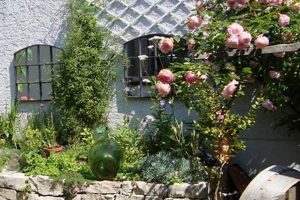
Elements originating from East Asian horticultural traditions and design philosophies are incorporated into outdoor spaces to create tranquil and aesthetically pleasing environments. These spaces often feature carefully arranged rocks, water features such as ponds or fountains, pruned trees and shrubs, and strategically placed ornaments like lanterns and statues. The overall intention is to evoke a sense of balance, harmony, and connection with nature. Examples include a Japanese Zen garden with raked gravel and carefully positioned stones, a Chinese garden featuring a koi pond and winding pathways, or a Korean garden showcasing native plants and traditional architecture.
The incorporation of these design principles offers several advantages. Beyond aesthetic appeal, these environments provide spaces for contemplation and relaxation, promoting mental well-being. The historical context reveals a deep respect for nature, evident in the meticulous planning and symbolism embedded in the layout. Historically, such landscapes have served as places for meditation, artistic inspiration, and social gatherings. The enduring popularity reflects a desire to create outdoor sanctuaries that offer respite from the demands of modern life.
The following sections will delve into specific components and principles of these garden designs, exploring the selection of plants, the arrangement of rocks, the implementation of water features, and the incorporation of decorative elements. Further discussion will cover considerations for adapting such aesthetics to various climate and space constraints, ensuring that the fundamental principles are maintained while catering to individual needs and preferences.
Essential Considerations for Asian-Inspired Outdoor Spaces
The creation of an outdoor space reflecting East Asian aesthetics necessitates careful planning and adherence to certain core principles. The following points offer guidance in achieving an authentic and harmonious design.
Tip 1: Prioritize Natural Materials: Incorporate elements such as bamboo, stone, and wood whenever possible. These materials contribute to the organic and serene ambiance characteristic of these landscapes. For example, use bamboo fencing for privacy or stone pathways for access.
Tip 2: Emphasize Balance and Harmony: Strive for equilibrium in the arrangement of elements. Avoid overcrowding and ensure that each component complements the others. Consider the use of asymmetry to create visual interest while maintaining overall harmony, mirroring natural landscapes.
Tip 3: Integrate Water Features: Water, in the form of ponds, fountains, or streams, is an integral element. The sound and movement of water contribute to the tranquility of the space. Consider the addition of aquatic plants and fish to enhance the natural aesthetic.
Tip 4: Select Plant Life Strategically: Choose plant species that are native to East Asia or that evoke a similar aesthetic. Consider incorporating elements such as Japanese maples, bamboo, azaleas, and mosses. Pruning and shaping plants to enhance their natural form is essential.
Tip 5: Incorporate Symbolic Elements: Integrate items with symbolic significance, such as lanterns, statues, or specific rock formations. These elements can add depth and meaning to the landscape. Research the cultural significance of each element before incorporating it.
Tip 6: Focus on Simplicity and Minimalism: Avoid excessive ornamentation and clutter. The beauty of these spaces lies in their simplicity and understated elegance. Focus on quality over quantity in the selection of elements.
Tip 7: Consider the Principles of Feng Shui: Incorporate principles such as the proper orientation of elements and the flow of energy to create a harmonious and balanced environment. Consult resources on Feng Shui to ensure correct application.
Adhering to these guidelines ensures the creation of an outdoor space that not only aesthetically reflects East Asian horticultural traditions but also provides a tranquil and contemplative environment.
The subsequent sections will explore the specific details and considerations for implementing these guidelines, focusing on design choices that promote balance and well-being.
1. Balance and Harmony

The concept of balance and harmony constitutes a foundational principle in these gardens, acting as a guiding force in the design and arrangement of all elements. The careful consideration of spatial relationships, material textures, and the interplay of light and shadow contributes to a sense of equilibrium. The absence of balance and harmony results in a space that feels discordant and unsettling, undermining the intended sense of tranquility. For instance, a garden with an overabundance of hardscape elements and a dearth of soft plantings would lack the necessary balance, creating a sterile and unnatural environment. Conversely, an uncontrolled profusion of plants without structured hardscaping would lead to visual chaos and a loss of defined space. Therefore, understanding the dynamic between these elements is essential for successfully implementing this design.
Practical applications of this principle involve the strategic placement of rocks, the pruning of trees and shrubs to create pleasing shapes, and the careful selection of plants to complement one another in color and texture. The application of this design can also affect the practical applications. Real-world examples include Zen gardens, where meticulously raked gravel represents the sea, and carefully positioned stones symbolize mountains, achieving a state of contemplative serenity. Another instance is the incorporation of water features, like koi ponds, balanced by surrounding vegetation and rock formations to create a natural and harmonious composition. Furthermore, adherence to Feng Shui principles dictates the placement of elements to optimize the flow of energy, further reinforcing the sense of balance within the garden.
In summary, the pursuit of balance and harmony in the context of these design aesthetics is not merely an aesthetic preference but a fundamental requirement for achieving the intended effect of tranquility and connection with nature. Challenges in achieving this equilibrium often stem from a lack of understanding of the underlying principles or a failure to consider the interplay of individual elements within the overall design. Successful implementation requires a meticulous and considered approach, recognizing the practical significance of each design choice in contributing to the overall sense of balance and harmony within the outdoor space.
2. Natural Materials
The utilization of materials derived directly from the natural environment forms a cornerstone of the aesthetic. This emphasis stems from a philosophical alignment with nature, a core tenet of East Asian design principles. The inclusion of
elements such as bamboo, stone, wood, and clay is not merely ornamental but serves to connect the constructed space with the surrounding landscape. The selection of these materials directly impacts the overall ambiance and the perceived authenticity of the design. For example, a Zen garden, characterized by its minimalist aesthetic, relies almost exclusively on carefully raked gravel, strategically placed stones, and perhaps a few meticulously pruned mosses, all natural components chosen for their inherent textures and symbolic meaning.
The selection process for these materials often considers their origin and inherent properties. Stone, sourced locally, reflects the geological character of the region and anchors the garden to its specific geographic context. Bamboo, prized for its flexibility and strength, lends a sense of lightness and movement, often used in fencing, screens, and water features. Wood, frequently employed in structures like bridges and pavilions, provides warmth and a tactile connection to nature. Clay, in the form of tiles, pathways, or pottery, adds an earthy element and contributes to the organic feel. Practical application involves careful consideration of the material’s durability, its ability to withstand the local climate, and its aesthetic compatibility with other elements within the space. Improper material selection can lead to structural instability, visual disharmony, and a diminished sense of authenticity.
In conclusion, the integration of natural materials within the space is not simply a decorative choice but a fundamental expression of philosophical principles and a crucial factor in achieving aesthetic authenticity. Challenges in implementing this aspect arise from the availability of suitable materials, the need for sustainable sourcing practices, and the skill required to work with these materials effectively. A thorough understanding of the properties and symbolic meanings associated with different natural materials is essential for successfully creating such spaces that resonate with the intended spirit of tranquility and connection with nature.
3. Water Features

The inclusion of water elements is a near-ubiquitous characteristic of East Asian landscaping aesthetics, contributing significantly to the overall sense of tranquility and connection with nature. The presence of water serves both practical and symbolic purposes, influencing the microclimate, providing auditory stimulation, and representing concepts such as purity, flow, and renewal.
- Ponds and Lakes
Ponds, often stocked with koi or other fish, are central components. Their reflective surfaces amplify light and create visual depth. The presence of aquatic plants, such as lotuses or water lilies, enhances the naturalism of the environment. Functionally, these bodies of water provide habitats for wildlife and contribute to evaporative cooling. Their design often incorporates carefully positioned rocks and marginal plantings to soften the edges and integrate them seamlessly into the surrounding landscape.
- Streams and Waterfalls
The incorporation of flowing water introduces dynamic movement and auditory interest. Streams meandering through the garden create pathways for water to circulate, oxygenating the water and providing a habitat for aquatic life. Waterfalls, ranging from gentle cascades to more dramatic drops, serve as focal points and contribute to the overall sense of natural beauty. The sound of flowing water is believed to have a calming effect, promoting relaxation and contemplation.
- Fountains and Basins
Fountains, traditionally crafted from stone or bamboo, offer a more controlled expression of water. They can range from simple, elegant designs to more elaborate multi-tiered structures. Basins, often used as receptacles for rainwater or for ritual cleansing, provide a subtle and understated water element. These features contribute to the aesthetic diversity of the landscape and offer opportunities for incorporating symbolic elements, such as carvings or inscriptions.
- Water as a Reflective Element
Even in the absence of flowing water, still water surfaces serve as reflective elements, mirroring the surrounding landscape and creating a sense of expanded space. Small pools or carefully placed water features can reflect trees, sky, and architectural elements, blurring the boundaries between the garden and its surroundings. This reflective quality enhances the sense of tranquility and allows for a deeper engagement with the natural world.
These examples illustrate the diverse ways in which water features contribute to the design. Their integration is not merely aesthetic but also functional and symbolic, enhancing the overall sensory experience and connecting the garden to the broader natural world. When done well, water features do more than decorate – they add a new dimension to the landscape, elevating it above the norm.
4. Strategic Planting

Strategic planting is integral to aesthetic design, influencing the visual harmony, symbolism, and overall atmosphere of the space. The intentional selection and arrangement of plant species directly contribute to the creation of an authentic and balanced outdoor environment. This goes beyond mere ornamentation; it’s about curating a living tableau that echoes philosophical and cultural principles.
- Selection of Plant Species
The choice of plant species holds significant weight. Plants native to East Asia, or those that evoke a similar aesthetic, are favored. Examples include Japanese maples (Acer palmatum), bamboo (various species), azaleas (Rhododendron spp.), and mosses (various species). Each plant carries specific symbolic meanings and contributes distinct textures and colors to the landscape. For instance, the Japanese maple symbolizes grace and beauty, while bamboo represents resilience and strength. The strategic placement of these plants amplifies their intended effect.
- Spatial Arrangement and Composition
The arrangement of plants within the space is crucial for achieving visual balance and harmony. Techniques such as layering, repetition, and asymmetry are employed to create dynamic compositions. Layering involves positioning plants of different heights and textures to create depth and visual interest. Repetition involves using the same plant species or grouping in multiple locations to create a sense of rhythm and continuity. Asymmetry, a key principle, avoids rigid symmetry, mimicking the natural irregularity found in landscapes. These strategies ensure a composition that is both visually appealing and evocative of the natural world.
- Pruning and Training Techniques
Pruning and training plants is an essential aspect of maintaining the aesthetic. Techniques such as cloud pruning (shaping trees into cloud-like forms) and espalier (training plants to grow flat against a wall) are used to control the size, shape, and density of plants. These methods not only enhance the visual appeal of individual plants but also contribute to the overall balance and harmony of the garden. Proper pruning and training techniques require skill and knowledge of the specific plant species, ensuring healthy growth and sustained aesthetic impact.
- Seasonal Considerations and Adaptability
Strategic planting takes into account seasonal chan
ges and adaptability to local climate conditions. Plants are selected for their ability to provide visual interest throughout the year, with consideration given to flowering times, foliage color, and winter structure. Adaptability to local climate conditions ensures the long-term health and sustainability of the garden. This often involves choosing drought-tolerant plants in arid regions or selecting species that can withstand heavy rainfall in wetter climates. Such considerations guarantee a garden that remains vibrant and aesthetically pleasing year-round.
In summary, strategic planting is an indispensable component of landscape design. It contributes significantly to the aesthetic authenticity, visual harmony, and symbolic resonance of the space. By carefully selecting plant species, arranging them with intention, employing appropriate pruning techniques, and considering seasonal changes and local climate conditions, it is possible to create landscapes that are both beautiful and sustainable.
5. Symbolic Elements

The incorporation of symbolic elements within landscapes constitutes a crucial aspect of East Asian garden design, serving to imbue the space with layers of meaning beyond mere aesthetic appeal. These symbols, derived from cultural, religious, and philosophical traditions, function as visual cues that evoke specific emotions, ideas, or narratives. The absence of symbolic elements would render the space visually appealing but devoid of deeper cultural resonance. For example, the deliberate placement of stones to represent mountains and islands in a Japanese Zen garden is not simply an aesthetic choice; it symbolizes the quest for enlightenment and the overcoming of obstacles. The presence of a koi pond, with its vibrantly colored fish, represents prosperity and good fortune. These symbols act as a visual language that communicates complex ideas to those familiar with the associated cultural context.
The practical significance of understanding these symbols lies in the ability to create outdoor spaces that resonate deeply with cultural and philosophical values. For instance, incorporating a stone lantern (tr) not only provides illumination but also symbolizes guidance and enlightenment, reflecting the Buddhist principle of shedding light on the path to knowledge. The inclusion of a carefully chosen bonsai tree, representing harmony between nature and humanity, requires understanding the principles of cultivation and shaping to convey the intended symbolic message. The arrangement of bamboo, symbolizing resilience and flexibility, demands knowledge of its growth habits and its cultural significance as a symbol of strength in adversity. Misinterpretation or inappropriate use of these symbols can result in a space that feels culturally inauthentic or even disrespectful.
In summary, the integration of symbolic elements represents more than just an ornamental addition. It serves to connect the landscape to a rich tapestry of cultural and philosophical traditions, imbuing the space with deeper meaning and significance. Recognizing and understanding these symbols is essential for creating outdoor environments that are not only visually appealing but also culturally authentic and emotionally resonant. The thoughtful and deliberate incorporation of these elements elevates the garden from a mere collection of plants and stones to a powerful expression of cultural values and philosophical ideals. Challenges in this area stem from the need for cultural sensitivity and a deep understanding of the underlying symbolism, ensuring that the chosen elements are appropriate and respectful of the traditions they represent.
6. Minimalist Aesthetic

The concept of a minimalist aesthetic is intrinsically linked to design principles. This philosophy emphasizes simplicity, functionality, and the elimination of unnecessary ornamentation, mirroring core tenets found in various East Asian garden traditions. The connection is not coincidental; centuries of Zen Buddhist influence, for example, have shaped Japanese garden design, prioritizing contemplation and inner peace over lavish displays. Therefore, a minimalist approach is not merely a stylistic choice, but a direct reflection of underlying philosophical values. The absence of this aesthetic in such gardens can result in visual clutter and a distraction from the intended meditative atmosphere.
Real-world examples abound. A classic Karesansui, or dry landscape garden, often features carefully raked gravel representing water, with strategically placed rocks symbolizing mountains or islands. The design is sparse, yet profoundly evocative. Similarly, in some Chinese gardens, one might find a single, perfectly formed bonsai tree as a focal point, rather than a profusion of floral displays. The practical significance of understanding this lies in the ability to create authentic and harmonious outdoor spaces. Overcrowding a garden with excessive features disrupts the sense of calm and renders the space aesthetically discordant.
In conclusion, the minimalist aesthetic functions as a critical component of design. Its influence shapes not only the visual appearance but also the intended emotional and philosophical impact. Challenges in achieving this aesthetic arise when designers prioritize superficial ornamentation over underlying principles, resulting in a space that lacks the depth and tranquility characteristic of genuine design. Adherence to minimalism allows for creating gardens that facilitate contemplation and connection with nature.
7. Feng Shui Principles

The application of Feng Shui principles within landscapes significantly influences the harmony, balance, and energy flow of the space. These principles, originating from ancient Chinese philosophy, aim to create environments that promote well-being and prosperity by aligning structures and landscapes with the natural world’s energy, known as chi. This alignment is considered essential in landscape design, affecting the overall atmosphere and functionality.
- The Five Elements Theory
The Five Elements theoryWood, Fire, Earth, Metal, and Waterdictates the balance and interaction of elements within the landscape. Each element corresponds to specific colors, shapes, and materials, and their harmonious arrangement is crucial for positive energy flow. For example, a rock fountain represents both Earth (stone) and Water, while nearby plants represent Wood, creating a beneficial cycle. Improper placement or an imbalance of these elements can lead to stagnant or negative energy.
- Yin and Yang Balance
The concept of Yin and Yang, representing opposing but complementary forces, is vital in garden design. Yin elements are passive, such as still water and shaded areas, while Yang elements are active, such as bright sunlight and moving water. A balanced garden incorporates both, creating a dynamic yet harmonious environment. An overemphasis on Yin may result in a gloomy space, while too much Yang can lead to restlessness. Careful planning ensures that both forces are in equilibrium.
- Bagua Map Application
The Bagua map, an octagonal diagram representing different life aspects, is us
ed to determine the optimal placement of features. Each section corresponds to areas such as career, relationships, and knowledge, and placing appropriate elements in these sections is believed to enhance those aspects of life. For instance, placing a water feature in the career section or plants in the family section is thought to activate and strengthen those areas. Correct Bagua application involves aligning the map with the garden’s layout, ensuring that each area receives the necessary attention and elements. - Commanding Position and Clear Pathways
The concept of the commanding position, which refers to strategically locating seating areas and entryways to provide clear views and control of the space, is also important. This positioning promotes a sense of security and dominance. Clear pathways allow chi to flow freely throughout the garden, preventing stagnation. Winding paths are preferred over straight lines to slow down the energy and allow for contemplation. Obstructions or clutter along pathways disrupt the flow and can negatively impact the garden’s energy.
In conclusion, the integration of Feng Shui principles is fundamental to creating that resonate with cultural and philosophical values. These principles influence not only the aesthetic layout but also the energetic properties, enhancing the overall well-being and harmony of the inhabitants. By carefully considering the Five Elements, Yin and Yang balance, Bagua map application, and commanding position, one creates landscape that is both visually appealing and energetically supportive.
Frequently Asked Questions
This section addresses common inquiries and misconceptions regarding the principles and practices of this decor, providing clarity and guidance for enthusiasts and practitioners.
Question 1: What distinguishes this garden decor from other styles?
It is distinguished by its emphasis on natural materials, balance, harmony, and symbolic elements, often reflecting philosophical and religious traditions of East Asia. This contrasts with more formal European styles or the unstructured nature of some contemporary designs.
Question 2: Is it necessary to adhere strictly to traditional design rules?
While understanding traditional principles is valuable, strict adherence is not always necessary. Adaptations can be made to suit individual preferences and site-specific conditions, but maintaining the core essence of balance and harmony is crucial.
Question 3: Can this decor be incorporated into small spaces?
This decor can be effectively implemented in small spaces by focusing on key elements such as a small water feature, carefully selected plants, and strategically placed rocks. Minimalism and vertical gardening techniques can maximize space utilization.
Question 4: What are the essential plant species for such a garden?
Essential plant species often include Japanese maples, bamboo, azaleas, mosses, and various flowering shrubs. The specific selection depends on the climate and desired aesthetic, but plants with symbolic significance are generally preferred.
Question 5: How important is the maintenance of a garden?
Regular maintenance is essential for preserving the aesthetic and health. Pruning, weeding, and water feature upkeep are necessary to prevent overgrowth and ensure the continued visual appeal.
Question 6: Are there sustainable practices relevant to this style of landscaping?
Sustainable practices are highly relevant, including the use of native plants, water conservation techniques, and avoidance of chemical pesticides. These practices align with the philosophical emphasis on harmony with nature.
Key takeaways include the importance of balance, the adaptability of design principles, and the necessity of sustainable practices in maintaining authentic and harmonious gardens.
The subsequent section will explore specific regional variations of this decor, highlighting unique characteristics and design elements from different East Asian countries.
Conclusion
This exploration of asian garden decor has highlighted its core principles: balance, harmony, the incorporation of natural materials, and the strategic use of symbolic elements. From the minimalist Zen gardens of Japan to the intricate water features of Chinese landscapes, the recurring emphasis on tranquility and connection with nature is evident. The application of Feng Shui principles further underscores the importance of energy flow and spatial arrangement in achieving a harmonious environment.
As understanding of these design principles grows, individuals and professionals can draw inspiration from the tradition to create outdoor spaces that offer not only aesthetic beauty but also a sense of peace and contemplation. Continued exploration and mindful implementation of these elements will ensure the enduring relevance and appreciation of decor as a means of fostering well-being and a deeper connection to the natural world. Those seeking to create their own gardens should prioritize the principles and symbols to best represent that which they wish to create.