Outdoor furnishings crafted in earlier periods, typically before 1950, define a specific category of collectible items. These pieces, often constructed from materials like wrought iron, cast iron, wood, or wicker, were designed to enhance the aesthetics and functionality of gardens and patios. For example, a Victorian-era wrought iron bench or a set of art deco wicker chairs exemplify items belonging to this classification.
The value and desirability of these historical outdoor items stem from several factors. They offer a tangible connection to past eras, reflecting the design sensibilities and craftsmanship of their time. Furthermore, possessing such items elevates the ambiance of outdoor spaces, lending an air of sophistication and historical significance. Their longevity is also a key advantage, with well-maintained pieces often capable of withstanding the elements for decades, making them a sustainable and enduring investment.
Subsequent sections will delve into the identification, preservation, and integration of these pieces within contemporary outdoor settings. Further discussion will also cover the different styles, prevalent materials, and key manufacturers associated with this specific area of collectible objects.
Essential Considerations for Acquiring and Maintaining Period Outdoor Furnishings
The acquisition and preservation of outdoor furnishings from prior eras require careful consideration to ensure both authenticity and longevity. The following tips outline crucial aspects of the selection and care process.
Tip 1: Conduct Thorough Authenticity Verification: Prior to acquisition, scrutinize pieces for manufacturer markings, patent dates, or construction techniques indicative of the purported era. Consult specialized guides or expert appraisers to confirm authenticity and avoid misrepresented items.
Tip 2: Assess Structural Integrity: Examine the item for signs of significant corrosion, rot, or structural damage. While minor imperfections may be acceptable, extensive deterioration can compromise the piece’s stability and value. Prioritize items with sound construction.
Tip 3: Prioritize Material Compatibility: Understand the material composition of the item (e.g., cast iron, wrought iron, teak) and its susceptibility to environmental factors. Choose protective coatings or storage solutions appropriate for the specific material to mitigate damage from moisture, sunlight, or temperature fluctuations.
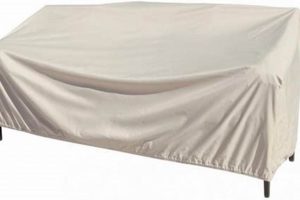
Tip 4: Implement Protective Measures: Employ strategies to minimize exposure to the elements. This may involve covering items during inclement weather, storing them indoors during winter months, or utilizing specialized sealants designed to protect against UV radiation and moisture penetration.
Tip 5: Employ Appropriate Cleaning Techniques: Utilize cleaning methods specifically recommended for the item’s material. Abrasive cleaners or harsh chemicals can damage delicate surfaces or remove original finishes. Mild detergents and soft brushes are generally preferred.
Tip 6: Consider Professional Restoration: For items with significant damage or deterioration, consider engaging a qualified restoration specialist. Professional restoration can preserve the item’s historical integrity while ensuring its structural soundness for continued use.
Tip 7: Document Provenance and Condition: Maintain detailed records of the item’s history, including purchase date, prior ownership (if known), and any restoration work performed. These records enhance the item’s value and provide essential information for future maintenance.
Adhering to these guidelines will facilitate the informed selection and proper care of period outdoor furnishings, preserving their historical significance and aesthetic appeal for years to come.
The subsequent section will address the integration of these pieces into contemporary garden designs and landscapes.
1. Material Composition

The fundamental character and longevity of outdoor furnishings from prior eras are inextricably linked to their material composition. The choice of materials directly influenced the furniture’s ability to withstand environmental stressors, such as moisture, sunlight, and temperature fluctuations, thereby determining its ultimate survival and condition as an item of potential interest. The properties inherent in materials like cast iron, wrought iron, wood (teak, oak, etc.), and wicker had a profound effect on how these pieces aged and the types of preservation techniques required to maintain them.
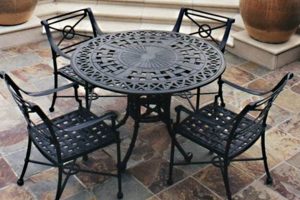
For example, cast iron, renowned for its robustness, was frequently employed in Victorian-era benches and tables. While resistant to deformation, cast iron is susceptible to corrosion. The presence of rust can significantly diminish the item’s structural integrity and aesthetic appeal. Conversely, teak, a dense and naturally oily hardwood, exhibits exceptional resistance to rot and insect infestation, making it a popular choice for durable outdoor furniture. Consequently, teak pieces often survive in better condition than those crafted from less resilient woods, such as pine or fir. Wicker, typically woven from rattan or willow, presents a different set of challenges. While lightweight and aesthetically pleasing, wicker is vulnerable to moisture damage and can become brittle and prone to breakage over time. Therefore, an understanding of the material’s specific vulnerabilities is crucial for informed acquisition and preservation efforts.
In conclusion, material composition is a critical determinant of the condition and value of antique garden furniture. The selection of appropriate preservation strategies and cleaning techniques is directly contingent upon identifying the materials used in the item’s construction. A thorough understanding of these materials and their inherent properties allows for responsible stewardship, ensuring that these historical pieces endure for future appreciation and enjoyment. Recognizing the interaction between material and environment allows collectors to determine authentic versus reproduction by understanding the natural degradation processes in differing regional climates.
2. Era-specific styles

The distinct design aesthetics prevalent during different historical periods exert a profound influence on the form, materials, and ornamentation of outdoor furnishings. Recognizing these stylistic variations is essential for accurately identifying, dating, and appreciating antique garden furniture. The stylistic details serve as markers of origin, revealing insights into the cultural and economic context in which the pieces were created.
- Victorian Era (c. 1837-1901)
Victorian garden furniture is characterized by elaborate ornamentation, often incorporating intricate cast iron scrollwork and floral motifs. Benches, chairs, and fountains from this period typically feature curvaceous lines and a sense of grandeur. Wrought iron and cast iron were the predominant materials, reflecting the industrial advancements of the time. For example, Coalbrookdale cast iron furniture, known for its intricate designs, exemplifies the Victorian aesthetic.
- Arts and Crafts Movement (c. 1880-1920)
Reacting against the mass-produced ornamentation of the Victorian era, the Arts and Crafts movement emphasized handcrafted quality and natural materials. Garden furniture from this period often features simple, rectilinear forms and an emphasis on functionality. Wood, particularly oak and teak, was a favored material, often left unadorned or with minimal embellishment. Examples include rustic wooden benches and tables with mortise and tenon joinery.
- Art Deco Period (c. 1920-1939)
The Art Deco period brought a streamlined and geometric aesthetic to garden furniture. Designs often incorporate bold geometric patterns, stylized floral motifs, and luxurious materials such as chrome and Bakelite. Tubular metal furniture became popular during this era, reflecting the influence of modern industrial design. An example includes metal framed chairs with bold geometric patterns on their fabric or metal back.
- Mid-Century Modern (c. 1945-1965)
Characterized by clean lines, minimalist design, and the use of new materials like molded plywood and plastic, Mid-Century Modern furniture focused on functionality and affordability. Outdoor pieces from this era frequently featured simple geometric shapes and a focus on comfortable, casual living. Examples might include plastic molded chairs or minimalist wrought iron tables.
The stylistic variations evident in antique garden furniture provide valuable clues to its origin and historical context. Understanding these era-specific styles enables collectors and enthusiasts to make informed decisions regarding acquisition, restoration, and appreciation of these historical pieces. Additionally, the varying styles showcase trends in design and production over time, further enhancing historical knowledge and appreciation.
3. Rarity and Provenance

The factors of scarcity and documented history hold significant sway in determining the value and desirability of period outdoor furnishings. Rarity, referring to the limited availability of certain pieces due to factors such as limited production runs or material scarcity, interacts dynamically with provenance, the documented ownership history, to elevate select items to exceptional status within the realm of collectible garden artifacts. Understanding the interplay between these two elements is paramount for serious collectors and historians.
- Limited Production and Design
Pieces produced in limited quantities, either due to experimental designs, specialized commissions, or short production runs, command higher prices. For example, a set of cast iron chairs from a manufacturer that only operated briefly in the late 19th century would inherently be rarer than items from a larger, more established foundry. Such pieces represent not only historical artifacts but also examples of unique artistic vision.
- Historical Association
Garden furniture associated with notable historical figures or events significantly increases its value. A bench known to have been located in a historically significant garden, for instance, adds layers of historical importance beyond its intrinsic aesthetic qualities. The provenance, meticulously documented through estate records, photographs, or historical accounts, validates the connection, enhancing its cultural and monetary value.
- Material Scarcity and Craftsmanship
The use of rare or discontinued materials, combined with exceptional craftsmanship, contributes to the scarcity and value of period outdoor furnishings. An example is a wrought iron gazebo constructed from a specific type of iron ore now depleted, displaying advanced forging techniques rarely seen today. The combination of material rarity and the high skill required for its creation makes such a piece highly sought after.
- Documentation and Traceability
Detailed records documenting the item’s journey from its creation to the present day are crucial for establishing provenance. Original sales receipts, manufacturer catalogs, or family records provide evidence of ownership and authenticity. The clearer the chain of ownership and the more extensive the documentation, the more confidently the item can be positioned within the market.
The interaction between rarity and provenance defines the upper echelons of the antique garden furniture market. Items possessing both exceptional scarcity and a well-documented history are highly valued by collectors seeking tangible links to the past. The verification of both elements through expert appraisal and careful historical research is essential to ensuring the long-term value and historical integrity of these pieces.
4. Original Finish

The presence and condition of the original finish on period outdoor furnishings represents a critical factor influencing value, authenticity, and historical integrity. The finish, whether paint, varnish, or a protective coating, provides direct evidence of the item’s history and the care it received over time. Its preservation, or lack thereof, speaks volumes about its past and significantly impacts its current worth.
- Authenticity Verification
The original finish serves as a benchmark for verifying authenticity. Examining the composition, texture, and application technique of the finish can help distinguish genuine period pieces from reproductions or heavily restored items. For instance, the presence of lead-based paint on cast iron furniture suggests a pre-1950s manufacture, while the absence of such paint might indicate a later origin or a more recent refinishing. Microscopic analysis of paint layers can reveal the sequence of applied coatings, offering clues about the item’s history and past repairs.
- Historical Information
The color and style of the original finish provide insights into the design sensibilities and manufacturing practices of the period. The prevalence of certain paint colors or finishing techniques can be linked to specific manufacturers or stylistic movements. A particular shade of green commonly used on Victorian-era wrought iron furniture, for example, reflects the era’s aesthetic preferences and the available pigment technology of the time. The presence of multiple layers of paint, each representing a different era, provides a chronological record of the item’s evolution and adaptation over time.
- Preservation Challenges
Maintaining the original finish presents significant preservation challenges. Exposure to the elements, including sunlight, moisture, and temperature fluctuations, can cause the finish to fade, crack, or peel. Physical wear and tear from use can also contribute to its deterioration. Effective preservation strategies involve minimizing exposure to harsh environmental conditions, employing gentle cleaning techniques, and using protective coatings designed to preserve the existing finish without altering its appearance. Ethical preservation prioritizes stabilizing the original finish over complete restoration, aiming to retain as much of the historical material as possible.
- Impact on Value
The condition of the original finish directly impacts the item’s market value. Pieces with well-preserved original finishes command higher prices than those that have been heavily restored or refinished. A weathered but intact original finish is often more desirable to collectors than a pristine but historically inaccurate restoration. The presence of the original finish not only enhances the item’s aesthetic appeal but also confirms its authenticity and provides a tangible link to its past, making it a more valuable and sought-after collectible.
The original finish represents an integral component of period outdoor furnishings, providing vital clues to their origin, history, and value. Its preservation requires a delicate balance between protecting the item from further deterioration and retaining its historical integrity. Understanding the significance of the original finish is crucial for collectors, historians, and anyone seeking to appreciate and preserve these tangible remnants of the past. The choice to preserve rather than restore often protects the item from irreversible damage and loss of its historical identity.
5. Structural condition

The physical integrity of period outdoor furnishings, denoted as “structural condition,” is paramount in assessing its longevity, safety, and overall value. A comprehensive evaluation transcends mere aesthetic considerations, demanding a meticulous examination of foundational elements and their capacity to withstand continued use and environmental stressors.
- Material Fatigue and Degradation
Prolonged exposure to environmental elements precipitates material fatigue in antique garden furniture. Metallic components, such as cast or wrought iron, are susceptible to corrosion, leading to weakened joints and potential structural failure. Wooden elements may exhibit rot, insect infestation, or warping, compromising their load-bearing capacity. Regular inspection for signs of material degradation is critical for ensuring stability and preventing accidents. For example, a cast iron bench displaying significant rust accumulation along its supports may be at risk of collapse under normal weight.
- Joint Integrity and Stability
The robustness of joints, whether welded, riveted, or mortise-and-tenon, directly impacts the overall stability of the furniture. Loose or compromised joints introduce instability and can accelerate further deterioration. Careful examination of joint connections is necessary to identify weaknesses and implement appropriate repair strategies. A wicker chair with frayed or broken weaving at its joints, for example, loses both its structural integrity and its aesthetic appeal.
- Load-Bearing Capacity and Weight Distribution
The ability of the furniture to safely support its intended load is a key aspect of structural condition. Uneven weight distribution or inherent design flaws can create stress points, leading to fractures or deformation. Assessing the furniture’s load-bearing capacity requires consideration of its original design specifications and the anticipated usage patterns. For instance, a wrought iron table with excessively slender legs may be prone to buckling under the weight of heavy objects.
- Repair History and Intervention Impact
Previous repairs, while potentially extending the life of the furniture, can also introduce new weaknesses or compromise its original structural integrity. Improper welding techniques, mismatched replacement materials, or poorly executed repairs can undermine the overall stability of the piece. A thorough assessment of repair history is essential to evaluate the long-term impact of past interventions and identify any potential risks. Consider a wooden bench where a previous repair used inappropriate adhesives leading to further wood rot, compromising its integrity.
The assessment of “structural condition” requires expertise in material science, historical construction techniques, and preservation practices. A comprehensive evaluation, considering material fatigue, joint integrity, load-bearing capacity, and repair history, ensures that antique garden furniture can be safely enjoyed and preserved for future generations. Overlooking the importance of these aspects can lead to irreversible damage or, worse, potential injuries caused by furniture failure. Therefore, assessing this topic is extremely important when collecting antique garden furniture.
6. Maker Identification
Determining the manufacturer of antique garden furniture is crucial for establishing its authenticity, historical context, and ultimately, its market value. The identification process relies on various indicators, including manufacturer markings, design characteristics, and historical records. The presence of a maker’s mark, such as a foundry stamp or a carved signature, offers direct evidence of origin. However, the absence of such marks does not necessarily preclude identification, as stylistic elements and construction techniques can often be attributed to specific manufacturers based on documented examples.
The significance of maker identification extends beyond mere authentication. It provides valuable insights into the furniture’s production methods, materials used, and design influences. For instance, identifying a cast iron bench as a product of Coalbrookdale, a renowned 19th-century British foundry, immediately places it within a specific historical and cultural context. The company’s reputation for intricate designs and high-quality craftsmanship enhances the item’s desirability and collectibility. Similarly, recognizing a wicker chair as a Heywood-Wakefield product, a prominent American manufacturer of wicker furniture, reveals its association with a particular design aesthetic and a legacy of innovative manufacturing techniques. The practical application of this knowledge allows collectors and historians to accurately categorize and interpret antique garden furniture, contributing to a deeper understanding of its historical and cultural significance.
However, maker identification presents challenges. Manufacturer markings can be faded, obscured, or intentionally removed. Stylistic elements can be ambiguous or subject to interpretation. Historical records may be incomplete or inaccessible. Overcoming these challenges requires a combination of expert knowledge, meticulous examination, and diligent research. The rewards for successful identification are substantial, offering a richer appreciation of the furniture’s history and a more informed assessment of its value. Ultimately, linking a piece to its maker elevates it from a mere object to a tangible representation of historical craftsmanship and design.
Frequently Asked Questions About Period Outdoor Furnishings
The following addresses common inquiries regarding the identification, valuation, and preservation of outdoor furnishings from earlier eras.
Question 1: How can one distinguish genuine period outdoor furniture from reproductions?
Authenticity verification involves a multi-faceted approach. Examination of construction techniques, material composition, and manufacturer markings is critical. Consulting specialized guides and expert appraisers can further aid in discerning genuine pieces from later reproductions. Discrepancies in these areas often point to a non-original item.
Question 2: What factors contribute to the valuation of these items?
Valuation is influenced by several variables. Rarity, provenance, condition, material, and maker all play significant roles. Pieces with documented historical connections, exceptional craftsmanship, and original finishes command higher prices. Scarcity invariably drives up market demand and, consequently, value.
Question 3: What are the most effective methods for preserving the condition of these furnishings?
Preservation strategies hinge on the material composition of the item. Protecting pieces from direct sunlight, moisture, and extreme temperature fluctuations is essential. Implementing appropriate cleaning techniques and applying protective coatings can further mitigate deterioration. Regular inspection and timely repairs are also crucial.
Question 4: How does one identify specific manufacturers of period outdoor furniture?
Identification often relies on manufacturer markings, stylistic characteristics, and historical documentation. Consulting manufacturer catalogs, trade publications, and museum collections can provide valuable insights. Online databases and expert networks also offer resources for identifying specific makers and their products.
Question 5: What types of restoration are considered acceptable for these items?
Ethical restoration prioritizes preservation over complete renewal. Interventions should aim to stabilize the item’s condition while retaining as much original material as possible. Historically accurate materials and techniques should be employed to avoid compromising the item’s authenticity. Comprehensive documentation of all restoration work is essential.
Question 6: Are there specific materials that are more desirable or valuable in these furnishings?
Certain materials, due to their inherent durability, aesthetic qualities, or historical significance, are more highly valued. Teak, wrought iron, and specific types of hardwoods are often sought after. The rarity and condition of the material significantly influence its desirability and impact on the overall valuation of the piece.
Key takeaways: Authentication, preservation, and valuation of outdoor furnishings from prior eras require specialized knowledge and a meticulous approach. Consulting with experts and conducting thorough research are vital for informed decision-making.
Subsequent sections will explore the integration of these pieces in contemporary garden designs, focusing on stylistic harmony and practical considerations.
Conclusion Regarding Period Outdoor Furnishings
This exploration has addressed crucial elements surrounding the acquisition, preservation, and historical significance of outdoor furnishings crafted in earlier eras. Key considerations include verifying authenticity, understanding material properties, recognizing stylistic variations, and assessing structural condition. The interplay of rarity, provenance, and the preservation of original finishes significantly impacts valuation and desirability.
The stewardship of period outdoor furnishings necessitates a commitment to informed decision-making and ethical preservation practices. Recognizing the historical and artistic value inherent in these pieces ensures their continued appreciation and integration within both public and private landscapes. Continued scholarship and responsible stewardship safeguard these tangible links to past eras.

![Protect & Extend: Garden Furniture Feet Protectors [Buy Now] | The Ultimate Gardening Guide: Grow a Thriving Garden Year-Round](https://MyGardenPatch.com/wp-content/uploads/2025/07/th-3169-300x200.jpg "Protect & Extend: Garden Furniture Feet Protectors [Buy Now] The Ultimate Gardening Guide: Grow a Thriving Garden Year-Round")