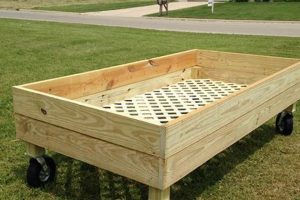
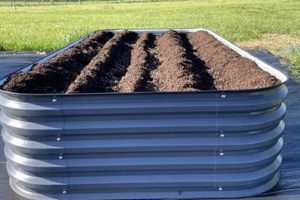
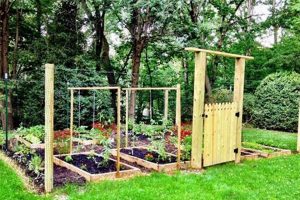
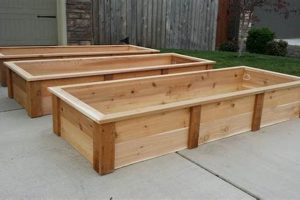
A rectangular structure, often constructed from wood, measuring four feet in width and eight feet in length, elevated above ground level and filled with soil for planting. These structures provide a defined space for cultivating plants, distinct from the surrounding landscape. An example includes using such a structure to grow vegetables like tomatoes, lettuce, and peppers in a backyard setting.
These elevated planting areas offer numerous advantages. They facilitate improved soil drainage, reduce soil compaction, and minimize weed intrusion. Their height provides easier access for planting, tending, and harvesting, reducing strain on the back and knees. Historically, similar methods of elevated gardening have been employed in regions with poor soil quality or limited space, demonstrating a practical solution to horticultural challenges.
Further discussion will explore the materials used in construction, optimal soil composition, plant selection strategies, and maintenance techniques relevant to maximizing productivity within this defined garden space. Considerations for drainage, pest control, and irrigation will also be addressed to ensure successful cultivation.
Optimizing a Defined Planting Area
The following guidelines offer insights into maximizing the productivity and longevity of a rectangular, elevated garden structure measuring four feet by eight feet.
Tip 1: Soil Composition: Prioritize a well-draining soil mix. A combination of topsoil, compost, and peat moss, in roughly equal proportions, provides the necessary nutrients and aeration for optimal plant growth. Avoid heavy clay soils that can impede drainage and root development.
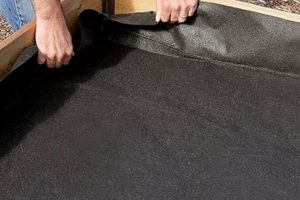
Tip 2: Structural Integrity: Employ rot-resistant lumber, such as cedar or redwood, or treated lumber specifically designed for garden use. Securely fasten the boards using exterior-grade screws or bolts to prevent warping or collapse over time. Consider lining the interior with landscape fabric to further protect the wood from moisture.
Tip 3: Strategic Planting: Implement the square foot gardening method to maximize space utilization. Carefully plan plant placement, considering mature size and sunlight requirements. Group plants with similar needs to streamline watering and fertilization efforts.
Tip 4: Consistent Watering: Monitor soil moisture levels regularly, especially during dry periods. Implement a drip irrigation system or utilize a soaker hose to deliver water directly to the roots, minimizing water loss through evaporation and reducing the risk of foliar diseases.
Tip 5: Pest and Disease Management: Implement preventative measures, such as crop rotation and companion planting, to deter pests and diseases. Regularly inspect plants for signs of infestation or infection, and promptly address any issues with appropriate organic or chemical treatments.
Tip 6: Vertical Gardening Integration: Maximize space by incorporating vertical elements such as trellises or supports for vining plants like tomatoes or cucumbers. This not only increases yield but also improves air circulation and sunlight penetration.
Tip 7: Seasonal Amendments: Replenish soil nutrients annually with compost or other organic amendments. Conduct soil tests periodically to determine any specific nutrient deficiencies and address them accordingly.
Implementing these techniques will foster a thriving and productive rectangular garden space.
The subsequent sections will delve into specific plant varieties suitable for this garden design and address advanced cultivation techniques.
1. Soil Composition
The success of any rectangular, elevated planting area measuring four feet by eight feet is inextricably linked to the composition of the soil it contains. This enclosed environment restricts access to naturally occurring soil horizons, making the selected soil mix the sole source of nutrients, water retention, and drainage. An inadequate soil composition directly results in stunted growth, nutrient deficiencies, and increased susceptibility to diseases. For example, using compacted clay soil in the elevated structure prevents proper root development and water drainage, leading to root rot and inhibiting nutrient uptake. Conversely, a soil mix that is too sandy will drain rapidly, resulting in insufficient moisture retention and necessitating frequent watering. The very limited soil space means that the soil in raised garden bed are easier to improve rather than in-ground garden bed.
Optimal soil composition within the structure consists of a balanced blend of topsoil, compost, and a soil amendment such as peat moss or coco coir. Topsoil provides a base structure, while compost introduces essential organic matter, enriching the soil with nutrients and improving water retention. The soil amendment serves to improve drainage and aeration. This carefully considered mixture fosters a thriving root system, facilitating efficient nutrient absorption and robust plant growth. Failure to address compaction issues, aeration or other issue may require amending with perlite, vermiculite and other product.
In summary, the soil within a 4 x 8 elevated garden structure is not merely a medium but a foundational element dictating plant health and productivity. Careful attention to soil composition, including the precise balance of organic matter, drainage, and nutrient content, is paramount for successful cultivation. Overlooking this critical aspect leads to suboptimal plant growth and diminished yields, negating many of the inherent advantages of elevated gardening. The limitation of a rectangular, elevated planting area measuring four feet by eight feet also is good learning opportunity that soil composition is key.
2. Structural Materials

The selection of structural materials for a rectangular, elevated planting structure measuring four feet by eight feet directly influences its longevity, stability, and suitability for horticultural purposes. The materials used define the physical integrity of the structure, impacting its capacity to contain the soil medium, withstand environmental stressors, and resist degradation over time. For instance, using untreated lumber in a moist environment will inevitably lead to rot and eventual structural failure, compromising the integrity of the growing space and potentially damaging the plants within. Conversely, choosing appropriate materials like naturally rot-resistant wood or treated lumber extends the lifespan of the structure and minimizes maintenance requirements. Material costs, ease of assembly, environmental impact and safety are all things to consider.
Commonly employed materials include cedar, redwood, and pressure-treated lumber. Cedar and redwood possess natural resistance to decay and insect infestation, making them well-suited for outdoor applications. Pressure-treated lumber undergoes a chemical process to enhance its resistance to rot and decay, but considerations regarding chemical leaching into the soil must be addressed. Alternatives such as composite lumber or recycled plastic offer enhanced durability and environmental benefits, but may present different cost and aesthetic considerations. The appropriate choice depends on budget constraints, desired aesthetic, and environmental priorities. One must also be aware of the intended goal for the raised garden bed. Some may wish to grow specific plants in the future, but the lumber chosen may be harmful to the plants. Consider the health aspect.
In summary, structural materials are a critical determinant of the success and longevity of a 4 x 8 elevated planting structure. Proper selection, based on durability, environmental impact, cost, and aesthetic considerations, directly impacts the structure’s ability to provide a stable and reliable growing environment. The choice between natural wood, treated lumber, or alternative materials must be carefully evaluated to ensure the long-term viability and functionality of the garden bed. The type of material used could affect the types of plant one wishes to grow.
3. Plant Spacing

Plant spacing is a critical determinant of the success and productivity of a rectangular, elevated planting structure measuring four feet by eight feet. Due to the confined space, optimizing plant density is essential to maximize yields and prevent resource competition.
- Light Penetration
Inadequate spacing leads to overcrowding, restricting light penetration to lower leaves. This reduction in light diminishes photosynthetic efficiency, impacting overall plant growth and fruit production. For example, closely planting tomato seedlings within the structure results in a dense canopy that shades lower branches, hindering fruit ripening and increasing susceptibility to fungal diseases.
- Air Circulation
Insufficient spacing impairs air circulation, creating a humid microclimate that favors the development of fungal diseases such as powdery mildew and blight. Proper spacing allows for adequate airflow, reducing humidity and minimizing the risk of disease outbreaks. Dense plantings of squash within the structure, for example, can create an environment conducive to squash vine borer infestations due to reduced airflow and increased humidity.
- Nutrient Competition
Overcrowding results in increased competition for essential nutrients within the limited soil volume. Plants compete for nitrogen, phosphorus, potassium, and other micronutrients, potentially leading to deficiencies and stunted growth. For instance, planting multiple rows of leafy greens too close together depletes soil nutrients rapidly, resulting in smaller, less productive plants.
- Root Development
Limited space necessitates careful consideration of root systems. Insufficient spacing hinders root development, restricting access to water and nutrients. Overcrowding also promotes root entanglement, further exacerbating competition and potentially leading to root rot. Planting larger vegetables like broccoli too closely restricts root growth, resulting in smaller heads and reduced yields.
Optimal plant spacing within the defined area requires careful planning and consideration of mature plant size. Utilizing techniques such as square foot gardening allows for efficient space utilization while ensuring adequate light, air circulation, and nutrient availability. Strategic spacing promotes healthy growth, maximizes yields, and minimizes the risk of disease and pest infestations within the four-foot by eight-foot rectangular garden.
4. Water Management

Effective water management is crucial within a rectangular, elevated planting structure measuring four feet by eight feet due to its inherent constraints and amplified environmental exposure. The elevated nature of the structure promotes quicker drainage compared to in-ground gardens, leading to increased evaporation and the potential for rapid soil drying. Consequently, inconsistent watering practices can swiftly induce plant stress, hindering nutrient uptake and suppressing overall growth. For instance, during periods of high temperatures or intense sunlight, a neglected elevated structure can exhibit signs of wilting within a matter of hours, particularly among water-sensitive plants like lettuce or spinach. Overwatering, conversely, creates anaerobic conditions in the soil, fostering root rot and fungal diseases, which can rapidly decimate plant populations within the confined space.
Successful water management within this limited area necessitates a combination of strategies. Implementing a drip irrigation system delivers water directly to plant roots, minimizing surface evaporation and maximizing water efficiency. Mulching the soil surface with organic materials such as straw or wood chips reduces moisture loss and regulates soil temperature. Regular monitoring of soil moisture levels through manual probing or the use of soil moisture sensors ensures that watering schedules are adjusted to meet the specific needs of the plants. Moreover, selecting plant species with similar water requirements and grouping them together within the structure facilitates targeted watering and minimizes the risk of over or under-watering individual plants. A well-drained soil composition will help retain just the right amount of water.
In conclusion, water management constitutes a fundamental aspect of cultivating plants within a 4 x 8 elevated planting structure. The elevated design amplifies the challenges associated with maintaining optimal soil moisture levels, necessitating proactive and informed watering practices. Consistent monitoring, efficient irrigation techniques, and the strategic selection of plant species are essential for mitigating the risks of water stress, promoting healthy plant growth, and maximizing the yield potential of the garden.
5. Pest Control
Effective pest control within a four-foot by eight-foot elevated garden structure is crucial for maintaining plant health and maximizing yield. The confined space intensifies the impact of pest infestations, necessitating proactive and targeted strategies to mitigate potential damage.
- Early Detection and Identification
The limited area of the rectangular, elevated planting space facilitates easier and more frequent inspection for signs of pest activity. Early detection allows for prompt intervention, preventing minor infestations from escalating into widespread problems. Identifying specific pests is essential for selecting appropriate control methods, whether biological, chemical, or cultural. For example, recognizing the presence of aphids on tomato plants enables the application of insecticidal soap or the introduction of beneficial insects like ladybugs.
- Physical Barriers
Utilizing physical barriers is particularly effective within the controlled environment of a four-foot by eight-foot elevated structure. Covering the bed with insect netting prevents flying pests, such as cabbage moths and squash vine borers, from accessing plants. Installing copper tape around the perimeter deters slugs and snails. These physical barriers minimize the need for chemical interventions, promoting an organic gardening approach.
- Beneficial Insects
Introducing beneficial insects within the confined space can provide effective biological pest control. Ladybugs, lacewings, and parasitic wasps prey on common garden pests, such as aphids, whiteflies, and caterpillars. Maintaining a balanced ecosystem within the structure, by providing habitat and food sources for beneficial insects, supports a natural pest control mechanism. A small structure can foster a good environment for beneficial insects to flourish.
- Cultural Practices
Implementing sound cultural practices within the four-foot by eight-foot elevated garden structure minimizes pest problems. Crop rotation disrupts pest life cycles, preventing the buildup of soilborne pests and diseases. Removing diseased or infested plant material promptly limits the spread of infestations. Maintaining proper plant spacing promotes air circulation, reducing humidity and discouraging fungal diseases that often accompany pest outbreaks.
These facets collectively highlight the importance of integrated pest management within a four-foot by eight-foot elevated garden structure. Combining early detection, physical barriers, beneficial insects, and sound cultural practices creates a resilient and productive growing environment. Proactive pest control strategies are essential for mitigating potential damage and maximizing the yield potential of the confined space. Failure to address these can result in devastating losses that can quickly escalate within a closed environment.
Frequently Asked Questions
The following questions address common inquiries regarding the design, construction, and utilization of rectangular, elevated planting structures measuring four feet by eight feet.
Question 1: What is the ideal lumber thickness for constructing a 4 x 8 elevated garden structure?
A minimum lumber thickness of two inches is recommended to ensure structural integrity and prevent warping or bowing, especially when filled with soil. Thicker lumber offers greater durability and longevity.
Question 2: How much soil is required to fill a 4 x 8 elevated garden bed?
A structure measuring four feet by eight feet and one foot in height requires approximately 32 cubic feet of soil. This volume provides sufficient depth for root development and nutrient retention.
Question 3: Is a liner necessary for a 4 x 8 elevated garden structure?
While not essential, a liner, such as landscape fabric, can extend the lifespan of the wooden structure by preventing direct contact between the soil and the wood. This reduces the risk of rot and decay.
Question 4: How frequently should a 4 x 8 elevated garden structure be watered?
Watering frequency depends on factors such as climate, soil composition, and plant type. Regular monitoring of soil moisture levels is essential to determine appropriate watering intervals. Overwatering or under watering must be avoided.
Question 5: Can a 4 x 8 elevated garden structure be placed directly on grass?
It is advisable to remove the grass layer before positioning the structure to prevent grass from growing into the bed and competing with the cultivated plants. Landscape fabric can be placed beneath the structure to further suppress weed growth.
Question 6: What are some suitable vegetables for planting in a 4 x 8 elevated garden structure?
Leafy greens, root vegetables, tomatoes, peppers, and herbs are well-suited for cultivation within a 4 x 8 elevated structure. Plant selection should consider available space and sunlight requirements.
Understanding these considerations ensures the successful construction and utilization of a 4 x 8 elevated garden structure, maximizing its productivity and longevity.
The subsequent sections will explore advanced cultivation techniques and address specific plant varieties suitable for this garden design.
In Conclusion
This exploration has detailed the multifaceted considerations involved in effectively utilizing a 4 x 8 raised garden bed. Topics including soil composition, structural integrity, strategic planting, water management, and pest control have been addressed, underscoring their individual and collective importance in achieving optimal horticultural outcomes. These elements are critical for maximizing plant health and productivity within the defined spatial limitations.
Mastering these principles equips individuals with the knowledge to cultivate thriving gardens. Continued research and adaptation of techniques are encouraged to refine cultivation practices and ensure long-term success. The 4 x 8 raised garden bed presents a controlled environment, enabling the application of precise horticultural strategies for consistently productive results.