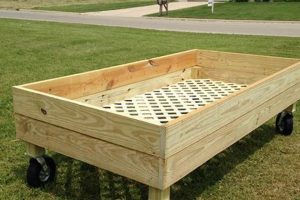
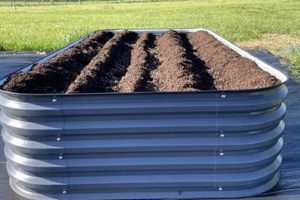
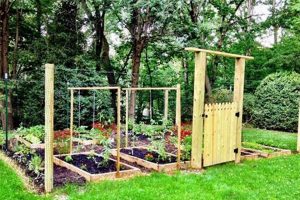
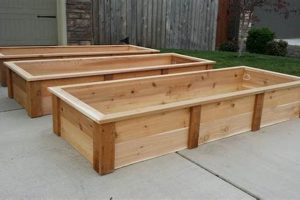
A rectangular planting structure, measuring three feet by six feet, elevated above the ground and designed specifically for cultivating edible plants represents a manageable and accessible gardening option. This structured arrangement provides a defined area for soil and plants, differing significantly from traditional in-ground gardening. As an example, a homeowner might construct a wooden frame measuring three feet wide and six feet long, filling it with a custom soil blend to create such a garden.
The advantages of this garden type are numerous, including improved soil control, reduced back strain, and enhanced accessibility for individuals with mobility limitations. Historically, raised beds have been employed in various forms to improve drainage, extend the growing season, and manage soilborne diseases. The defined space simplifies tasks such as weeding, watering, and pest control, contributing to increased yields and a more organized garden environment.
The following sections will delve into optimal plant selection, spatial arrangement strategies, companion planting techniques, and essential maintenance practices tailored to this specific type of garden. Attention to these details will maximize the productivity and enjoyment derived from a small-scale vegetable garden.
Optimizing a Small-Scale Vegetable Garden
The efficient use of space is crucial when cultivating vegetables within a compact, rectangular raised bed. The following tips address critical considerations for maximizing yield and promoting plant health.
Tip 1: Vertical Gardening Utilization: Incorporate trellises or supports for vining plants such as tomatoes, cucumbers, or beans. This technique allows plants to grow upwards, conserving valuable ground space and improving air circulation.
Tip 2: Intensive Planting Methods: Employ square-foot gardening principles to determine the appropriate spacing for each vegetable type. Group compatible plants closely together to maximize space utilization while ensuring adequate sunlight and airflow.
Tip 3: Succession Planting Implementation: Plant quick-maturing crops like radishes, lettuce, or spinach between slower-growing vegetables. As the faster-maturing crops are harvested, the space becomes available for the slower-growing plants to expand.
Tip 4: Companion Planting Strategies: Select plant pairings that offer mutual benefits. For example, planting basil near tomatoes can deter pests and improve tomato flavor, while marigolds can repel nematodes.
Tip 5: Crop Rotation Practices: Rotate vegetable families annually to prevent soil depletion and reduce the risk of soilborne diseases. Avoid planting the same type of vegetable in the same location year after year.
Tip 6: Optimal Soil Management: Use a well-draining soil mix amended with compost or other organic matter. Regular soil testing is recommended to maintain appropriate pH levels and nutrient availability.
Tip 7: Efficient Irrigation Techniques: Implement drip irrigation or soaker hoses to deliver water directly to plant roots, minimizing water waste and reducing the risk of foliar diseases.
Consistent application of these strategies will contribute significantly to the success of a small-scale vegetable garden, maximizing productivity within the confines of the limited space.
The next section will address common challenges encountered in this type of garden and offer solutions to mitigate potential issues.
1. Orientation

Orientation, in the context of a rectangular elevated planting structure, is the direction in which the bed is positioned relative to the sun. The alignment directly influences the amount of sunlight received by the plants throughout the day, thereby affecting their growth and productivity. A suboptimal orientation can result in insufficient sunlight, leading to stunted growth, reduced yields, and increased susceptibility to diseases. Conversely, excessive sunlight, particularly in hotter climates, can cause leaf scorch and water stress.
For example, in the northern hemisphere, orienting the longer side of the structure along an east-west axis typically provides the most uniform sunlight exposure throughout the day. Taller plants should be placed on the north side of the bed to prevent them from shading smaller, sun-loving plants. Conversely, in the southern hemisphere, the placement of taller plants should be on the south side. In situations where full sun is not available, selecting shade-tolerant vegetables becomes crucial. Common vegetables benefit from at least six hours of direct sunlight daily, though some leafy greens thrive with only four hours.
Consequently, a precise understanding of local sunlight patterns and careful selection of plants according to their light requirements are essential elements of garden planning. Failure to consider orientation can negate other diligent efforts, such as soil improvement and pest management. The relationship between orientation and plant health is a fundamental determinant of garden success.
2. Soil Composition

Soil composition is a critical determinant of plant health and productivity within a compact vegetable garden. The selection of appropriate soil directly affects nutrient availability, water retention, drainage, and overall root development, all of which are essential for successful cultivation in a limited space.
- Nutrient Content
The soil must provide essential macronutrients (nitrogen, phosphorus, potassium) and micronutrients (iron, manganese, zinc) in bioavailable forms. A soil test is recommended to determine existing nutrient levels and identify any deficiencies. Amending the soil with compost, well-rotted manure, or organic fertilizers can correct nutrient imbalances and improve overall soil fertility. For instance, nitrogen deficiency can lead to stunted growth and yellowing leaves, while phosphorus deficiency can hinder root development and fruit production.
- Water Retention and Drainage
An ideal soil composition balances water retention and drainage. Excessive water retention can lead to root rot, while inadequate water retention can result in drought stress. Incorporating organic matter, such as peat moss or coconut coir, improves water-holding capacity in sandy soils and enhances drainage in clay-heavy soils. Proper drainage is particularly important in raised beds to prevent waterlogging and maintain optimal root health. Raised beds inherently have better drainage than in-ground gardens due to their elevated structure.
- Soil Structure and Aeration
Soil structure refers to the arrangement of soil particles and their aggregation into larger units. Well-structured soil allows for adequate aeration, which is essential for root respiration and microbial activity. Compacted soil restricts root growth and inhibits nutrient uptake. Amending the soil with organic matter and avoiding excessive tilling promotes a crumbly soil structure with good aeration. Roots require oxygen to properly function; compacted soils eliminate the necessary air pockets for healthy root development.
- pH Level
Soil pH influences the availability of nutrients to plants. Most vegetables thrive in a slightly acidic to neutral pH range (6.0 to 7.0). Soil pH can be adjusted by adding lime to raise the pH or sulfur to lower the pH. Regular soil testing is crucial to monitor pH levels and ensure optimal nutrient availability. For example, blueberries require acidic soil (pH 4.5 to 5.5) to thrive, while most other common vegetables are best suited to a slightly acidic or neutral level.
In conclusion, careful consideration of soil composition is paramount when establishing and maintaining a compact garden. Addressing nutrient content, water retention, soil structure, and pH level ensures that plants have access to the resources they need to thrive within the constraints of the designated area. Selection and amendment of appropriate soil mixes significantly impact overall productivity and plant vitality.
3. Plant Selection

The selection of suitable plant varieties is a critical factor in maximizing productivity within a confined planting area. The success of a compact vegetable garden hinges on choosing plants that are well-suited to the limited space and resources available.
- Growth Habit and Size
Consideration must be given to the mature size and growth habit of each plant. Select compact or bush varieties of vegetables, such as bush beans or dwarf tomatoes, that require less space than their sprawling counterparts. Avoid planting aggressive or vining species that can quickly overtake the area, shading out neighboring plants and hindering their growth. For example, indeterminate tomato varieties, if not properly supported and pruned, can become unmanageable in a small raised bed.
- Sunlight Requirements
Each vegetable species has specific sunlight requirements. Ensure that the selected plants are compatible with the amount of sunlight available in the designated location. Arrange plants strategically, placing taller varieties on the north side of the bed (in the Northern Hemisphere) to prevent them from shading smaller, sun-loving plants. Failure to account for sunlight requirements can result in stunted growth and reduced yields. For instance, leafy greens like lettuce and spinach can tolerate partial shade, while fruiting vegetables like tomatoes and peppers require at least six hours of direct sunlight daily.
- Root Depth and Spacing
Different vegetables have varying root depths and spacing requirements. Group plants with similar needs together to optimize water and nutrient uptake. Avoid overcrowding, as it can lead to competition for resources and increase the risk of disease. Refer to seed packets or plant labels for recommended spacing guidelines. Shallow-rooted vegetables, such as radishes and lettuce, can be planted closer together than deep-rooted vegetables, such as carrots and parsnips.
- Succession Planting Compatibility
Plan the planting schedule to maximize the use of available space and extend the harvest season. Select vegetables with different maturity rates to allow for succession planting. As one crop is harvested, another can be planted in its place. For example, planting radishes or spinach between rows of slower-growing vegetables, such as broccoli or cabbage, can effectively utilize available space. The faster-maturing crops will be harvested before the slower-growing crops require the entire area.
Thoughtful selection of plant varieties, considering their growth habit, sunlight requirements, root depth, and succession planting compatibility, is essential for achieving a productive and well-managed small-scale vegetable garden. Prioritizing these factors optimizes space utilization and enhances the overall success of the cultivation effort within the constraints of a 3×6 raised bed.
4. Water Management

Water management is a critical element within the context of a compact vegetable garden, such as a 3×6 raised bed. The limited volume of soil in such a structure necessitates careful monitoring and regulation of moisture levels to ensure optimal plant health. Due to its defined boundaries and elevated position, a raised bed can experience both rapid drainage and quicker drying compared to in-ground gardens. Inadequate water supply leads to drought stress, stunted growth, and reduced yields. Conversely, overwatering saturates the soil, depriving roots of oxygen and increasing the risk of root rot and fungal diseases. The relationship between water availability and plant health is therefore more pronounced in a confined space, requiring conscientious application of appropriate irrigation techniques.
Several practical strategies can be employed to effectively manage water in a small raised bed. Drip irrigation systems, for example, deliver water directly to the root zone, minimizing water loss through evaporation and reducing the risk of foliar diseases associated with overhead watering. Mulching with organic materials, such as straw or wood chips, helps to conserve soil moisture by reducing evaporation and suppressing weed growth, which can compete for water resources. Additionally, selecting drought-tolerant vegetable varieties reduces the overall water demand of the garden. Regular soil moisture monitoring, through visual inspection or the use of moisture meters, enables gardeners to adjust irrigation schedules based on actual plant needs, avoiding both underwatering and overwatering. The effectiveness of these techniques is contingent upon the specific soil type, climate conditions, and plant species cultivated.
In summary, effective water management is indispensable for maximizing the productivity and longevity of a 3×6 raised bed vegetable garden. The restricted soil volume and heightened susceptibility to moisture fluctuations necessitate meticulous attention to irrigation practices, mulching, and plant selection. Integrating these strategies optimizes water use, promotes healthy plant growth, and mitigates the risks associated with both water scarcity and excess. The benefits derived from a well-managed irrigation system directly correlate with increased yields and enhanced plant resilience within the limited spatial confines of the garden.
5. Pest Control

The management of pests in a compact vegetable garden is intrinsically linked to its physical design. A 3×6 raised bed, while offering advantages in terms of soil control and accessibility, presents unique challenges regarding pest infestations. The concentrated planting area can create a conducive environment for rapid pest proliferation. Proximity of plants increases the likelihood of pest transmission between individuals, potentially leading to widespread damage. The enclosed nature of the bed might also impede the natural movement of beneficial insects that would otherwise act as biological controls. For example, an aphid infestation on one tomato plant can quickly spread to adjacent plants in a confined raised bed, requiring swift intervention. The design of the bed, therefore, dictates the necessity of vigilant monitoring and proactive pest management strategies.
Implementing effective pest control methods within a 3×6 raised bed requires a multifaceted approach. Physical barriers, such as row covers or netting, can prevent pests from accessing plants. Handpicking larger pests, such as caterpillars or slugs, is a feasible option in a small garden. Companion planting, utilizing species that repel or confuse pests, can provide a natural deterrent. For instance, planting marigolds near tomatoes can deter nematodes and certain flying insects. The selection of pest-resistant vegetable varieties also minimizes the risk of infestation. Additionally, proper sanitation practices, such as removing fallen leaves and debris, reduce overwintering sites for pests and diseases. Careful consideration of these strategies, adapted to the specific pest pressures in a given region, is crucial for maintaining a healthy garden ecosystem.
In conclusion, pest control is an indispensable component of successful vegetable gardening within a 3×6 raised bed layout. The compact nature of the design necessitates a proactive and integrated approach to pest management. By combining physical barriers, biological controls, and careful monitoring, gardeners can mitigate pest damage, promote plant health, and maximize yields. The effectiveness of these methods hinges on a thorough understanding of local pest populations and the specific needs of the cultivated vegetables. Sustainable pest control practices are essential for preserving the long-term productivity of the small-scale garden.
6. Spatial Arrangement
Spatial arrangement, within the context of a rectangular, elevated planting structure, refers to the purposeful organization of individual plants to optimize resource utilization and enhance overall garden productivity. The dimensions of the bed necessitate meticulous planning to avoid overcrowding, ensure adequate sunlight exposure, and facilitate proper air circulation, all of which directly impact plant health and yield.
- Plant Height and Sunlight Exposure
The strategic placement of plants based on their mature height is essential for maximizing sunlight capture. Taller varieties should be positioned on the north side of the bed (in the Northern Hemisphere) to prevent them from shading smaller, sun-loving plants. This arrangement ensures that all plants receive sufficient sunlight for photosynthesis. Failure to consider plant height can result in stunted growth and reduced yields for shaded plants. For example, placing tomato plants on the south side of the bed will likely deprive herbs and leafy greens of the sunlight needed for optimal growth.
- Companion Planting Considerations
Spatial arrangement should incorporate the principles of companion planting, grouping together plants that offer mutual benefits. Certain plant combinations can deter pests, attract beneficial insects, improve nutrient uptake, or enhance flavor. For example, planting basil near tomatoes can repel insects and improve tomato flavor, while marigolds can deter nematodes. Understanding the synergistic relationships between different plant species is crucial for optimizing the garden’s ecosystem and reducing the need for chemical interventions.
- Spacing and Air Circulation
Adhering to recommended spacing guidelines is critical for promoting adequate air circulation and preventing disease. Overcrowding restricts airflow, creating a humid environment that is conducive to fungal diseases. Proper spacing also allows plants to develop their root systems without competing for resources. Refer to seed packets or plant labels for specific spacing recommendations for each vegetable variety. Thinning seedlings as they grow ensures that each plant has sufficient space to thrive. For example, overcrowding spinach or lettuce seedlings can lead to bolting and reduced yields.
- Succession Planting Implementation
Spatial arrangement can be adapted to accommodate succession planting, where quick-maturing crops are interplanted with slower-growing vegetables. This technique maximizes the use of available space and extends the harvest season. For example, planting radishes or spinach between rows of slower-growing crops like broccoli or cabbage allows for efficient use of the area. As the faster-maturing crops are harvested, the slower-growing crops have more room to expand.
These spatial considerations are not merely aesthetic choices; they are fundamental to the successful cultivation of vegetables within the constraints of a defined planting area. By carefully planning the arrangement of plants, considering their sunlight requirements, companion planting potential, spacing needs, and succession planting opportunities, gardeners can maximize productivity and create a thriving ecosystem within a 3×6 raised bed.
Frequently Asked Questions
This section addresses common inquiries regarding the planning, construction, and maintenance of a rectangular, elevated planting structure intended for vegetable cultivation. The information provided aims to clarify key aspects and mitigate potential challenges associated with this gardening approach.
Question 1: What are the optimal dimensions for a 3×6 raised bed vegetable garden layout?
A width of three feet allows for easy access from either side, minimizing soil compaction. A length of six feet provides sufficient space for a variety of vegetable plants while remaining manageable for construction and maintenance.
Question 2: What type of materials are suitable for constructing a 3×6 raised bed vegetable garden layout?
Untreated wood, such as cedar or redwood, is a durable and long-lasting option. Composite lumber offers resistance to decay and insects. Concrete blocks or bricks provide a sturdy and aesthetically pleasing alternative, although they may require more effort to install.
Question 3: How much soil is required to fill a 3×6 raised bed vegetable garden layout?
The amount of soil needed depends on the desired bed depth. A bed with a depth of 12 inches requires approximately 18 cubic feet of soil. A combination of topsoil, compost, and other organic matter is recommended for optimal plant growth.
Question 4: What vegetables are best suited for a 3×6 raised bed vegetable garden layout?
Compact or bush varieties of vegetables are ideal for maximizing space. Examples include bush beans, dwarf tomatoes, peppers, lettuce, spinach, and radishes. Vining crops, such as cucumbers and squash, can be grown vertically on trellises to conserve space.
Question 5: How should a 3×6 raised bed vegetable garden layout be oriented for optimal sunlight exposure?
In the Northern Hemisphere, orienting the longer side of the bed along an east-west axis generally provides the most uniform sunlight exposure throughout the day. Taller plants should be placed on the north side to prevent them from shading smaller plants. The opposite is true for the Southern Hemisphere.
Question 6: How often should a 3×6 raised bed vegetable garden layout be watered?
Watering frequency depends on factors such as climate, soil type, and plant species. Generally, the soil should be kept consistently moist but not waterlogged. Drip irrigation or soaker hoses are effective methods for delivering water directly to plant roots.
The information provided in these FAQs offers a foundational understanding of key considerations for successful vegetable gardening within a 3×6 raised bed. Careful planning, appropriate material selection, and diligent maintenance practices contribute significantly to the productivity and longevity of this gardening approach.
The subsequent section will summarize the key benefits of a 3×6 raised bed vegetable garden layout and offer concluding remarks regarding its suitability for various gardening contexts.
Conclusion
This exploration of the 3×6 raised bed vegetable garden layout has highlighted several key advantages. Its manageable size makes it suitable for limited spaces, such as urban environments or small backyards. The elevated structure improves soil drainage and accessibility, reducing physical strain. Careful plant selection, strategic spatial arrangement, and diligent water management are crucial for maximizing productivity within its defined boundaries. Proactive pest control measures are also essential for safeguarding plant health in this compact environment.
The enduring appeal of the 3×6 raised bed vegetable garden layout lies in its adaptability and efficiency. It represents a practical approach to cultivating fresh produce in a controlled and accessible manner. Continued innovation in small-space gardening techniques will likely further enhance the productivity and sustainability of this method, contributing to increased self-sufficiency and a greater appreciation for locally grown food.