



A common plumbing adaptation involves connecting systems with differing thread standards. Specifically, it bridges the gap between a 3/4 inch National Pipe Thread (NPT), a standard used for many rigid plumbing connections, and the more familiar garden hose thread (GHT), found on outdoor spigots and watering equipment. This connection often employs a specialized fitting that features a male or female 3/4 inch NPT end on one side and a male or female GHT end on the other, facilitating a secure and leak-resistant link. For example, one might use such a fitting to connect a pressure washer with a 3/4 inch NPT outlet to a standard garden hose.
This type of adapter is crucial for creating versatile and adaptable water systems. Its use minimizes the need for permanent plumbing modifications, allowing for temporary connections and disconnections as needed. Historically, the need for such adapters arose from the divergence in plumbing and irrigation standards, creating incompatibility between various water-using devices. The availability of reliable adapters simplifies equipment setup and usage, saving time and preventing potential damage from makeshift or incompatible connections.
Understanding the nuances of thread standards and adapter options is key to effectively utilizing water resources. The following sections will delve into specific types of adapters, materials used in their construction, and best practices for ensuring a reliable and leak-free connection in diverse applications.
Essential Tips for Connecting 3/4 NPT to Garden Hose
Ensuring a secure and leak-free connection between a 3/4 inch National Pipe Thread (NPT) outlet and a standard garden hose requires careful consideration of materials, thread compatibility, and proper installation techniques. The following tips offer guidance for achieving optimal results.
Tip 1: Select the Correct Adapter. Verify that the adapter precisely matches the male or female configuration of both the 3/4 NPT fitting and the garden hose. Mismatched threads can lead to leaks and potential damage to the connected components.
Tip 2: Utilize Thread Sealant. Apply Teflon tape or pipe dope to the 3/4 NPT threads prior to assembly. This sealant fills microscopic gaps in the threads, creating a watertight seal and preventing corrosion. Wrap the tape in the direction of the threads.
Tip 3: Avoid Over-Tightening. Overtightening the adapter can strip the threads or damage the connected fittings. Tighten the connection until snug, then add a quarter turn. Observe the joint for any signs of leakage.
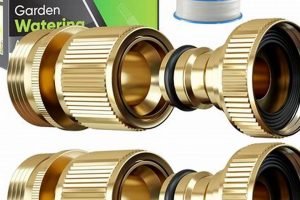
Tip 4: Choose Durable Materials. Opt for adapters made from brass, stainless steel, or high-quality engineered plastics. These materials resist corrosion, withstand high water pressure, and provide long-term durability.
Tip 5: Inspect for Damage. Before installation, carefully examine the adapter and the connected fittings for any signs of cracks, dents, or damaged threads. Replace any compromised components to prevent leaks.
Tip 6: Consider Flow Rate. If connecting to a high-flow device such as a pressure washer, ensure the adapter and hose are adequately sized to handle the volume of water. Restricted flow can reduce performance and potentially damage equipment.
Tip 7: Use a Wrench for Tightening. Employ a properly sized wrench to tighten the connection. Avoid using pliers, which can damage the adapter and prevent a secure seal.
By adhering to these guidelines, a reliable and leak-free connection can be established, maximizing the performance and longevity of the connected water systems. Proper preparation and attention to detail are crucial for achieving optimal results.
The subsequent sections will explore troubleshooting common connection issues and providing preventative maintenance strategies to extend the lifespan of these vital plumbing components.
1. Compatibility

Compatibility forms the foundational principle in effectively connecting a 3/4 inch NPT fitting to a garden hose. The two systems operate on fundamentally different thread standards, requiring a carefully selected adapter to bridge the discrepancy. Direct connection without a compatible adapter invariably results in leaks and potential damage to the threaded components. The NPT standard, characterized by its tapered threads, is designed for creating a tight, leak-resistant seal in plumbing applications. Garden hose threads (GHT), conversely, are parallel and rely on a rubber washer for sealing. Therefore, an adapter must precisely match the male or female configuration of both the NPT and GHT connections. Failure to observe this compatibility leads to cross-threading, a condition where threads are forced together incorrectly, resulting in compromised seals and potential fitting failure. For instance, attempting to connect a male NPT fitting directly into a female GHT outlet will damage the threads and not create a secure connection.
Practical application of this understanding translates directly into water conservation and system efficiency. Correctly identifying the necessary adapter, whether a 3/4 inch male NPT to male GHT or a 3/4 inch female NPT to female GHT, is essential for achieving a leak-free connection. The adapter itself must be constructed of durable materials like brass or engineered plastics to withstand water pressure and environmental conditions. Furthermore, ensuring the chosen adapter is specifically designed for the intended purpose, such as potable water or irrigation systems, is crucial for regulatory compliance and system integrity. Ignoring compatibility requirements can lead to water wastage, increased utility bills, and potential environmental harm due to uncontrolled leaks.
In summary, compatibility is not merely a desirable attribute but an absolute necessity for successfully and safely connecting systems utilizing dissimilar thread standards. Selecting the correct adapter based on thread type, gender, and application ensures a secure, leak-free connection that contributes to water conservation and system longevity. Overlooking this fundamental aspect introduces the risk of system failure, material degradation, and ultimately, the inefficient use of water resources. Identifying and adhering to compatibility standards remain paramount for any application involving the connection of 3/4 inch NPT and garden hose components.
2. Thread Sealant

Thread sealant plays a crucial role in establishing a secure and leak-free connection between a 3/4 inch NPT (National Pipe Thread) fitting and a garden hose, despite their inherent differences in thread design and sealing mechanisms. Its application mitigates potential leakage pathways, ensuring efficient water transfer.
- Function in Dissimilar Thread Connections
NPT threads rely on a tapered design for a mechanical seal, whereas garden hose threads are parallel and require a gasket or washer. Wh
en connecting these differing systems, thread sealant, typically in the form of Teflon tape or pipe dope, fills the microscopic gaps between the threads. This action compensates for the lack of a dedicated sealing surface on the NPT side, preventing water from seeping through the connection. An example is using Teflon tape on the 3/4 inch NPT threads before attaching a garden hose adapter to a pressure washer. - Types of Thread Sealant
Two common types of thread sealant exist: Teflon tape (PTFE tape) and pipe dope (pipe joint compound). Teflon tape is a thin, non-adhesive film that wraps around the threads, creating a physical barrier. Pipe dope is a paste-like substance that fills the thread valleys and provides lubrication during tightening. The choice between the two often depends on personal preference and the specific application. Teflon tape is generally preferred for cleaner applications and plastic fittings, while pipe dope may be favored for metal fittings and higher-pressure systems.
- Application Technique
Proper application of thread sealant is paramount for effective sealing. Teflon tape should be wrapped around the male NPT threads in the direction of the thread spiral, typically two to three times, overlapping each layer. Pipe dope should be applied evenly to the male threads, ensuring complete coverage. Insufficient sealant can lead to leaks, while excessive sealant can make tightening difficult and potentially damage the threads. Using the correct amount and applying it properly on the 3/4 inch NPT side of the garden hose adapter is vital.
- Compatibility with Materials
Thread sealants must be compatible with the materials of the fittings being connected. Some sealants can degrade or corrode certain plastics or metals over time. It is important to select a sealant that is specifically rated for use with the materials in question, such as brass, stainless steel, PVC, or polyethylene. For instance, some pipe dopes contain chemicals that can react with certain types of plastic, weakening the connection over time. Ensuring sealant compatibility will maintain the structural integrity of the 3/4 inch NPT to garden hose connection.
In conclusion, thread sealant serves as a critical component in establishing a secure and leak-proof connection between 3/4 inch NPT fittings and garden hoses, compensating for the inherent differences in their thread designs and sealing mechanisms. Its proper selection, application, and material compatibility are essential for ensuring efficient water transfer and preventing potential water damage. Neglecting this aspect of the connection can lead to leaks, water wastage, and compromised system performance.
3. Material Choice

The selection of materials for fittings that adapt a 3/4 inch NPT (National Pipe Thread) connection to a garden hose directly influences the longevity, reliability, and safety of the resulting system. This choice is not arbitrary; it is a critical engineering decision with far-reaching consequences. The inherent differences in operating pressures, environmental exposures, and fluid compatibility demand careful consideration when specifying appropriate materials. For example, a brass adapter used in an outdoor irrigation system will exhibit different performance characteristics than a plastic adapter used for a low-pressure indoor application. The material must withstand the intended service conditions without degradation, corrosion, or failure, thereby ensuring consistent water delivery and preventing costly repairs.
Consider the practical implications of material selection in various scenarios. Brass, known for its corrosion resistance and durability, is commonly employed in applications involving potable water or exposure to harsh weather conditions. However, brass fittings can be susceptible to dezincification in certain water chemistries, leading to weakening and eventual failure. Conversely, engineered plastics, such as polypropylene or nylon, offer excellent chemical resistance and are often preferred for applications involving fertilizers or other corrosive substances. Stainless steel provides superior strength and corrosion resistance but is generally more expensive, making it suitable for high-pressure systems or applications requiring exceptional durability. The correct material mitigates the risk of leaks, contamination, and premature component failure, thereby optimizing system performance and minimizing maintenance requirements. For instance, utilizing a plastic adapter with inadequate pressure ratings on a high-pressure cleaning system could result in catastrophic failure, posing a significant safety risk.
In summary, the connection between material choice and the successful adaptation of 3/4 inch NPT to garden hose connections is inextricably linked. The appropriate material ensures structural integrity, chemical compatibility, and long-term reliability. Challenges arise in balancing cost considerations with performance requirements, necessitating a thorough understanding of the operating environment and the properties of available materials. Ultimately, informed material selection is paramount for achieving a durable, safe, and efficient water delivery system, reflecting a commitment to quality and engineering best practices.
4. Tightening Torque
Appropriate tightening torque is a critical parameter in establishing a secure and leak-free connection when adapting a 3/4 inch NPT (National Pipe Thread) fitting to a garden hose. Applying too little torque results in a loose connection prone to leakage, while excessive torque can damage the threads or the fitting itself, also leading to leaks or even catastrophic failure. Therefore, understanding and adhering to recommended torque values are essential for ensuring the reliability and longevity of the connection.
- Achieving a Leak-Proof Seal
Tightening torque directly influences the sealing force between the threads of the NPT fitting and the garden hose adapter. NPT threads are designed to create a pressure-tight seal through mechanical deformation when properly tightened. The correct torque value ensures that the threads are sufficiently engaged to compress the sealing material (e.g., Teflon tape or pipe dope) and prevent water from escaping. Conversely, insufficient torque leaves gaps between the threads, leading to leakage, while overtightening can distort the threads, creating pathways for water to escape despite the sealant. For example, a brass NPT fitting connected to a plastic garden hose adapter requires a specific torque range that balances the sealing force with the fragility of the plastic material.
- Preventing Thread Damage
Excessive tightening torque can strip or deform the threads on either the NPT fitting or the garden hose adapter, especially when one or both components are made of softer materials like plastic or brass. Stripped threads lose their ability to create a tight seal, rendering the connection useless. Over-tightening also can crack or break plastic fittings. Recommended torque values are established to prevent exceeding the yield strength of the materials, thus preserving the integrity of the threads. As an illustration, applying excessive torque to a plastic NPT adapter can cause it to split, requiring replacement and potentially leading to water damage.
- Material-Specific Torque Considerations
The optimal ti
ghtening torque varies depending on the materials used for the NPT fitting and the garden hose adapter. Softer materials, like brass or PVC, require lower torque values compared to harder materials like stainless steel. Manufacturers typically provide recommended torque specifications for their fittings, taking into account the material properties. Ignoring these specifications can lead to premature failure or leakage. For instance, stainless steel NPT fittings can withstand higher torque values than brass fittings without deforming, allowing for a tighter and more robust seal. - Use of Torque Wrenches
To ensure accurate tightening, the use of a torque wrench is highly recommended, especially in critical applications. A torque wrench allows for precise control over the applied force, preventing over-tightening or under-tightening. This is particularly important when working with sensitive materials or in situations where consistent performance is required. A torque wrench also provides a repeatable process for connecting the NPT and garden hose components, reducing the likelihood of human error. As an example, a calibrated torque wrench can be used to consistently tighten a series of NPT to garden hose connections in an industrial setting, ensuring uniform performance and minimizing the risk of leaks.
In conclusion, tightening torque is a crucial factor in establishing a reliable and leak-free connection between 3/4 inch NPT fittings and garden hoses. Proper torque ensures adequate sealing force while preventing damage to the threads. Adhering to material-specific torque recommendations and utilizing a torque wrench for precise application contribute significantly to the overall performance and longevity of the connected system. Disregarding the importance of tightening torque increases the risk of leaks, component failure, and potential water damage, highlighting the need for careful consideration during installation.
5. Leak Prevention
Leak prevention is paramount when connecting a 3/4 inch NPT (National Pipe Thread) fitting to a garden hose, primarily due to the inherent differences in their sealing mechanisms. NPT relies on tapered threads for a pressure-tight seal, while garden hose connections utilize parallel threads that require a rubber washer. This disparity necessitates meticulous attention to detail during installation to prevent leaks, which can lead to water wastage, property damage, and increased utility costs. A common cause of leaks is inadequate thread sealing, where microscopic gaps between the threads allow water to escape. For example, without proper Teflon tape application, the imperfect thread engagement between a 3/4 inch NPT adapter and a garden hose will invariably result in leakage under pressure. Therefore, leak prevention is an integral component of any successful 3/4 inch NPT to garden hose connection, influencing the selection of materials, the application of sealing agents, and the tightening torque applied during assembly.
Effective leak prevention extends beyond initial installation to encompass ongoing maintenance and inspection. Regular checks for signs of water seepage around the connection points can identify potential problems before they escalate into significant leaks. For instance, noticing a persistent drip at the junction between a 3/4 inch brass NPT fitting and a plastic garden hose adapter indicates a compromised seal, potentially due to corrosion, material degradation, or improper tightening. Addressing such issues promptly by replacing worn components, reapplying thread sealant, or adjusting the tightening torque can prevent substantial water loss and potential property damage. Furthermore, the selection of high-quality, corrosion-resistant materials, such as brass or stainless steel, contributes significantly to long-term leak prevention by minimizing the risk of material failure under demanding operating conditions.
In conclusion, leak prevention is not merely an ancillary concern but a fundamental requirement when establishing a connection between 3/4 inch NPT fittings and garden hoses. The challenges inherent in joining dissimilar thread systems necessitate a proactive approach that encompasses meticulous installation practices, regular maintenance, and the use of appropriate materials. By prioritizing leak prevention, users can ensure the efficient and reliable transfer of water while mitigating the risks associated with water wastage, property damage, and increased operational costs. The broader implications of leak prevention extend to environmental sustainability, as it promotes responsible water usage and reduces the strain on water resources.
6. Application Suitability

Application suitability serves as a critical determinant in the effective and safe utilization of any 3/4 inch NPT to garden hose connection. The intended environment, operating conditions, and fluid characteristics dictate the appropriate choice of materials, fittings, and installation practices. Mismatched application and hardware can lead to premature failure, leakage, and potential safety hazards.
- Pressure Requirements
The operating pressure of the system is a primary factor influencing application suitability. Low-pressure applications, such as residential irrigation, can often utilize plastic or brass fittings. However, high-pressure systems, like those found in industrial cleaning or pressure washing, necessitate the use of robust materials like stainless steel or high-strength brass. Exceeding the pressure rating of a fitting can result in catastrophic failure, leading to property damage and potential injury. The connection between a 3/4 inch NPT outlet on a pressure washer and a garden hose must withstand significant pressure spikes; a plastic fitting would be unsuitable in this scenario.
- Temperature Considerations
The temperature of the fluid being conveyed and the ambient temperature of the environment impact material selection. High-temperature applications require materials that maintain their structural integrity and chemical resistance at elevated temperatures. Conversely, low-temperature environments can cause some materials to become brittle and prone to cracking. A 3/4 inch NPT to garden hose connection used for conveying hot water in an industrial process necessitates heat-resistant materials to prevent deformation or failure. Standard PVC fittings would be unsuitable for this application.
- Fluid Compatibility
The chemical composition of the fluid being conveyed must be compatible with the materials used in the 3/4 inch NPT to garden hose connection. Some fluids can corrode or degrade certain materials over time, leading to leaks and premature failure. For instance, a connection used for conveying fertilizers or other corrosive chemicals requires materials that are resistant to chemical attack, such as polypropylene or stainless steel. Brass fittings may be unsuitable for applications involving acidic solutions, as they are susceptible to corrosion.
- Environmental Exposure
The external environment also influences application suitability. Outdoor applications are exposed to UV radiation, temperature fluctuations, and moisture, which can degrade certain materials over time. Fittings used in marine environments must be resistant to saltwater corrosion. A 3/4 inch NPT to garden hose connection used in an outdoor irrigation system should be constr
ucted of UV-resistant materials to prevent degradation from sunlight exposure. Standard PVC fittings may become brittle and crack over time when exposed to prolonged UV radiation.
These considerations collectively underscore the critical importance of application suitability in ensuring the reliable and safe use of 3/4 inch NPT to garden hose connections. Selecting the appropriate materials and installation practices based on the specific operating conditions is essential for preventing failures, minimizing maintenance, and maximizing the lifespan of the connection. Failure to account for application suitability can have significant consequences, ranging from minor leaks to catastrophic system failures.
Frequently Asked Questions
The following addresses common inquiries regarding the connection of 3/4 inch National Pipe Thread (NPT) fittings to standard garden hoses, providing essential information for ensuring secure and leak-free systems.
Question 1: What differentiates NPT from garden hose threads?
NPT (National Pipe Thread) employs tapered threads designed to create a pressure-tight seal as the fittings are tightened. Garden hose threads (GHT), in contrast, are parallel and rely on a rubber washer for sealing. This fundamental difference necessitates the use of an adapter to connect the two systems effectively.
Question 2: Why is thread sealant required when connecting 3/4 NPT to a garden hose?
Even with an adapter, minute gaps exist between the threads of the NPT fitting and the garden hose adapter. Thread sealant, such as Teflon tape or pipe dope, fills these imperfections, creating a watertight seal and preventing leaks under pressure.
Question 3: What materials are suitable for a 3/4 NPT to garden hose adapter?
Common materials include brass, stainless steel, and engineered plastics. Brass offers good corrosion resistance, stainless steel provides superior strength and durability, and engineered plastics offer chemical resistance and cost-effectiveness. The selection should align with the operating conditions and the fluid being conveyed.
Question 4: How much tightening torque is appropriate when connecting a 3/4 NPT fitting to a garden hose adapter?
The optimal tightening torque varies based on the materials involved. Overtightening can damage the threads, while undertightening can lead to leaks. Adhering to the manufacturer’s torque specifications or, if unavailable, using a calibrated torque wrench to avoid exceeding the yield strength of the materials is recommended.
Question 5: How can leaks be prevented in a 3/4 NPT to garden hose connection?
Prevention involves several steps: selecting the correct adapter, applying thread sealant properly, avoiding overtightening, using high-quality materials, and regularly inspecting the connection for signs of leakage. Promptly addressing any identified issues can prevent escalation.
Question 6: What factors determine the suitability of a 3/4 NPT to garden hose connection for a specific application?
Key factors include the operating pressure, temperature range, fluid compatibility, and environmental exposure. The connection must withstand the intended service conditions without degradation or failure. Selecting materials and fittings rated for the specific application is crucial.
These considerations aim to provide a clear understanding of the essential aspects involved in establishing a reliable and efficient 3/4 NPT to garden hose connection.
The following section will delve into troubleshooting common issues encountered with these connections and offer practical solutions.
Conclusion
The preceding exploration of 3/4 NPT to garden hose connections underscores the importance of understanding thread standards, material selection, and proper installation techniques. Reliable water transfer hinges on adhering to best practices, ensuring compatibility, utilizing appropriate sealants, and applying correct tightening torque. Neglecting these considerations can lead to system inefficiencies, water wastage, and potential damage to connected equipment.
Maintaining vigilance over these connections, through regular inspection and proactive maintenance, remains critical for preserving water resources and safeguarding equipment integrity. The future of water management depends on a commitment to sound engineering principles and a dedication to minimizing waste in all applications, from residential irrigation to industrial processes.
![Best 2 Inch Garden Hose For [X] & Reviews | The Ultimate Gardening Guide: Grow a Thriving Garden Year-Round](https://MyGardenPatch.com/wp-content/uploads/2025/07/th-5631-300x200.jpg "Best 2 Inch Garden Hose For [X] & Reviews The Ultimate Gardening Guide: Grow a Thriving Garden Year-Round")