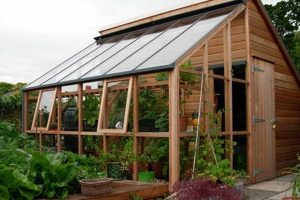
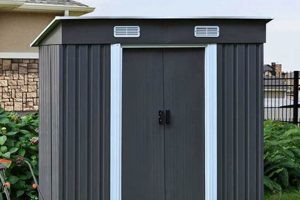
A structure with dimensions of ten feet by twenty feet, intended for outdoor storage and often located in a yard or garden, provides a contained space for tools, equipment, and other items. Such structures are commonly employed to protect lawnmowers, gardening implements, and seasonal decorations from the elements. The specified dimensions offer a balance between accommodating substantial storage needs and fitting within typical residential property sizes.
The utility of these outbuildings lies in their ability to declutter primary residences and garages. Their presence can improve the organization of outdoor spaces, preventing weather-related damage to valuable possessions. Historically, simpler versions served as rudimentary storage on farms and homesteads, evolving into more sophisticated and durable constructions for modern homeowners.
The subsequent sections will detail crucial considerations for selecting, constructing, and maintaining a storage building of this size. Factors such as material choice, foundation requirements, local building codes, and aesthetic integration with existing landscapes will be examined.
Essential Considerations for Structures of Specified Dimensions
Optimizing the utility and longevity of a ten-foot by twenty-foot storage building requires careful planning and execution. The following tips address key aspects of design, construction, and maintenance.
Tip 1: Foundation Integrity: A solid foundation is paramount. Concrete slabs, gravel pads, or treated lumber platforms provide stable bases, preventing settling and moisture damage. Ensure the foundation extends beyond the structure’s perimeter for proper water runoff.
Tip 2: Material Selection: Choose materials suited to the local climate. Pressure-treated lumber resists rot and insect infestation, while metal siding offers durability and low maintenance. Consider composite materials for trim and accents to minimize upkeep.
Tip 3: Secure Fasteners: Utilize galvanized or stainless steel fasteners for all connections. These materials resist corrosion and ensure structural integrity over time, particularly in environments with high humidity or coastal exposure.
Tip 4: Ventilation Strategies: Adequate ventilation prevents moisture buildup and reduces the risk of mold and mildew. Incorporate vents near the roofline and foundation to promote airflow and temperature regulation.
Tip 5: Door and Window Placement: Strategically position doors and windows for optimal accessibility and natural light. Consider double doors for accommodating larger items and windows on opposing walls for cross-ventilation.
Tip 6: Roof Design and Drainage: Implement a sloped roof with appropriate overhangs to effectively shed water and snow. Gutters and downspouts direct water away from the foundation, preventing erosion and water damage.
Tip 7: Regular Maintenance: Conduct routine inspections to identify and address potential issues promptly. Repair damaged siding, replace worn-out shingles, and ensure proper drainage to extend the structure’s lifespan.
Adherence to these recommendations ensures a durable, functional, and well-maintained storage structure, maximizing its value and minimizing long-term costs.
The following sections will explore specific design options and organizational strategies to further enhance the utility of this storage space.
1. Dimensions & Layout

The specified dimensions of ten feet by twenty feet directly dictate the potential internal layout and usable storage capacity of a structure. This fixed footprint necessitates careful consideration of how interior space is allocated for specific storage needs. For instance, a desire to store a riding lawnmower alongside gardening tools and seasonal decorations requires a layout that efficiently separates and organizes these diverse items. The length-to-width ratio influences aisle space, shelving placement, and the overall ease of movement within the building. An inefficient layout can negate the benefits of the generous dimensions, leading to clutter and difficulty in accessing stored items.
Practical examples illustrate this principle. A layout prioritizing vertical storage, achieved through shelving units extending to the ceiling, maximizes the use of available cubic footage. Conversely, a design that neglects vertical space in favor of open floor area may result in wasted potential and a disorganized appearance. The placement of the access door also plays a critical role. A centrally located door provides symmetrical access to the entire storage area, while a door placed at one end can create limitations in maneuvering larger items. Furthermore, incorporating windows impacts wall space available for shelving and dictates natural light distribution within the structure.
In summary, the interplay between dimensions and layout is a crucial determinant of functionality. Strategic planning, involving detailed inventory of stored items and their spatial requirements, is essential to optimize the use of the ten-foot by twenty-foot footprint. Overlooking this relationship can lead to an underutilized and inefficient storage space, despite the seemingly ample dimensions. Successfully integrating these elements results in a practical and organized solution for outdoor storage needs.
2. Material Durability

The lifespan and functionality of a ten-foot by twenty-foot outdoor storage building are inextricably linked to the durability of the materials used in its construction. The larger the structure, the greater the cumulative impact of material degradation over time. Inadequate material selection leads to premature failure, necessitating costly repairs or complete replacement. For example, untreated lumber exposed to prolonged moisture will succumb to rot, compromising structural integrity and potentially leading to collapse, especially concerning the roof supports.
Considerations regarding material durability extend beyond the primary structural components. Roofing materials must withstand extreme weather conditions, including heavy snowfall, high winds, and intense sunlight. Siding materials should resist impacts, such as those from hail or falling branches. Furthermore, fasteners employed in assembly must resist corrosion to maintain the integrity of connections. The choice of durable materials directly correlates to reduced maintenance requirements and an extended service life, resulting in long-term cost savings. A structure utilizing pressure-treated lumber, metal roofing, and corrosion-resistant fasteners will demonstrably outperform one built with inferior materials.
In summation, material durability is not merely a desirable attribute but a fundamental requirement for a robust and cost-effective outdoor storage solution. A thorough understanding of material properties and their suitability for specific environmental conditions is essential for maximizing the investment in a ten-foot by twenty-foot building. Neglecting this aspect introduces significant risk, potentially resulting in structural instability, property damage, and diminished utility. The initial investment in durable materials yields substantial dividends through prolonged performance and minimized maintenance burdens.
3. Foundation Stability

The structural integrity of a ten-foot by twenty-foot outdoor storage building hinges critically on the stability of its foundation. A compromised foundation, regardless of the structure’s material quality, introduces a cascading effect of potential failures. Uneven settling, a direct consequence of inadequate foundation preparation or unsuitable soil conditions, leads to distortions in the frame, impaired door and window operation, and ultimately, a weakened overall structure susceptible to collapse under load. Consider, for example, a situation where a building is placed on poorly compacted soil; over time, the weight of the building and its contents will cause the ground to compress unevenly, leading to cracks in the foundation and structural misalignment.
The selection of an appropriate foundation type be it a concrete slab, gravel pad, or pier system must be tailored to the specific site conditions, including soil composition, drainage patterns, and frost depth. A concrete slab, while offering superior stability on well-drained sites, may be impractical or cost-prohibitive in areas with expansive clay soils prone to seasonal movement. A gravel pad, providing adequate drainage and a level surface, may prove insufficient in areas with heavy rainfall or unstable ground. Proper site preparation, including excavation, leveling, and compaction, is paramount irrespective of the chosen foundation type. Neglecting these preparatory steps jeopardizes the long-term stability of the structure. Imagine the situation where homeowners neglect to level the ground before installing a gravel foundation, this neglect can lead to structural issues due to the lack of stability.
In essence, foundation stability is not merely a desirable attribute but a non-negotiable prerequisite for the longevity and functionality of a ten-foot by twenty-foot storage building. The initial investment in a properly engineered and constructed foundation provides a solid base upon which the entire structure rests, mitigating the risk of structural failure and ensuring years of reliable service. Failure to prioritize foundation stability ultimately translates to increased maintenance costs, potential structural damage, and a shortened lifespan for the building. The practical understanding of foundation requirements is crucial for homeowners.
4. Roofing Integrity

Roofing integrity is paramount for a ten-foot by twenty-foot outdoor storage building. The roof serves as the primary defense against precipitation, ultraviolet radiation, and extreme temperature fluctuations. A compromised roof permits water infiltration, leading to damage of stored contents, accelerated structural decay, and the potential for mold and mildew growth. The relatively large surface area of a ten-foot by twenty-foot structure amplifies the risk; even minor breaches can result in significant internal damage over time. Consider, for example, a situation where a small leak in the roof goes undetected for an extended period, leading to extensive rotting of the underlying sheathing and framing. This situation requires costly repairs and compromises the building’s structural stability.
Material selection, installation techniques, and ongoing maintenance contribute to roofing integrity. Shingle type, metal gauge, and seam welding all influence resistance to environmental stressors. Proper overlapping of roofing materials, secure fastening, and appropriate flashing around penetrations are crucial for preventing leaks. Regular inspections to identify damaged or missing shingles, corroded metal panels, or deteriorated sealants enable timely repairs and prevent escalation of problems. Furthermore, considering the roof’s slope can enhance its ability to shed water and snow, reducing the risk of water pooling and potential leaks. A steeper slope facilitates drainage, whereas a flatter roof requires more robust waterproofing measures. For instance, the correct installation of a waterproof membrane is necessary.
In conclusion, roofing integrity is not merely a desirable feature but a fundamental requirement for preserving the functionality and extending the lifespan of a ten-foot by twenty-foot outdoor storage building. Proactive measures, including careful material selection, diligent installation, and consistent maintenance, are essential for mitigating the risks associated with roof failures. The financial investment in a robust and well-maintained roof translates directly into reduced maintenance costs, protection of stored assets, and sustained structural stability over the long term. The absence of appropriate actions can lead to a much greater economic impact than if preventive measure was taken from the start.
5. Ventilation Adequacy

Ventilation adequacy within a ten-foot by twenty-foot outdoor storage building is a critical determinant of its long-term structural integrity and the preservation of stored contents. Insufficient ventilation leads to moisture accumulation, fostering conditions conducive to mold growth, wood rot, and corrosion, ultimately compromising the building’s stability and rendering it unsuitable for sensitive storage.
- Moisture Control
Adequate airflow mitigates moisture buildup resulting from humidity fluctuations, rainwater intrusion, and condensation. Uncontrolled moisture accelerates the deterioration of wooden structural components, fostering fungal growth and attracting wood-boring insects. A poorly ventilated structure may exhibit visible mold growth on interior surfaces and a musty odor, indicating pervasive moisture problems. For example, seasonal temperature changes might lead to condensation on the interior surfaces of the shed, creating a damp environment that encourages mold growth.
- Temperature Regulation
Proper ventilation helps regulate interior temperature, preventing excessive heat buildup during summer months and reducing the risk of condensation during temperature drops. Elevated temperatures can damage certain stored items, such as paints, adhesives, and plastics, while temperature fluctuations contribute to moisture condensation. For instance, without ventilation, a dark-colored storage building exposed to direct sunlight can experience temperatures exceeding 120F (49C), potentially compromising the integrity of heat-sensitive materials stored inside.
- Material Preservation
Adequate ventilation safeguards stored items from the damaging effects of moisture and temperature extremes. Tools, equipment, and other valuables are susceptible to rust, corrosion, and degradation in poorly ventilated environments. For instance, metal tools stored in a damp, unventilated shed can quickly develop rust, rendering them unusable. Similarly, paper documents and fabrics may become moldy and disintegrate. A controlled environment helps maintain the integrity of a wide range of stored items, prolonging their useful lifespan.
- Air Quality
Effective ventilation removes stagnant air and reduces the concentration of volatile organic compounds (VOCs) emitted by stored materials. VOCs, released from paints, solvents, and other chemicals, can contribute to indoor air pollution and pose health risks. Adequate airflow dilutes VOC concentrations, improving air quality and creating a safer environment for accessing and handling stored items. A well-ventilated structure minimizes the accumulation of unpleasant odors and promotes a healthier storage environment.
The four elements discussed above establish that ensuring sufficient ventilation within the structure is crucial for preserving the longevity of the building itself. The ability to regulate moisture, control temperature, preserve materials, and maintain healthy air quality ultimately contributes to the utility and value of the storage area. The absence of ventilation can cause significant damage to both building and stored content.
6. Accessibility Design

Accessibility design, concerning a ten-foot by twenty-foot outdoor storage structure, dictates the ease and efficiency with which individuals can access and utilize the stored contents. Careful planning of door placement, ramp inclusion, internal aisle width, and shelving height significantly impacts the structure’s practicality and usability, especially for individuals with limited mobility or those handling bulky items. Prioritizing these considerations ensures the structure serves its intended purpose effectively and safely.
- Doorway Dimensions and Placement
Doorway width directly influences the types of items that can be easily moved in and out of the structure. Narrow doorways restrict access for larger equipment, while strategically positioned doors, such as double doors or doors on the gable end, improve maneuverability. The placement should account for anticipated traffic flow and minimize obstruction of internal storage areas. For example, a wider doorway allows for easy passage of a lawn tractor, while a well-placed door reduces the need to maneuver items around obstacles.
- Ramp Integration and Threshold Management
Eliminating or mitigating thresholds and incorporating ramps are essential for individuals with mobility impairments or those using wheeled equipment. High thresholds pose tripping hazards and impede access, while well-designed ramps provide smooth transitions between the exterior ground level and the interior floor. The slope and surface texture of ramps must adhere to safety guidelines to prevent slips and falls. A gradual ramp, for example, facilitates easy access for individuals using wheelchairs or dollies.
- Internal Aisle Width and Circulation Space
Sufficient aisle width ensures comfortable and safe movement within the structure, particularly when carrying or maneuvering items. Narrow aisles create bottlenecks and increase the risk of collisions, while generous circulation space allows for efficient organization and retrieval of stored goods. The aisle width should be proportional to the size and type of items stored and the anticipated frequency of access. For instance, wider aisles accommodate the turning radius of a wheelbarrow, while ample circulation space enables easy access to items stored on shelves.
- Shelving Height and Reach Accessibility
Adjustable shelving systems cater to varying storage needs and ensure items are within easy reach. High shelves require reaching, potentially creating strain and increasing the risk of falls, while low shelves may be difficult to access for individuals with limited mobility. Shelving height should be optimized to accommodate a range of users and the specific items being stored. For example, adjustable shelves allow for efficient storage of both small hand tools and larger containers, while a range of shelving heights accommodates diverse user needs.
Collectively, these considerations highlight the importance of incorporating accessibility principles into the design of a ten-foot by twenty-foot outdoor storage structure. Attention to doorway dimensions, ramp integration, aisle width, and shelving height enhances usability for all individuals, promoting safety and maximizing the structure’s long-term value. Ignoring these aspects diminishes the utility of the storage area, potentially creating barriers to access and limiting its functionality. Proper accessibility design ensures the storage structure serves its intended purpose effectively for diverse users.
7. Security Measures

Security measures are a fundamental consideration for a ten-foot by twenty-foot outdoor storage building, given its potential to house valuable equipment, tools, or personal belongings. A robust security strategy mitigates the risk of theft, vandalism, and unauthorized access, preserving the integrity of the structure and protecting its contents. Neglecting security measures leaves the building vulnerable, potentially leading to financial loss and disruption.
- Door and Window Reinforcement
Reinforcing entry points is a primary security measure. Solid-core doors, reinforced frames, and security hinges resist forced entry. Window coverings, such as shutters or security film, deter unauthorized viewing and hinder access. These measures impede attempts to breach the structure and provide a visual deterrent to potential intruders. For example, installing a steel security door with a deadbolt lock significantly increases resistance to forced entry compared to a standard wooden door with basic hardware.
- Locking Mechanisms and Key Control
Employing high-quality locking mechanisms is crucial. Deadbolt locks, padlock hasps, and key control systems enhance security. Limiting key distribution and implementing key tracking mechanisms prevent unauthorized access. Consider using combination locks or smart locks to eliminate the need for physical keys. These measures provide layers of protection against unauthorized entry. The implementation of key control helps prevent potential misuse, loss, or duplicating of keys.
- Perimeter Security and Lighting
Establishing a secure perimeter deters unauthorized access. Fencing, landscaping, and motion-activated lighting create a barrier and increase visibility around the structure. Well-lit areas discourage intruders and improve surveillance capabilities. Consider strategically placed security cameras to monitor activity around the perimeter. These measures enhance the overall security posture of the property. For instance, installing motion-sensor lights can discourage theft. A security fence limits the possibility of any external interference.
- Alarm Systems and Monitoring
Integrating an alarm system provides an additional layer of security. Door and window sensors, motion detectors, and surveillance cameras can trigger alerts in the event of unauthorized entry. Professional monitoring services provide rapid response and notification to law enforcement. Wireless alarm systems offer flexibility and ease of installation. Alarm systems create a direct channel with security agencies. For example, a monitored alarm system with door sensors alerts a security company and the homeowner in case of forced entry.
These facets emphasize the importance of proactive security planning for a ten-foot by twenty-foot outdoor storage building. Robust security measures, encompassing physical reinforcement, access control, perimeter security, and alarm systems, significantly reduce the risk of theft and vandalism, protecting the structure and its contents. Neglecting security measures exposes the building to potential threats, resulting in financial losses and diminished peace of mind. The combination of these features contributes to a safe environment.
Frequently Asked Questions
The following addresses common inquiries regarding ten-foot by twenty-foot outdoor storage structures. The information aims to provide clarity and inform decisions related to acquisition, construction, and maintenance.
Question 1: What is the typical permit requirement for a structure of this size?
Local building codes dictate permit requirements. Structures of this size often necessitate a permit due to their footprint and potential impact on property lines, zoning regulations, and utility easements. Consult the local planning and zoning department for specific stipulations before commencing construction.
Question 2: What foundation options are suitable for such a building?
Viable foundation options include concrete slabs, gravel pads, and pier systems. The optimal choice depends on site conditions, soil composition, drainage characteristics, and budget constraints. A professional geotechnical assessment can inform the most appropriate foundation selection.
Question 3: What are the implications of building this structure close to property lines?
Proximity to property lines is governed by local setback regulations. Encroaching upon setback areas can result in fines, legal disputes with neighbors, and potential forced removal of the structure. Research and adherence to setback requirements are essential.
Question 4: What are the best materials to withstand harsh weather conditions?
Pressure-treated lumber, metal siding, and composite roofing materials offer enhanced resistance to weathering. Galvanized or stainless steel fasteners prevent corrosion. Specific material choices should align with the prevailing climate and anticipated environmental stressors.
Question 5: How can adequate ventilation be achieved in a building of this size?
Ventilation is facilitated by gable vents, ridge vents, and soffit vents. The number and placement of vents should be calculated to promote airflow and prevent moisture buildup. Dehumidifiers may supplement ventilation in humid climates.
Question 6: What security measures are advisable for protecting stored contents?
Security measures include reinforced doors and windows, deadbolt locks, motion-activated lighting, and alarm systems. A visible security presence deters potential intruders. Consider security cameras. Protecting stored items can be done with security measures.
In summation, thorough research, adherence to local regulations, and careful consideration of site-specific factors are crucial for ensuring the successful implementation of a ten-foot by twenty-foot storage structure.
Subsequent sections will provide detailed guidelines for construction planning and execution.
10×20 garden shed Conclusion
The preceding analysis has comprehensively explored various facets of the ten-foot by twenty-foot outdoor storage structure. Key considerations have been presented, spanning from foundational integrity and material durability to ventilation strategies, accessibility design, and robust security protocols. An awareness of these elements is critical for ensuring the long-term functionality, structural soundness, and security of these storage solutions.
The successful implementation of a ten-foot by twenty-foot structure hinges on informed decision-making and adherence to established best practices. Individuals contemplating the construction or acquisition of such a building are encouraged to meticulously assess their specific needs, local regulations, and site-specific conditions. The long-term utility and value of the investment are directly proportional to the thoroughness of the planning and execution process.